


Tweeting Jihadism: How the online onslaught of Islamic State can be countered
Just blocking the jihadist, pro-Islamic State accounts on certain social platforms is not the solution. A well-thought-out, well-reasoned, coherent and effective counter-narrative against the extremist rhetoric is imperative.

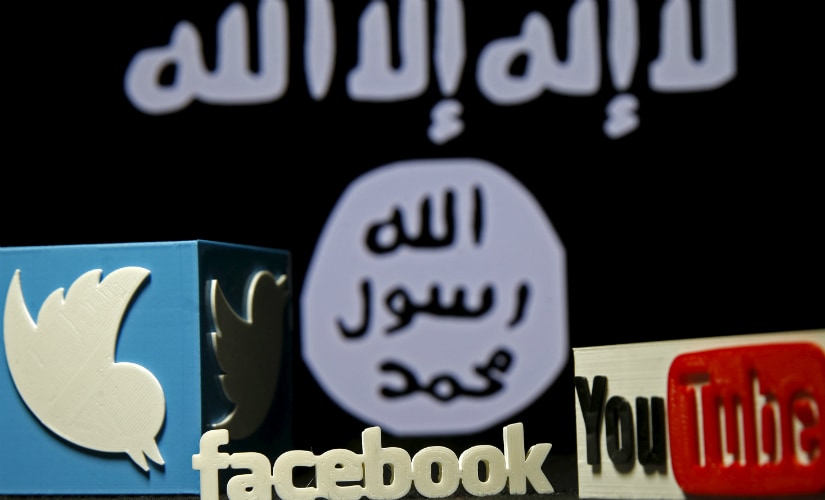
Representational image. Reuters[/caption]Prior to this report, RAND also carried out a rigorous research on ‘radicalisation in the digital era’. Based on case studies, it primarily explored how individuals were engaged with the internet during the process of their radicalisation. For instance, a study held by RAND titled “The use of the internet in 15 cases of terrorism and extremism” has developed a nuanced understanding of the role of the online media in radicalisation. Some of the fundamental questions that this study sought to address are: How the radical Islamist groups are using the internet to indoctrinate radicalism into an individual’s mind, and what are the ways in which a radical Islamist’s online engagement relates to his offline activities?RAND’s study also offers precise and useful recommendations for framing policy responses to the use of the digital media in the process of radicalisation. It argues that the digital media is an enabling technology in the case of growing Islamist radicalisation and thus this 'online onslaught' can best be tackled online only.Empirical evidence in this study supports the hypotheses that internet eases the online process of radicalisation and that it acts as an ‘echo chamber’ (a place where individuals find their ideas supported and echoed by other like-minded individuals). But this evidence relies only on a few cases which buttress the point that internet facilitates the radicalisation of Muslim users of certain Islamist websites and online portals. Although it is not the only driver of the radicalisation process. However, there is no substantial evidence in this study to corroborate the main hypothesis that the study holds. For instance, the online media maximises the potentials of self-radicalisation or that it occurs without any physical contact.Several other think tanks have studied the scope of ‘digital radicalisation’ from an anti-terrorism perspective.A research journal Studies in Conflict & Terrorism published a detailed report titled, “Tweeting the Jihad: Social Media Networks of Western Foreign Fighters in Syria and Iraq” in 2015. Jytte Klausen, the compiler of this report, did a social network analysis of the data on Twitter users, mostly militants, based in Western Syria. He used a snowball method with 59 starter accounts to collect data about the most popular accounts in the network at large from January to March 2014. The researchers engaged in this study used their own Twitter accounts to identify potential foreign fighters in Syria. A total of 60 accounts were initially identified but one was inactive at the time, and therefore excluded from analysis.Klausen also used the social network analysis (SNA) tool in order to recognise the crucial disseminators of content that drove the traffic on Twitter. Using a snowball method, the original accounts were treated as “starter nodes” in a network of followers creating a larger dataset that covered the entire network. The snowball method captured a particular network that comprised only a slice of the global network of the Twitter. However, the analytical platforms of this study could not encompass the larger scope of the dataset for the whole of Twitter's network. Due to lack of capacity of the analytical platforms, there could not have been more sophisticated analytical description.Another American think tank like RAND – Brookings Institution – based in Washington, D.C, found in its "Twitter Census" that Islamic State supporters used at least 46,000 accounts between September and December 2014. Alarmed at this increasing trend of Twitter jihadism, the social media network's daily suspensions of terror-linked accounts have jumped to 80 percent since 2015. Twitter has suspended an additional 2,35,000 accounts since February 2016, after halting 1,25,000 accounts since the middle of 2015, most of which were related to Islamic State.However, experts believe that merely blocking the jihadist accounts on Twitter is not a guarantee for their complete elimination. Since the beginning of February 2016 when Twitter began this crackdown, terrorist accounts have started migrating to Telegram. Nevertheless, Telegram channels of the terror indoctrinators are also being shut down just like the Twitter accounts. But in recent years, several accounts promoting terrorism, particularly Islamic State, have used Facebook as their platform.Clearly, just blocking the jihadist accounts on certain social platforms is not the solution. Also, a well-thought-out, well-reasoned, coherent and effective counter-narrative against the extremist rhetoric is imperative.In this gigantic anti-extremism moderate, Islamic scholars and thinkers can help. Since the jihadist indoctrination and recruitment of the Muslim youth has been on the rampage in the cyber world, the ‘online de-radicalisation’ is desperately required.In this task, the fundamental questions that should be grappled with are: What drives online radicalisation to rely on a religious justification? – How operative is the “ideology” within the process of online radicalisation? What is the significance of “idealism” and “theodicy” and how these could be interpreted and implemented? – As most terrorists loudly claim to be inspired by Islamism, what is the moderate response of the Muslims to the violent extremist ideology; and how they interpret Qur’an and Hadith – the two primary sources of Islam – to counter radicalisation?Omar Ashour, the author of “The De-Radicalization of Jihadists: Transforming Armed Islamist Movements”, wrote a paper ‘Online De-Radicalization? Countering Violent Extremist Narratives: Message, Messenger and Media Strategy’. Based on his empirical knowledge of the impact of religion on radicalisation, he explored the role of the ‘new media’ or the online media in indoctrinating the violent extremist narratives into the young and impressionable Muslim minds. At the same time, he also examined how the online media and internet, as opposed to its effects on radicalisation, can play an effective role in promoting a counter-narrative to facilitate the process of online de-radicalisation.The very first question Ashour addressed was: Whether online counter-extremism is possible? In conclusion, he offers what could be a ‘concrete solution’ in his mind to ‘online radicalisation’. He opines that the ongoing online extremist indoctrination can only be countered by an online de-radicalisation. To work out an effective and impacting counter-narrative, he avers, we need to channelise digital media – websites, online newspapers, blogs, wikis, internet TV and most importantly social media.Indeed, without an online counter-narrative, we cannot tackle the onslaught of the extremist Islamist narratives. But it is very unsettling that no such strategy has been evolved to control the ongoing digital radicalisation even in the US, UK or India. Ironically, this is too difficult a task for even these countries of the best tech-savvy people. One still fails to understand it. If the government-led high-tech teamwork is not capable enough to battle the jihadist radicalisation, no wonder that the executives from Twitter, Telegram, Apple Snapchat, Facebook, MTV to Buzzfeed still fail to tackle the online onslaught of the Islamic State.The author is a scholar of Comparative Religion, Classical Arabic and Islamic sciences, cultural analyst and researcher in Media and Communication Studies. Write to him at grdehlavi@gmail.com

Globe at a glance: From Houthis striking Saudi tankers in Red Sea to wildfires in Europe
Houthis claim responsibility for attack on two Saudi oil tankers in Red Sea as a new chokepoint emerges
Air India to cut Delhi-Toronto flight time by 3 hours, resume non-stop services from August 1
US signs landmark nuclear deal with Saudi Arabia amid tensions in West Asia
Wildfires ravage parts of Italy, Spain and France, prompting thousands of evacuations