


Radicalisation by Islamic State and Al-Qaeda is not just Islam's problem, but India's too
Islamic scholars would tell you that the 7th Century religion, which originally respects the ideals of religious pluralism, is a victim of misinterpretation. Its holy text has often been misinterpreted by terror groups to misguide the youth

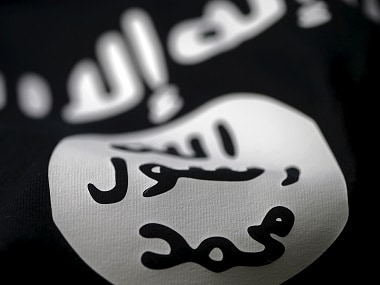
Representational image of an Islamic State flag. Reuters[/caption]It's not just ISReports confirm that Al-Qaeda too has called upon Indian Muslims to launch lone wolf attacks in the subcontinent. India has largely been a hard-to-penetrate market for Al-Qaeda. Since its inception, only a handful of India’s 160 million Muslims have fallen into the terror outfit's trap, Reuters reported, quoting government officials. But, with IS gaining ground, it's logical that Al-Qaeda too will be under pressure to reinforce its India unit to claim the lead in spreading terror in the subcontinent.In fact, Al-Qaeda has been losing ground on the IS internationally for years now, prompting Ghost Wars author Steve Coll to compare Al-Qaeda to Myspace and IS to Facebook in December 2014.But on the subcontinent, this phenomenon isn't reserved to India alone. Most recently, the terror attacks in Dhaka by suspected IS militants that killed 22 people meant that the region itself has to gear up to face the new face of terror. One thing is obvious. Over the last few decades, with the rise of the Taliban, Al-Qaeda and later the new, toughened avatar of the IS, Islam and the community has been increasingly associated with terrorism, perhaps, more than any other religious or ethnic groups.Islamic scholars would tell you that the 7th Century religion, which originally respects the ideals of religious pluralism, is a victim of misinterpretation. Its holy text has often been misinterpreted by terror groups to misguide the youth.That is a known problem.But, when IS-like forces gain ground in India, how will we tackle the problem? India is a large secular, democratic country unlike Syria or Afganisthan — where the governments have failed to offer a sense of security to its citizens, making youth vulnerable to the coercion and brainwashing by militant groups? But what is prompting Indian youth to do the same?Islamic scholars in India have two sets of views on this issueSome Islamic experts acknowledge that there is indeed a problem of vested interests misinterpreting the Quran. And perhaps its time for the Muslim community to wake up to the problem to take corrective measures. “One of the main reasons why Muslim youths, even those who are professionally educated, fall prey to terrorist ideology, is that they are misguided with misinterpreted versions of Quran,” said Sheikh Mohammed Karakunnu, Islamic scholar and assistant Ameer at Jamaat-e-Islami's Kerala branch, who has studied this issue for years.“Often, verses in the Quran are misinterpreted taking them only in the literal sense, not in the contextual meaning. It is ignorance about Islam,” said Karakunnu, who has authored two books on the approach of the Quran to war and the tolerance of Islam. Karakunnu said the solution lies within Islam itself by finding the true sense of religious pluralism and correcting the misguided youth. Karakkunnu explained that there were many instances, especially in the eighth and ninth chapters of Quran that talk about war, which often cause confusion. These verses pertain to defending the self from enemies on the war front but are often misinterpreted as the right to overpower the dissenters within and outside the community, he said.Two prominent examplesChapter 8: verse 39:
'And fight with them until there is no more fitna (disorder, strife) and religion should be only for Allah?'According to Islamic scholars, these verses were originally aimed at those tribes who were attacking Islam, the Muslim empire, but later misinterpreted as right to attack other religions.Chapter 9: verse 123:
'O you who believe, fight those of the unbelievers near you and let them see how harsh you can be. Know that Allah is with the righteous,'This one has a similar context. According to Karakunnu, this is originally meant against those fake believers who joined forces with enemies of the prophet in the war. “Even within Islam, the right to take on enemies lies with the government, not with individuals or groups. But that is what IS-like organisations do today,” he addedKarakkunnu noted that the increasing influence of social media among Islamic youth has also caused the misinterpretations to spread, making the youth vulnerable to terrorist ideology.Abid Rasool Khan, chairman of Hyderabad minority commission, largely agreed with this view saying the problem arises when certain groups/sects within the community misguide the youth with the use of wrong interpretations of the holy text and don't see them in context. Khan is someone who has been advocating the idea of letting the government being a part of the madrassa education system, besides bringing in transparency in their financial dealings. “This parallel education system does not help the community,” Khan said.

Globe at a glance: From Houthis striking Saudi tankers in Red Sea to wildfires in Europe
Houthis claim responsibility for attack on two Saudi oil tankers in Red Sea as a new chokepoint emerges
Air India to cut Delhi-Toronto flight time by 3 hours, resume non-stop services from August 1
US signs landmark nuclear deal with Saudi Arabia amid tensions in West Asia
Wildfires ravage parts of Italy, Spain and France, prompting thousands of evacuations