


Pervez Musharraf defends Pakistan's military rulers, says those who go against country's welfare must be killed
Musharraf faces several charges, including treason for abrogating the Constitution and declaring emergency in 2007.

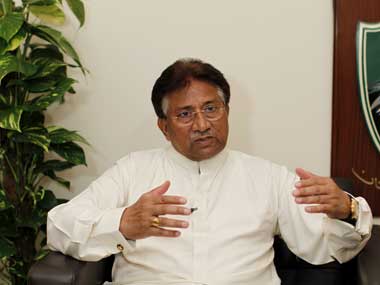
File image of Pervez Musharraf. Reuters[/caption]He faces several charges, including treason for abrogating the Constitution and declaring emergency in 2007.Musharraf has also been charged with involvement in the murder of two-time prime minister Benazir Bhutto in 2007."Whoever works actively against the welfare of Pakistan is against the country and should be killed," he said in the interview.Musharraf, who served as Pakistan's president from 2001 to 2008, defended his "intervention" in 1999, saying he wanted to "save the nation"."The Constitution can be ignored if there is a need to save the nation," he said, without explaining the nature of the threat Pakistan faced at that time.He defended the military "takeovers" of the civilian governments in Pakistan, saying that real development occurred only during military regimes and accused the civil governments of reversing the progress achieved during military rules."Military rule has always brought the country back on track, whereas civilian governments have always derailed it," he said. "Dictators set the country right, whereas civilian governments brought it to ruins."The powerful army, which enjoys considerable influence over policy decisions in Pakistan, has ruled the country for much of its life since it gained independence 70 years ago.Last week after Nawaz Sharif was ousted as prime minister after a Supreme Court ruling in the Panama Papers scandal, Musharraf posted a video on the social media hailing the verdict as "historic". He was criticised for the hypocritical remarks.On his return to the country, he appeared confident that the Pakistan Army would stand by him. "I have served as the head of the army and the army will always protect my welfare."He also held former Prime Minister Zulfiqar Ali Bhutto responsible for breaking up of Pakistan in 1971.He defended General Zia-ul Haq's Afghanistan policy but agreed some of Haq's polices resulted in creating extremism.

US set to sign Saudi nuclear deal; Rubio says pact won't fuel proliferation
India-US trade deal 'almost complete', says US after Jaishankar-Rubio talks in Manila
Marco Rubio says he 'would expect India to be concerned' over Trump's pharma tariffs
Trump renews China election interference claims, but files point to Russia's larger role
'See me after class!': UK education secretary Lucy Powell mocked by Tories over grammar gaffe