


Over 2.6 billion people in Zika risk areas in Africa, Asia: Study
At least 2.6 billion people, over a third of the global population, live in parts of Africa, Asia and the Pacific where Zika could gain a new foothold, researchers warned, with 1.2 billion at risk in India alone.

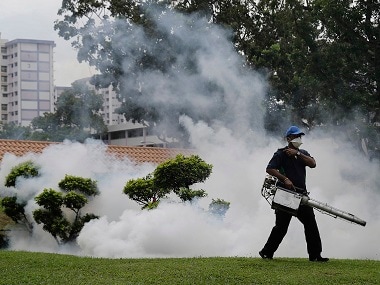
Representational image. Reuters[/caption]Whether or not the mosquito-borne virus would take off in any of these countries would be determined largely by a crucial unknown factor: Do the people there have immunity?Sporadic cases of Zika have previously been reported in Africa and Asia, but nobody knows whether they were widespread enough for populations to acquire resistance to the virus.Another mystery is whether immunity to the African Zika strain would offer protection against the Asian strain currently in circulation."If Zika immunity is widespread, introduced Zika will fizzle out fast," Derek Gatherer of Lancaster University said in a comment on the study published in The Lancet Infectious Diseases."On the other hand, if it enters another unprotected population, we may see a repeat of what we have already seen in Brazil and other parts of Latin America."The research team used air travel data, maps of mosquito spread and climate conditions, and information on population density and health spending to draw up an epidemiological risk model.Benign in most people, Zika has been linked to a form of severe brain damage called microcephaly which causes newborns' heads to be abnormally small, and to rare adult-onset neurological problems such as Guillain-Barre Syndrome (GBS), which can result in paralysis and death.In an outbreak that started mid-2015, more than 1.5 million people have been infected with Zika in Brazil, and more than 1,600 babies born with abnormally small heads and brains. Seventy countries and territories have reported local mosquito-borne Zika transmission, with Brazil by far the hardest hit.Seventeen countries have reported cases of microcephaly or other central nervous system malformations in babies, and eighteen signalled an increase in GBS, according to the World Health Organization. There have also been rare cases of person-to-person sexual transmission."As the Zika virus epidemic in the Americas intensifies and expands, hundreds, and possibly thousands, of infected travellers are now transporting the virus to distant regions of the world," the researchers wrote.

US House passes $1 trillion defence bill despite concerns over Iran war and Israel ties
Explorers discover wreckage of plane 72 years later. Will this help in finding MH370?
Chinese Defence Attache praise India’s rescue of 12 sailors off Kerala cost
'China ready to work with India,' says Wang Yi after talks with Jaishankar in Manila
Secret Service agent on JD Vance security detail put on leave over alleged leak of travel plans