


In photos | Beyond the cradle: The Artemis II mission in pictures
In a definitive return to deep-space exploration, Nasa’s Artemis II mission has yielded a staggering visual record of our voyage beyond low Earth orbit.

The Artemis II mission represents a pivotal leap in human spaceflight, marking the first time in over half a century that a crewed spacecraft has ventured to the vicinity of the Moon. These recently released images, captured by the crew and the Orion spacecraft’s sophisticated camera systems, offer a raw and intimate perspective of our transition from an Earth-bound species to a lunar one.
The collection documents the voyage of Reid Wiseman, Victor Glover, Christina Koch, and Jeremy Hansen as they tested the systems that will eventually return humans to the lunar surface. From the terrifyingly beautiful void of deep space to the familiar, yet fragile, marble of Earth, this photo story explores the visual legacy of a mission that has effectively reopened the gateway to the solar system.
 More from World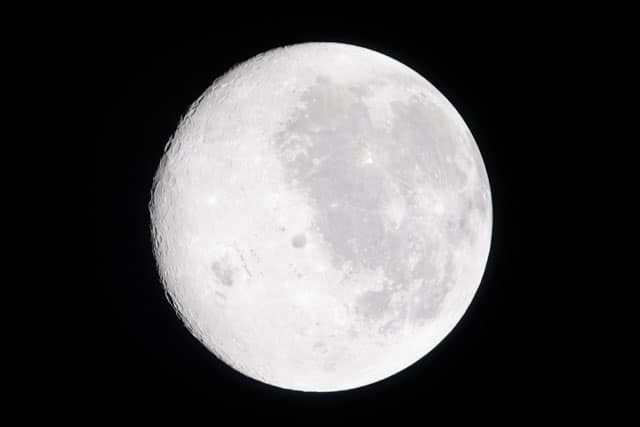
This striking high-exposure shot captures the Moon in its waxing gibbous phase, revealing the stark topography of the lunar highlands and the dark, basaltic plains known as maria.
The intense brightness of the sunlit surface against the absolute ink of the vacuum illustrates the lack of an atmosphere to scatter light.
Every crater rim and rille is rendered with clinical precision, serving as a reminder of the unforgiving terrain the Artemis crew monitored as they swung around the lunar far side.
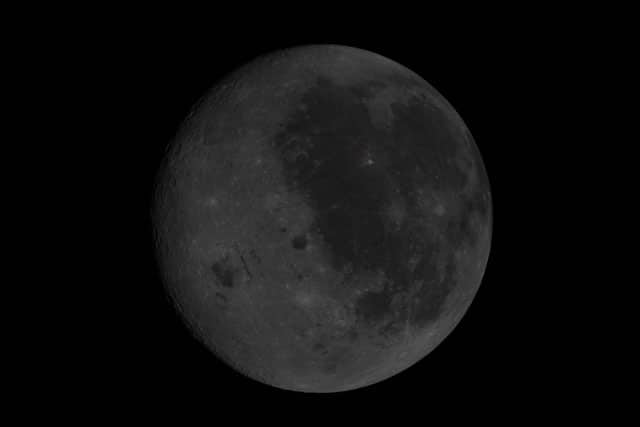
In a direct contrast to the previous frame, this lower-exposure image brings the subtle textures of the lunar surface into focus without the blinding glare. The Oceanus Procellarum and various impact sites appear as ghostly, charcoal-grey features.
This perspective is vital for navigational calibration, allowing the crew to distinguish subtle geological features that are often washed out by the sun’s unshielded radiation. It evokes a sense of the Moon not as a distant light, but as a physical, reachable destination.
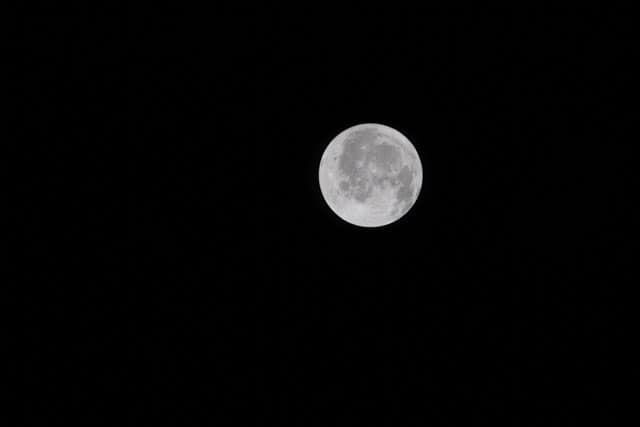
Framed against the vastness of the void, the Moon appears here as a solitary disk, emphasizing the immense scale of the journey undertaken by the Orion capsule. The vast distance between the spacecraft and its celestial target highlights the isolation of the four-person crew. At this range, the familiar face of the Moon becomes a waypoint, a destination that is simultaneously enormous and yet dwarfed by the infinite blackness surrounding it.
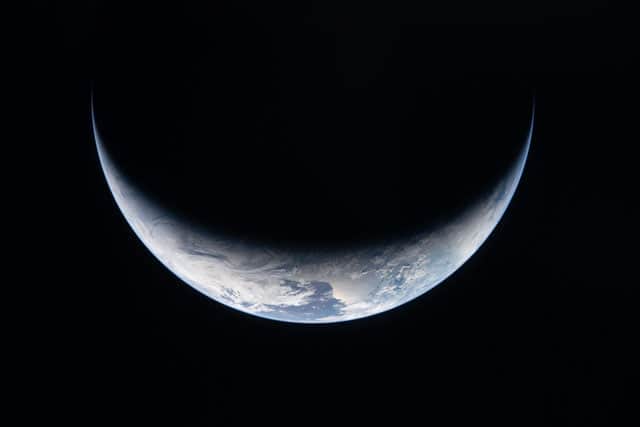
One of the most poetic captures of the mission, this image shows the Earth as a slender, glowing sliver of light. The curve of our home planet is traced by a thin, electric-blue line, the atmosphere, which is all that protects life from the vacuum of space.
The sheer delicacy of the crescent, hanging in total darkness, underscores the "Overview Effect" often described by astronauts, where the geopolitical boundaries of Earth vanish, replaced by a profound sense of planetary unity.
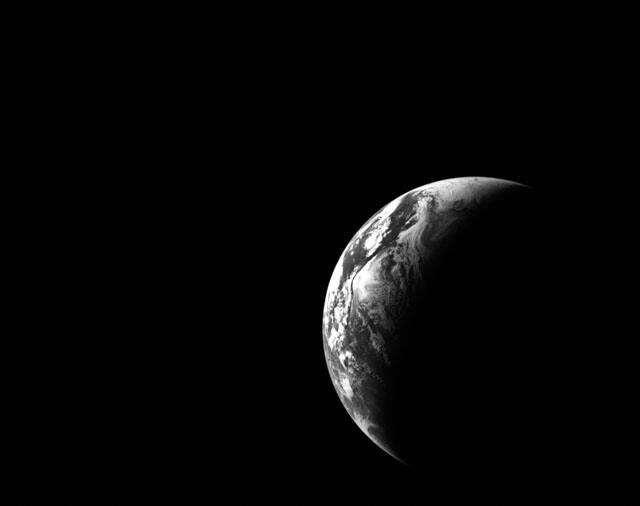
Captured during a system check of the optical navigation cameras, this black-and-white rendering of Earth focuses on the interplay of light and shadow. By stripping away the vibrant blues and greens, the image highlights the swirling complexity of cloud patterns and the sharp transition of the terminator line.
This data-heavy aesthetic is reminiscent of the early Apollo-era photography, bridging the gap between the pioneers of the 1960s and the modern Artemis generation.
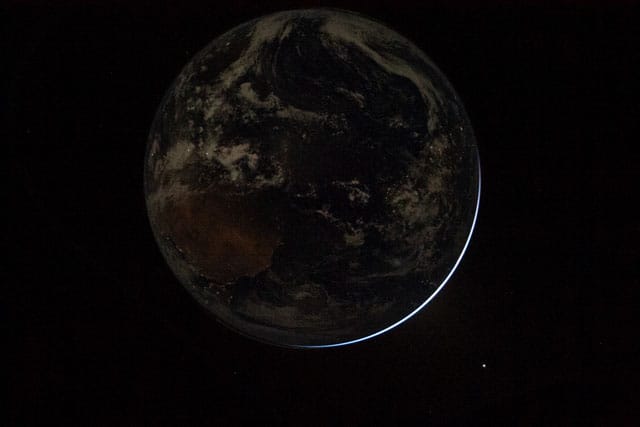
As the spacecraft orbited high above the night side of the planet, the Australian continent became visible through a break in the clouds. The deep ochre of the Outback is visible even in low light, contrasted by the faint, shimmering glints of coastal cities.
Above the horizon, a thin veil of airglow, a photochemical reaction in the upper atmosphere, paints a ghostly green and gold rim around the planet, while a distant star hangs low in the frame.
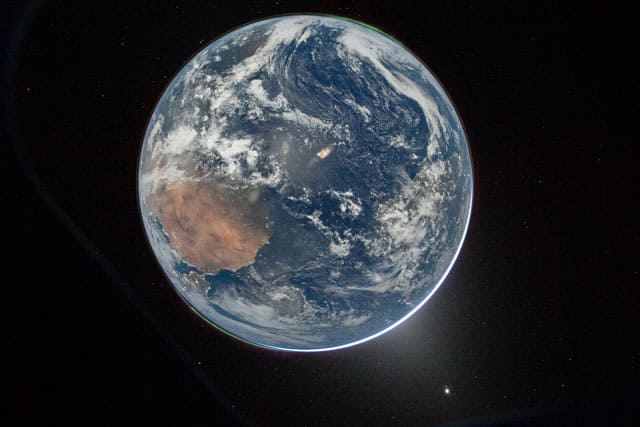
In a vibrant, full-colour perspective, the Earth appears in its iconic glory. The deep sapphire of the Pacific Ocean dominates the view, interspersed with complex weather systems and the sun’s reflection glinting off the water’s surface.
This image serves as a powerful psychological anchor for the crew; amidst the grey dust of the Moon and the blackness of space, the vivid saturation of Earth represents everything they are working to protect and the home to which they must eventually return.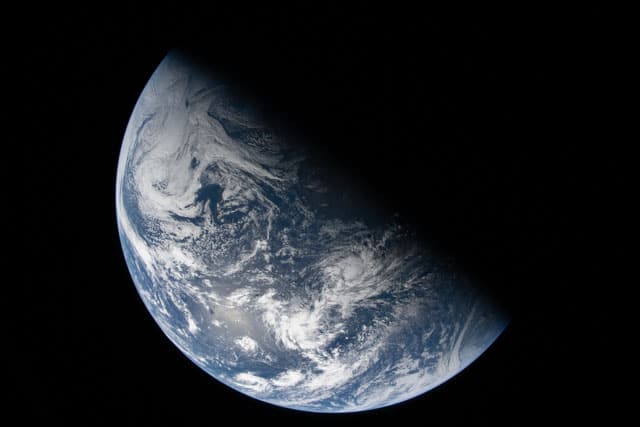
This close-up focuses on the northern hemisphere, where massive cyclonic weather systems move across the Atlantic. The intricate, fractal-like patterns of the clouds demonstrate the chaotic beauty of Earth’s climate.
From this altitude, the power of a storm is reduced to a silent, elegant spiral, offering the crew a laboratory-like view of the planet’s life-support systems in action. It is a reminder that while the mission looks outward to the stars, its success is fundamentally rooted in the survival of the world below.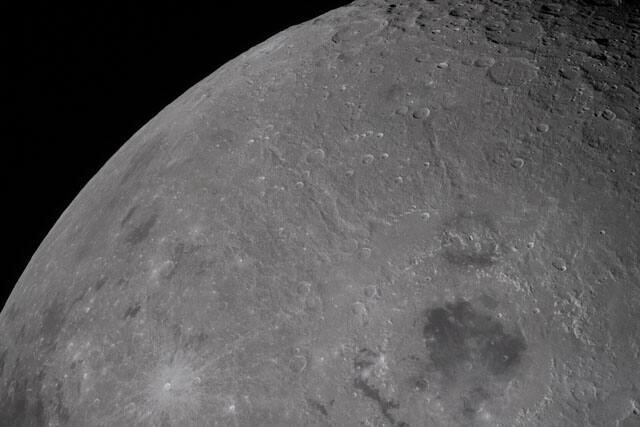
Closing our story with an oblique, wide-angle view, this image captures a sense of motion. The perspective is tilted, as if the viewer is peering through a porthole while the Orion spacecraft makes its sweeping turn around the Moon.
Large, complex impact basins with central peaks are visible, offering a three-dimensional view of the lunar crust’s resilience. It is a view that remained a mystery to humanity for eons, now rendered in stunningly mundane detail for the world to see.
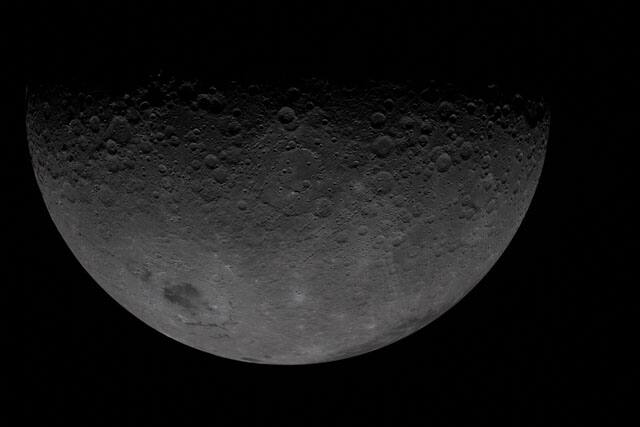
This frame offers an expansive view of the lunar southern hemisphere, a region characterized by its immense density of impact craters. The lack of large, smooth maria in this area creates a rugged, chaotic landscape where every square mile tells a story of celestial collision.
The subtle variations in grey tones reveal different mineral compositions and the age of ejecta blankets, providing a topographical map that is as scientifically valuable as it is visually arresting.
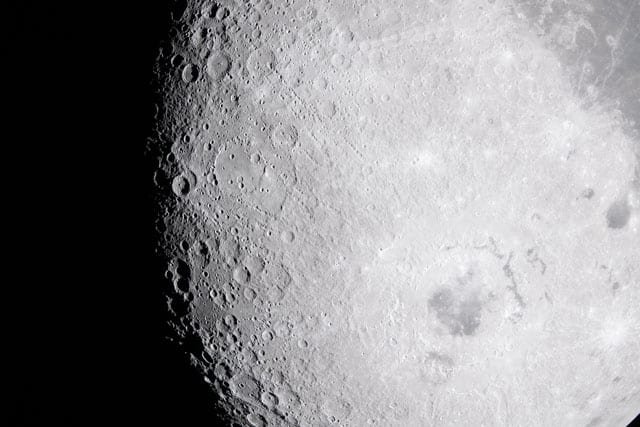
By utilising a higher exposure, this image brings the fine details of the lunar crust into sharp relief. The interplay of intense light and deep shadow along the crater rims provides a sense of the sheer depth and verticality of the Moon's surface.
This perspective is particularly useful for identifying smaller secondary craters and rilles, collapsed lava tubes that snake across the landscape, offering a granular look at the forces that have shaped the lunar environment over billions of years.
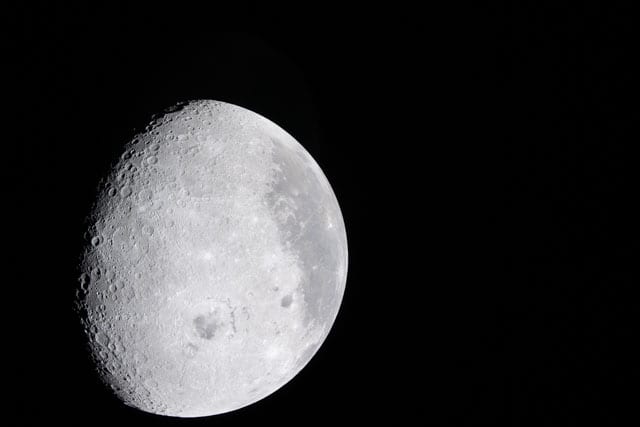
In this shot, the Moon is captured in its waxing gibbous phase, suspended against the absolute blackness of the space. The sharp definition of the lunar limb against the void emphasizes the total absence of a gaseous envelope.
This clarity allows for the observation of the "libration" zones, areas near the edge of the Moon that are sometimes visible from Earth due to the Moon's slight wobble, but here seen with the unwavering steadiness of a spacecraft camera.
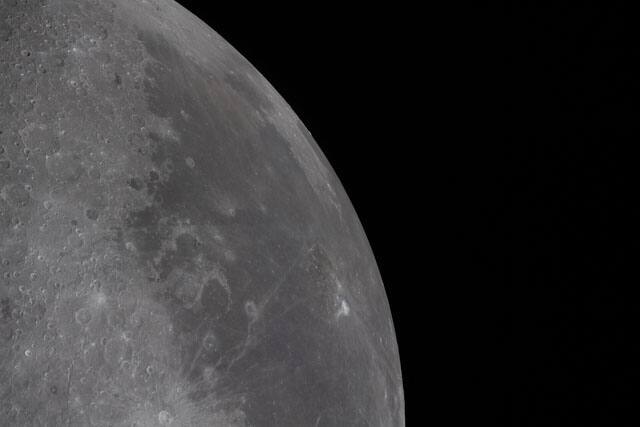
This final close-up focuses on the transition between the smooth, basaltic plains of a lunar mare and the more ancient, cratered highlands. The relative flatness of the mare is interrupted only by occasional, younger impact sites, creating a stark visual contrast with the jagged terrain nearby.
This view serves as a reminder of the Moon’s complex geological past, where massive volcanic eruptions once resurfaced vast portions of the globe, leaving behind the dark patches that have guided navigators for centuries.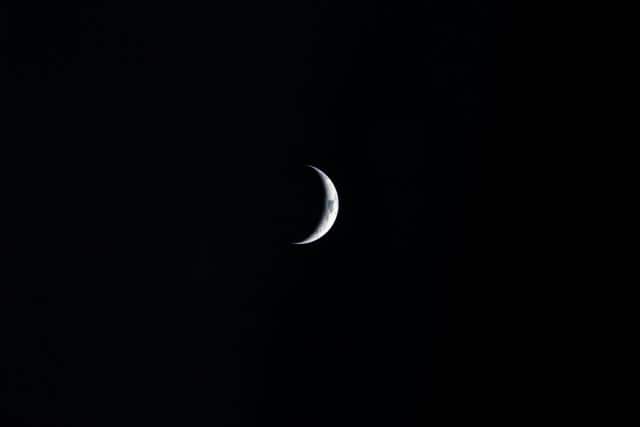
In one of the mission’s most evocative shots, Earth appears as a delicate, glowing sliver suspended in an absolute vacuum. At this distance, the entirety of human history is reduced to a thin curve of light.
The image emphasizes the isolation of the Artemis II crew; while they look toward the Moon for exploration, they are tethered to this single, fragile blue line that represents every life-support system they have left behind.
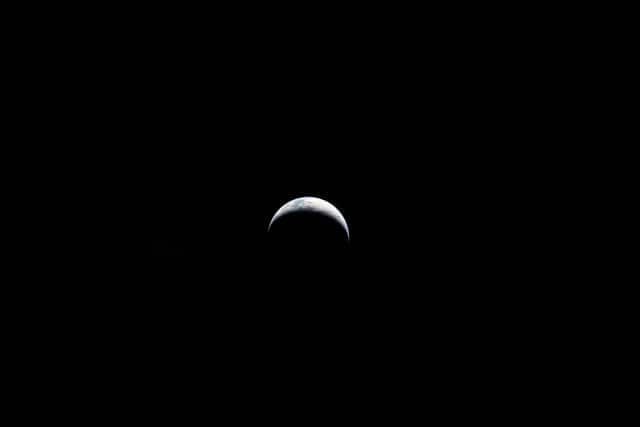
Stripping away the detail, this lower-exposure shot focuses on the geometric perfection of the Earth’s curve. The darkness surrounding the planet is so complete that it serves as a stark reminder of the "Overview Effect."
It is a perspective that shifts the mission from a technical achievement to a philosophical one, highlighting the vulnerability of our home in the context of the cosmic dark.
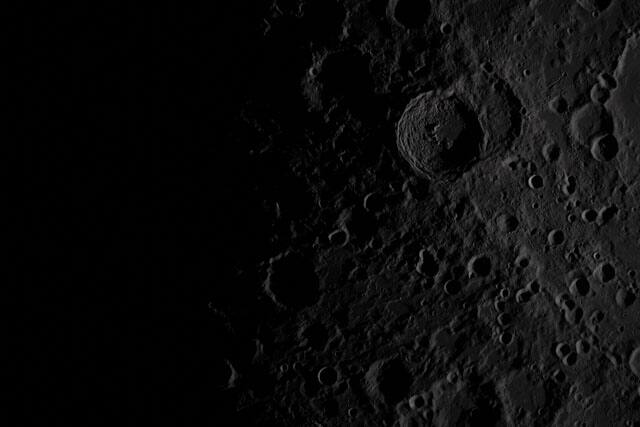
This tight focus on the lunar terminator, the line between day and night, showcases the Moon’s rugged topography through long, dramatic shadows. The sunlight grazes the crater rims, leaving the floors in total darkness.
This high-contrast view is essential for mapping the elevation of the lunar crust, as the length of the shadows allows scientists to calculate the height of mountains and the depth of basins with surgical precision.
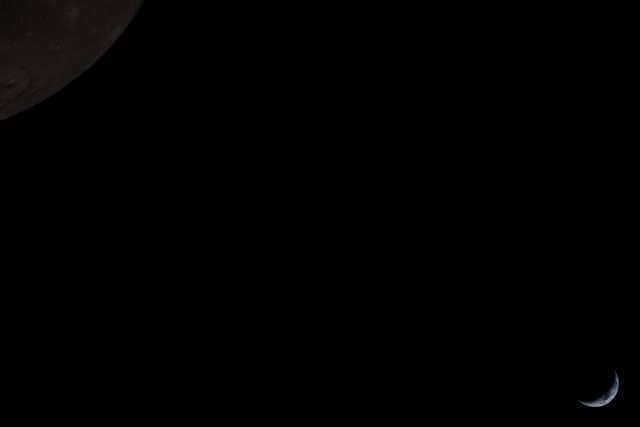
This rare composition captures both the lunar limb and the distant Earth in a single frame. The massive, dark presence of the Moon in the upper-left corner provides a sense of physical weight, while the tiny crescent of Earth in the lower-right illustrates the staggering distance between the two bodies.
It is a visual representation of the translunar journey, documenting the moment the crew was caught between their destination and their origin.
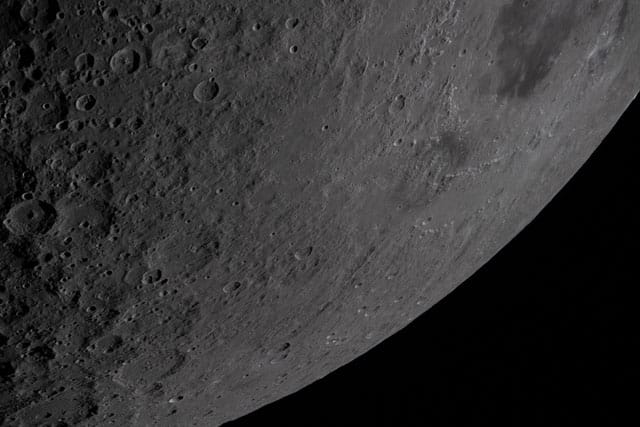
Focusing on a transitional zone, this image highlights the difference in albedo (reflectivity) between various regions of the Moon. The brighter highland areas, composed mainly of anorthosite rock, contrast with the darker, iron-rich basalt of the maria.
This geological "patchwork" is a primary focus for the mission’s scientific objectives, as understanding the distribution of these materials is key to future resource utilisation on the lunar surface.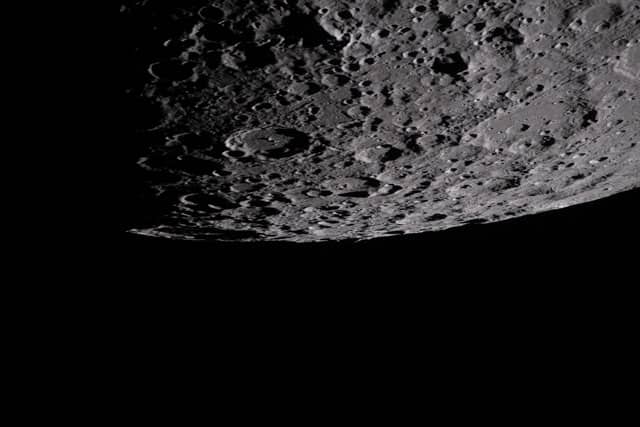
Peering across the lunar horizon, this frame captures the silhouette of the Moon against the blackness of space. The uneven, saw-tooth edge of the horizon is caused by the rims of massive craters and mountain ranges viewed in profile.
This perspective gives the Moon a tactile, physical presence, making it clear that this is not a flat disk in the sky, but a vast, mountainous world waiting to be explored by the next generation of voyagers.
Tags

US set to sign Saudi nuclear deal; Rubio says pact won't fuel proliferation
India-US trade deal 'almost complete', says US after Jaishankar-Rubio talks in Manila
Marco Rubio says he 'would expect India to be concerned' over Trump's pharma tariffs
Trump renews China election interference claims, but files point to Russia's larger role
'See me after class!': UK education secretary Lucy Powell mocked by Tories over grammar gaffe