


'Families deserve truth': Ahmedabad plane crash victims' lawyer raises questions for Boeing, FAA | Interview
Remember Ahmedabad plane crash? The final probe report is still awaited. Did the Boeing 787 Dreamliner have faulty fuel switches? Were the FAA and Boeing aware of the issue? Attorney Mike Andrews, representing the crash victims, speaks to Firstpost’s Shiksha Dev on this and more in an exclusive interview

Thirty-two seconds. 260 lives lost. June 12, 2025. The crash of Air India flight AI171 turned a routine journey into one of the deadliest aviation tragedies in recent years, placing Boeing’s 787 Dreamliner under intense global scrutiny.
As investigators continue to piece together what went wrong, questions are mounting over the aircraft’s systems and the possibility of deeper technical issues.
Mike Andrews, a senior aviation attorney at the US law firm Beasley Allen, is representing over 100 victims of the London-bound plane. The firm has filed a Freedom of Information Act (FOIA) request in the United States on behalf of victims’ families, and is conducting an investigation for filing a lawsuit.
 More from World
Andrews has raised concerns about long-standing issues with the 787 Dreamliner’s fuel switches, citing a 2018 Federal Aviation Administration (FAA) airworthiness bulletin.
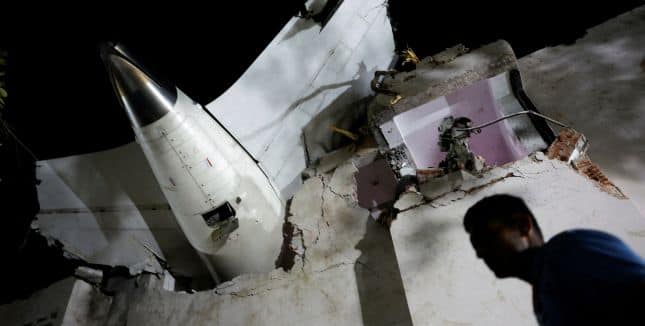
The lawyer asserts both Boeing and the FAA were aware of problems with the fuel switches years before the AI171 crash. He also flags concerns about the aircraft’s complex systems and the possibility of other issues that could affect the fuel system.
In an interview with Firstpost, Andrews also pushes back against the pilot-error narrative that has emerged in parts of the public discourse following some media reports citing unnamed sources claiming to know what's in the Aircraft Accident Investigation Bureau’s (AAIB) final probe findings, which are yet to be published.
He argues that there appears to be a rush to blame the pilots and says such reports seem to point fingers at the deceased crew without sufficient context. Speculation surrounding a tragedy of this scale, he says, is “improper”.
Edited excerpts:
Firstpost: It's been eight months since a Boeing mishap happened in India. The final report is still awaited. What your investigation has found as you build up your case in the court of law, and what are the most significant probe areas?
Andrews: We are eight months post-crash, and the preliminary report raised a number of questions that I and others have struggled to answer. It appeared to put immediate fault on the pilots without further context. Some highly decontextualised snippets of conversation from that report appeared to have been used to blame the pilot. We know that the investigation appears to be ongoing today.
We hear various hearings that have come out of India’s Supreme Court. We know that the AAIB and investigators have been given three weeks to provide the court with a thorough protocol so that everyone understands exactly what process they're following. On a daily-basis, we hear conflicting reports about the process.
At times, we hear that the report is nearing completion. Other times, we hear responses that say no, this is active and ongoing, and they have not reached any conclusions yet. So, it's difficult for us, as well as for the families, to really understand where the investigation currently stands in India.
Firstpost: AAIB has cautioned experts against speculating on any conclusions based on its preliminary report. There have been speculations surrounding fuel switches and a possible human error. Did your investigation find any concern regarding the design, reliability, or operation of the fuel switches of the 787 or any possible human error?
Andrews: Our investigation is ongoing. What we do know is that in 2018, Boeing and the FAA were aware of problems with these fuel switches. We know that there has been at least one other incident recently in which it was alleged that a fuel switch failed to remain in the run position and would easily transition to cut off. That's concerning to us.
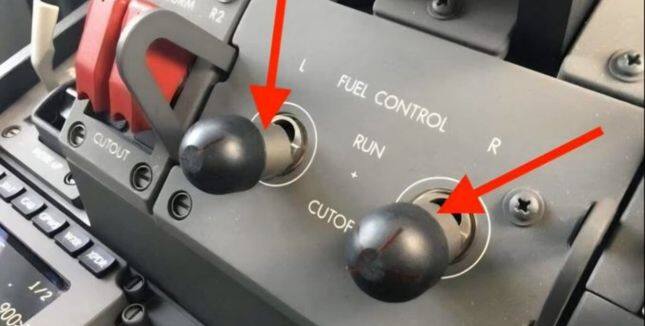
We're not aware whether the subject fuel switches on AI171 were replaced in accordance with an airworthiness bulletin. It wasn't a directive. It wasn't mandatory, but we're not sure whether it was replaced per the directive or the airworthiness bulletin.
In addition, we know that the preliminary report appeared to point the finger at the pilots, which is very concerning. We have said from day one in our investigation that speculation is improper. We need more information; there needs to be a thorough, transparent investigation so that the families can have the answers they deserve.
Firstpost: While aviation experts point to 787 fuel switches, saying they are designed to prevent inadvertent movement, there have been concerns about the locking mechanism. How do you view these apprehensions?
Andrews: We know, based on an airworthiness bulletin that was issued by the FAA and Boeing, the switch design initially had problems. It had issues staying in the run position and could inadvertently transition into cut-off. This tells us they were aware of a problem years before this crash, and, based on their own documents, there's an issue there. Now, whether that played a role in this crash remains to be seen.
Firstpost: Boeing whistleblowers have raised and spoken about design flaws. Boeing has assured that its planes have safety mechanisms. How do you read such contrasting narratives?
Andrews: Primarily, information that comes from Boeing or other manufacturers is by nature self-serving and is going to be put out to support their product and their narrative. What we know from whistleblowers and from experience in other crashes is that Boeing aircraft sometimes suffer quality problems.
For example, the 737 MAX cases were widely reported in the media. Whistleblowers have raised concerns about quality, management, design, and control issues with Boeing aircraft. Hence, our concern is whether or not the same culture that led to the 737 failures may have spilled over to the AI171.
Firstpost: You represented the victims’ families in the 2019 Ethiopian Airlines 737 MAX crash, a case that led Boeing to acknowledge issues with the aircraft. Given your experience, take us through the details of the AI171 crash and how it compares with earlier crashes in terms of similarities and differences.
Andrews: I think the most stark and immediate comparison between those two crashes is the immediate rush to blame the pilots rather than waiting for a thorough and sifting investigation to determine the technical problems.
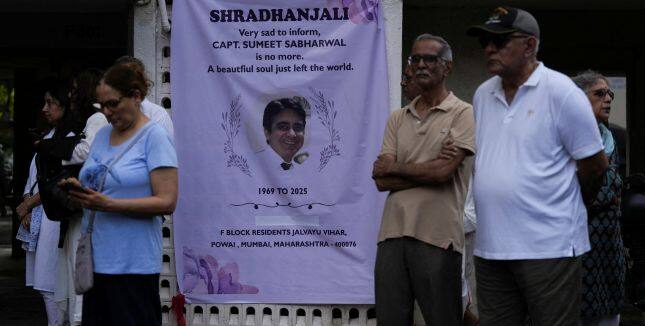
The rush to blame the pilots in the 737 crash was immediate, and there had been a prior crash just a few months before that. The very same thing happened, and so in AI171, we see an immediate rush to blame the pilots without releasing the information. On board AI171, there are at least two recording systems. One is the cockpit voice recorder, and the other is the flight data recorder, both installed to provide an objective record of what has happened.
These systems record everything that's happening during the crash; therefore, we have called for the release of that data from the very beginning.
We know that during our last trip in India in December, AAIB investigators were travelling to Washington to meet with the NTSB to go through that data yet again, and our question has been, if the pilot intent or the pilot error narrative is correct, then why are they still searching for answers by going through the data? That leads us to believe they are unsure and not convinced it is a pilot fault.
Firstpost: How do you assess AAIB's investigation so far? Several commentators also raised questions when the preliminary report was released. How do you view the reactions to it?
Andrews: I think the reactions to the report are all very well-founded and appropriate. I think that in a case where you've got this magnitude of loss of life, certainly in aviation, which affects everyone, the families as well as the flying public deserve the truth. And a rushed report that blames the pilots for a decontextualised conversation without providing all the information is inappropriate.
We have called upon the AAIB and Air India to release the data so that we know what happened and our investigators can review it. We can conduct an independent analysis by experts who have made this their entire career.
Firstpost: You have made multiple trips to Ahmedabad and also visited the crash site. You met the families of the victims. Why was it important for you to do that, and what did you gather from those visits?
Andrews: It's very important. Each of these families has a personal connection and loss to this crash. We treat each family individually with respect. It's important to sit down with them face-to-face because we were meeting with families who wanted to talk to us.
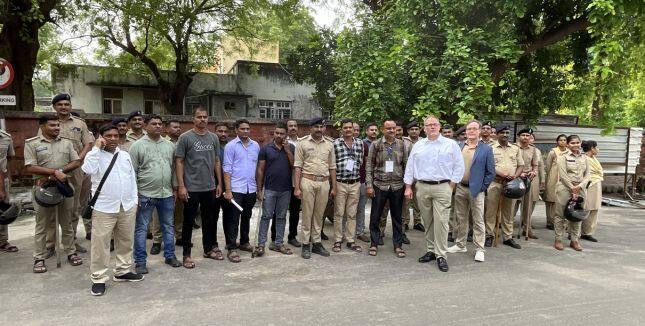
It's important for us to go to the crash site so we can get a clear, firsthand sense of what families experienced there. Not only did we go to the crash site initially, but we were also there for a candlelight vigil with the families to honour and respect those who lost their lives. We have additional trips planned to come back and sit down with families to update them on the process.
We have been very concerned about reports of releases provided to victims' families, encouraging them to sign and give up their rights. That is inappropriate. There have been releases provided to victims' families, offering them a very small amount of compensation in exchange for giving up their rights, with the promise that they will not sue or seek accountability. That's wrong, particularly given that this investigation is ongoing and no final report has been released yet.
So again, it's important for us to continue working with the families to help them understand their rights. It is very much a process that requires patience.

US set to sign Saudi nuclear deal; Rubio says pact won't fuel proliferation
India-US trade deal 'almost complete', says US after Jaishankar-Rubio talks in Manila
Marco Rubio says he 'would expect India to be concerned' over Trump's pharma tariffs
Trump renews China election interference claims, but files point to Russia's larger role
'See me after class!': UK education secretary Lucy Powell mocked by Tories over grammar gaffe