


‘FAA, Boeing knew fuel switch issues’: Lawyer representing AI171 crash victims questions pilot error narrative
It’s been eight months since Air India's Boeing 787 Dreamliner plane crashed in Ahmedabad, killing 260 people. As the Aircraft Accident Investigation Bureau (AAIB) continues its probe, senior aviation attorney Mike Andrews of the US law firm Beasley Allen, representing the families of over 100 crash victims, pushes back against the pilot error narrative in an exclusive interview with Firstpost’s Shiksha Dev

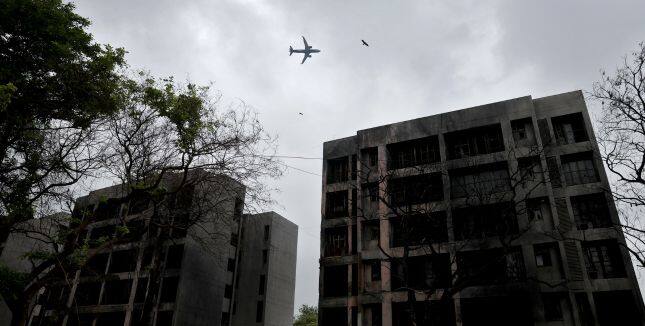
At 32 seconds, it was one of the shortest flights in history. Its take-off marked a turning point in the aviation industry worldwide, and, since then, what was once considered routine has never quite felt the same as every take-off now carries the weight of June 12, 2025.
The focus remains on the Air India 171 787 Dreamliner crash, one of the deadliest aviation disasters in India's history, and the first fatal crash of a Boeing 787 Dreamliner.
Eight months ago, a Boeing 787-8 Dreamliner carrying 230 passengers and 12 crew members took off from Sardar Vallabhbhai Patel Airport in Ahmedabad for London's Gatwick Airport. And, 32 seconds after take-off, the airplane crashed and everyone on board except one died.
 More from World
The families of the Air India crash victims, including the captain, the cabin crew, passengers and those in the building on which the Boeing 787 Dreamliner crash-landed, have been demanding justice. They seek a transparent probe that finds out the truth, without shielding reputations and passing blame.
India's Aircraft Accident Investigation Bureau (AAIB) is investigating the mishap. The final report is pending, while its preliminary report generated more questions than answers.
Senior aviation attorney Mike Andrews of the US law firm Beasley Allen is representing the case of families of over 100 victims of the London-bound plane.
More than 100 families have engaged with the Beasley Allen law firm. The firm has filed a Freedom of Information Act (FOIA) request in the United States on behalf of victims' families, and is conducting an investigation for filing a lawsuit.
In an interview with Firstpost, Andrews expressed his concern that there is a "hasty rush" to pin blame on the dead pilots.
He asserted that concerns persist over the Boeing 787 Dreamliner’s long-standing fuel switch issue. Andrews demanded a “thorough, transparent investigation” focusing on all technical aspects of the plane, calling it the need of the hour.
Lawyer seeks transparency over speculation
Calling speculation in the tragedy of this magnitude "improper", Andrews emphasised that the probe should prioritise full transparency, not insinuations.
Andrews said, "The preliminary report did appear to point the finger at the pilots, and that's very concerning. We have said from day one that speculation is improper."
Adding, "We need to have more information. There needs to be a thorough, transparent investigation, so that the families can have the answers that they deserve."
Andrews also pointed to the contradictory reports surrounding the investigation and its status, which, he said, "make it difficult for families to fathom the current status of the crash probe in India".
"On a daily-basis we hear conflicting reports about the process. At times, we hear that the report is nearing completion. Other times we hear responses that say no, this is very active and ongoing..." Andrews said.
‘Rush to blame pilots’
Andrews asserted the focus on how "rushing to blame pilots" undermines the integrity of the probe process, diverting attention away from possible cascading technical failures.
"Highly de-contextualised snippets of pilots' conversation in the preliminary report, such as 'why did you cut off?, I did not' were presented in a way that appeared to assign blame to the pilot," he said.
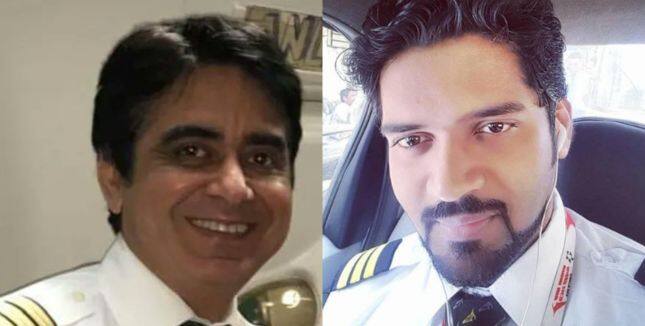
Andrews, who also represented Boeing 737 Max Ethiopian Airlines crash victims in 2019, noted that the most striking similarity between the Ethiopian and AI171 crash was the immediate tendency to blame the pilots rather than waiting for a thorough probe to determine whether there were potential electrical failures.
“The most stark and immediate comparison between those two crashes is the immediate rush to blame the pilots instead of waiting for a thorough and sifting investigation to determine what technical problems there may be,” the lawyer told Firstpost.
What's the controversy around Boeing 787 Dreamliner fuel switches?
The two words that dominated the headlines since the release of the preliminary report were "fuel switches". The media maelstrom covering the crash headlined “fuel switches” multiple times. It, however, remains unclear whether the fuel was actually cut off or something else happened to them.
Andrews referred to the FAA's 2018 airworthiness bulletin, which flagged the possibility of potential, inadvertent disengagement of the locking mechanism on Boeing fuel control switches across multiple models, including the 787-8, 787-9, and 787-10.
"In 2018, Boeing and the FAA were aware of problems with these fuel switches. Based on an airworthiness bulletin that was issued by the FAA and Boeing that the switch design initially had problems," he asserted, "it did have issues with remaining in the run position and could inadvertently transition to cut off. That tells us that they were aware of a problem years before this crash."
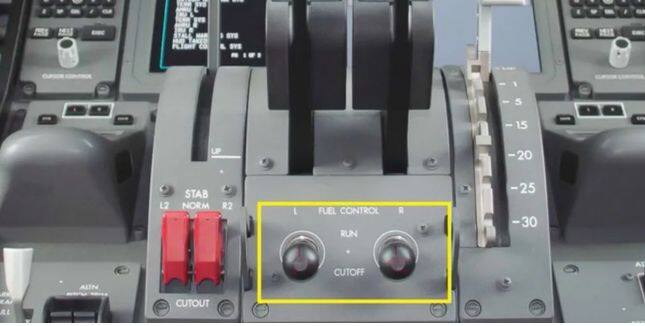
As for the other possible system failure, Andrews said, a malfunction in the Thrust Control Malfunction Accommodation (TCMA) could also have contributed to the devastating Dreamliner crash.
The TCMA is a decision-making system that determines whether the aircraft is on the ground or in the air. Then there is the Full Authority Digital Engine Control (FADEC), which is more like the engine's brain, responsible for controlling how much power the engines produce. At the same time, it helps manage speed and performance.
The TCMA, which detects the aircraft's condition, informs the FADEC, and the FADEC adjusts engine behaviour accordingly. If the TCMA system senses that the aircraft is on the ground, it automatically reduces engine power or throttles back without pilot input.
"The computer system can read erroneous data or can have a malfunction in something that's known as the TCMA, which can make it appear as if those fuel switches have transitioned when in fact they have not," Andrews explained.
AAIB-NTSB meet: 'AAIB is not convinced by the pilot error problem'
India's AAIB made a trip to Washington in December last year to meet NTSB (National Transportation Safety Board) officials. The meeting was convened to review aspects of the crash investigation.
Andrews said the meeting went beyond the pilot error narrative to factors that may be unrelated to the pilot's fault.
"If the pilot intent or the pilot error narrative is correct, then why are they still searching for answers by going through the data? That leads us to believe they are unsure and not convinced that it is a pilot problem," he said.
Attorney meets victims' families in Ahmedabad
When asked about his multiple trips to Ahmedabad and with families of crash victims, Andrews said, "It's very important. Each of these families has a personal connection and loss to this crash. And we treat each family individually with the respect and magnitude of their loss. It's important to sit down with them face-to-face because we were meeting with families who wanted to talk to us."
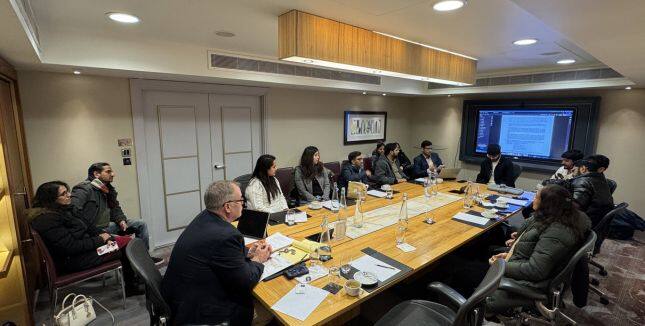
"It's important for us to go to the crash site so we can get a clear, firsthand sense of what families experienced there. We have additional trips planned to India in the future. We want to sit down and talk with families, as we are continually trying to update them on the process," he said.
As the families wait for a closure, they also wait for the final crash probe report to know what exactly led to the loss of 260 lives.

US set to sign Saudi nuclear deal; Rubio says pact won't fuel proliferation
India-US trade deal 'almost complete', says US after Jaishankar-Rubio talks in Manila
Marco Rubio says he 'would expect India to be concerned' over Trump's pharma tariffs
Trump renews China election interference claims, but files point to Russia's larger role
'See me after class!': UK education secretary Lucy Powell mocked by Tories over grammar gaffe