


Water desalination plants produce excess brine that harms the environment says UN
Desalination plants pump out 142 million cubic meters (5 billion cubic feet) of salty brine every day.

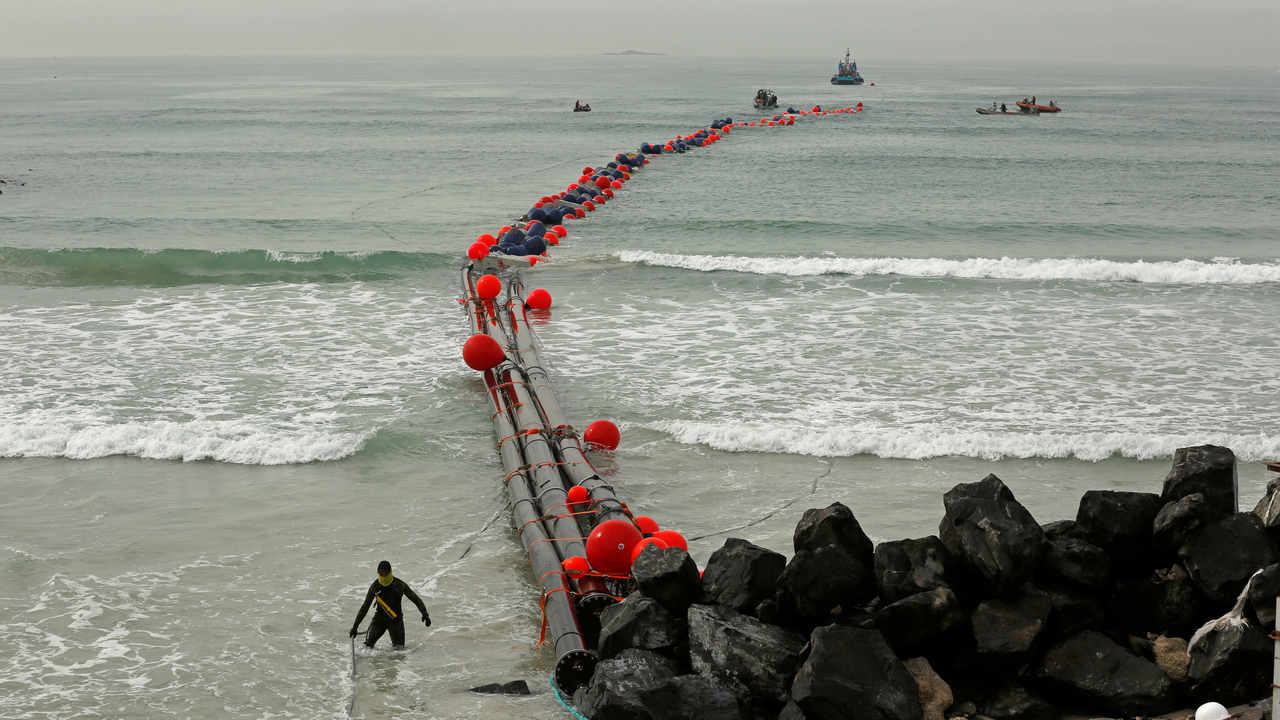
Intake pipes for the desalination plant are pulled ashore near Cape Town. Image: Reuters[/caption]Brine, water comprising about five percent salt, often includes toxins such as chlorine and copper used in desalination, it said. By contrast, global seawater is about 3.5 percent salt.Waste chemicals “accumulate in the environment and can have toxic effects in fish”, said Edward Jones, the lead author at UNU-INWEH who also works at Wageningen University in the Netherlands.Brine can cut levels of oxygen in seawater near desalination plants with “profound impacts” on shellfish, crabs and other creatures on the seabed, leading to “ecological effects observable throughout the food chain”, he said.Vladimir Smakhtin, director of UNU-INWEH, said the study was part of research into how best to secure fresh water for a rising population without harming the environment.Lakes, Rivers“There are all sorts of under-appreciated sources of water,” he said, ranging from fog harvesting to aquifers below the seabed. The study also involved the Gwangju Institute of Science and Technology in South Korea.Brine from desalination plants that tap brackish lakes, aquifers or rivers far inland is harder to treat than brine from coastal plants that can be piped into the seas.Gurpal Toor, a water quality expert at the University of Maryland who was not involved in the study, said brine “could be a serious issue in a small body of water” like an inland lake.Brine can be used inland for irrigating salt-tolerant crops, for fish farming or to produce table salt, he said.Alex Drak, an engineer at IDE Technologies in Israel, a leading water treatment firm, said properly processed brine from coastal plants dissolves quickly in the sea.“We see a lot of marine life, different types of fish, in the vicinity to the discharge point,” said Drak, who was not involved in the UNU study.

Careless Whispers: Scientists discover that plants can 'talk' to each other using smells
Life on Mars? European Space Agency’s Orbiter discovers ice water deposits at equator
Microsoft briefly overtakes Apple as the most valuable company, Apple back on top again
Even NASA is facing a tough time, starts layoffs following major budget cuts
ISRO, NASA's NISAR satellite to get ready by Jan-end, will monitor Earth's snow-covered regions