


Swarm of smaller black holes found in NGC 6397 where lone, massive one was thought to exist
The discovery opens up the possibility of black hole mergers in globular clusters – a potential source of gravitational waves.

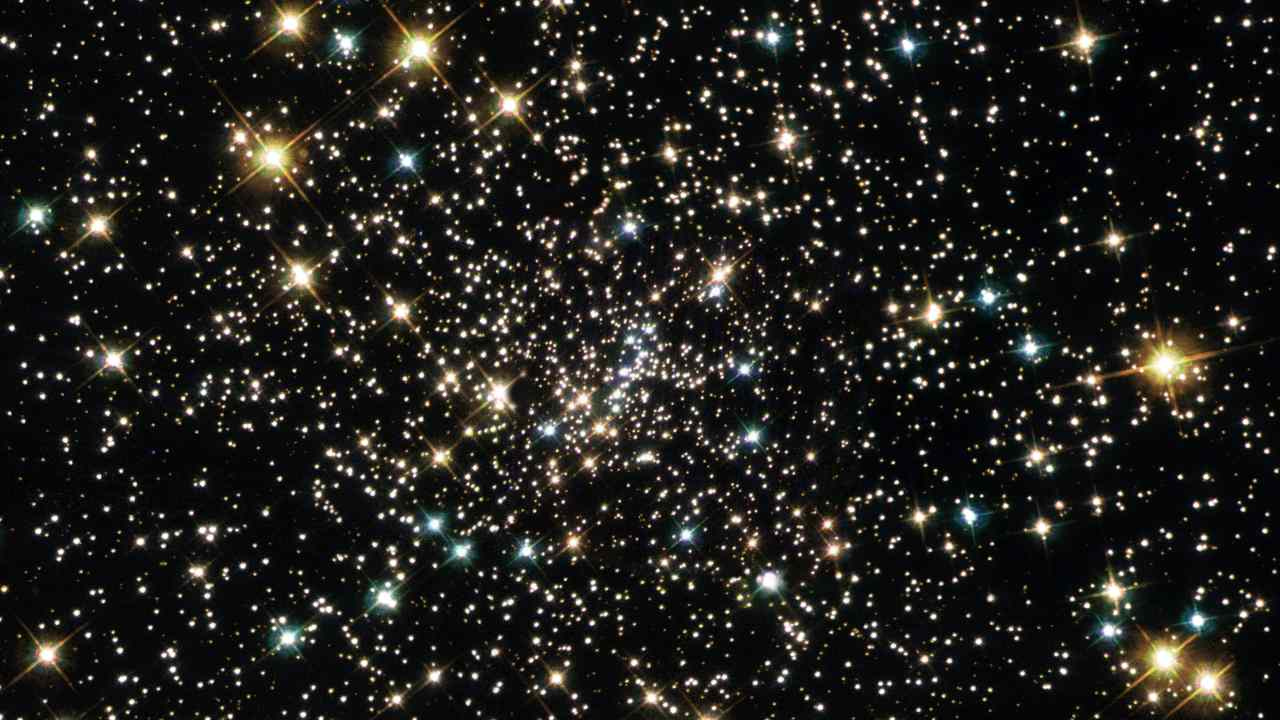
NGC 6397 is a globular cluster in the constellation Ara. The cluster contains around 4,00,000 stars, and can be seen with the naked eye under good observing conditions. Image: NASA[/caption]Vitral and Gary Mamon, also of IAP, used the velocities of stars in the cluster to determine the distribution of its total mass, as well as in faint stars and black holes, to detect the elusive hidden mass. Mamon added that their analysis indicated that the orbits of the stars are close to random throughout the globular cluster, rather than systematically circular or extremely elongated.Researchers concluded that the invisible component can only be made of the remnants of massive stars. They added that the stellar corpses, "progressively sank to the cluster's center after gravitational interactions with nearby less massive stars."Vitral added that theirs is the first study to provide both the mass and the extent of what appears to be a collection of mostly black holes in the center of a core-collapsed globular cluster.Researchers note that the discovery raises the possibility that mergers of these tightly packed holes in globular clusters may be an important source of gravitational waves, ripples through spacetime.

Careless Whispers: Scientists discover that plants can 'talk' to each other using smells
Life on Mars? European Space Agency’s Orbiter discovers ice water deposits at equator
Microsoft briefly overtakes Apple as the most valuable company, Apple back on top again
Even NASA is facing a tough time, starts layoffs following major budget cuts
ISRO, NASA's NISAR satellite to get ready by Jan-end, will monitor Earth's snow-covered regions