


Sun's coronal holes are about to release solar winds towards Earth: How will that affect us?
Coronal holes are dark spots visible on the Sun's surface where the Sun's corona is colder and less dense.

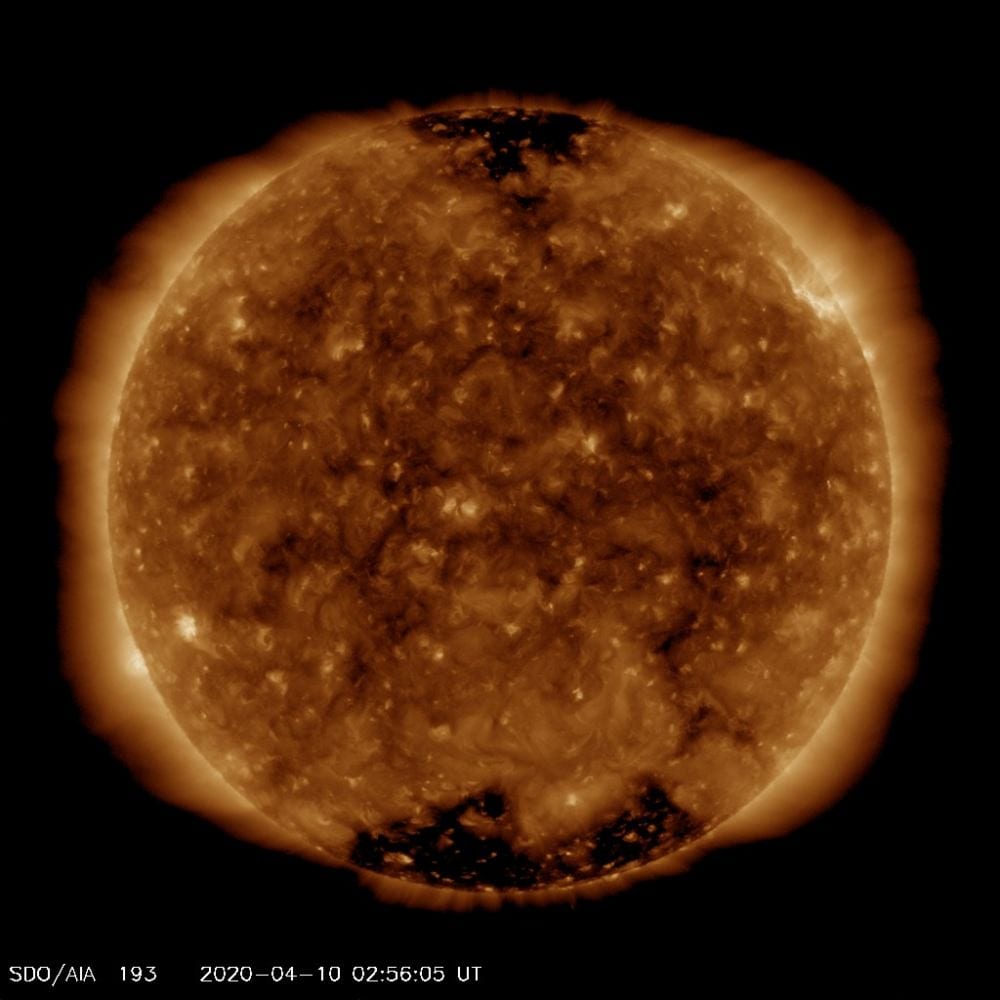
The image shows the outer atmosphere of the Sun - called the corona - as well as hot flare plasma. Hot active regions, solar flares, and coronal mass ejections will appear bright here. The dark areas - called coronal holes - are places where very little radiation is emitted, yet are the main source of solar wind particles. Image credit: NASA/SDO[/caption]NOAA explains that coronal holes are the dark spots that are visible on the surface of the Sun. They are areas where the Sun's corona (read: the outermost part of the Sun's atmosphere) is colder and less dense. These holes are constantly changing and reshaping because the corona is not uniform and is also the area where the solar winds escape.
What are solar winds?
The Sun releases a constant stream of charged particles and magnetic fields called solar winds that travel at the speed of 400 km per second. They wash over all planets and celestial bodies and flood the entire solar system. Usually, the Earth is protected from these winds because of its own magnetic field and its convenient position as the fifth planet in the solar system. This ensures that it is far away that solar winds do not really affect it but close enough to have enough heat from the Sun to sustain all its life forms.However, on rare occasions, these winds can make it past the barrier and have some effects on the electrical equipment on Earth. The solar winds can cause massive space weather storms that disrupt the satellites in space, our communications systems, and power grids.[caption id="attachment_8246121" align="alignnone" width="1280"]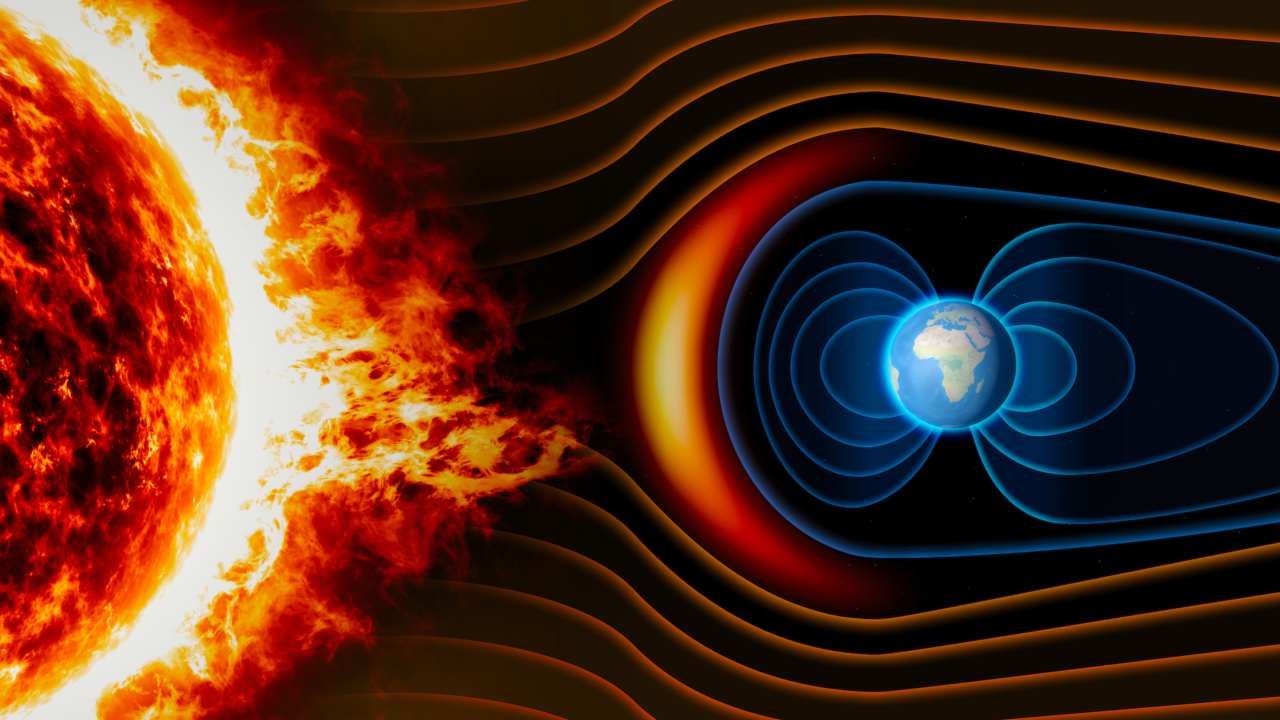
When solar wind collides with Earth's magnetic field. Image courtesy: National Geophysical Data Cantre[/caption]Heard of the aurora borealis? This natural and spectacular phenomenon that takes place on the north and south poles are also caused by the solar winds interacting with the Earth's magnetic field and the oxygen and nitrogen ions trapped in it.The moon does not have a magnetic field and is exposed and absorbs any and all radiation that comes its way. The only protection it has is from small magnetic rocks on its surface that provide the lunar surface with small, localised pockets of protection from these winds. Similar to human beings getting a sunburn from staying outside for too long, the moon also gets a kind of sunburn. Instead of looking splotchy and red like we do, the moon gets swirls on its surface. Scientists also believe that solar winds could be one reason why the moon has water-ice on its surface.
The Solar Dynamics Observatory
The SDO just completed its 10th year in space even though its original mission life was for five years. Throughout its time in space, the SDO has been constantly looking at the Sun to understand space weather and its effects it has on Earth. Its main mission is to help us understand where the Sun's energy comes from, how the inside Sun works, and how is its energy is stored and released. Recently, NASA released the ten things we have learnt from the observatory's data that included solar flares, tornadoes as well as coronal holes and the birth and death of a solar cycle.[caption id="attachment_8246151" align="alignnone" width="1280"]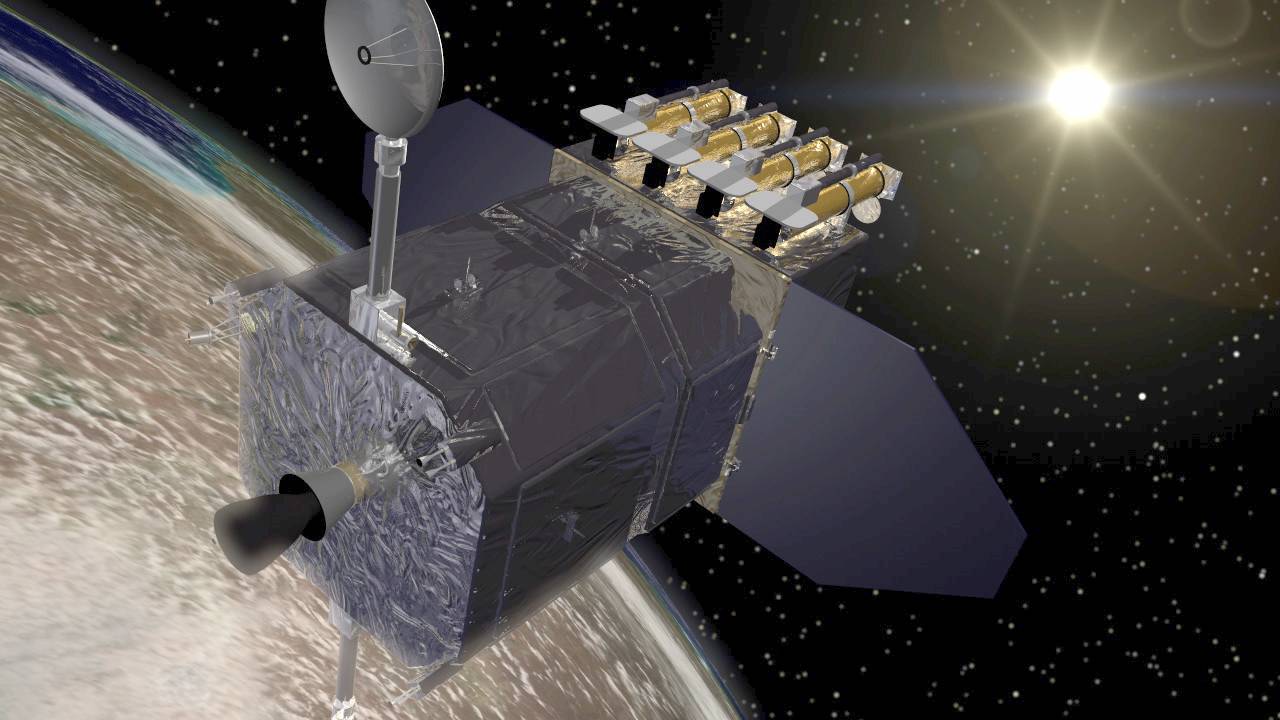
The Solar Dynamics Observatory Satellite studies all aspects of the Sun. Image credit: NASA[/caption]According to NASA, the Sun is a huge ball of electrically-charged hot gas and this gas moves, generating a powerful magnetic field. The Sun's magnetic field goes through a cycle every 11 years which is called the solar cycle.

Careless Whispers: Scientists discover that plants can 'talk' to each other using smells
Life on Mars? European Space Agency’s Orbiter discovers ice water deposits at equator
Microsoft briefly overtakes Apple as the most valuable company, Apple back on top again
Even NASA is facing a tough time, starts layoffs following major budget cuts
ISRO, NASA's NISAR satellite to get ready by Jan-end, will monitor Earth's snow-covered regions