


Solar storm likely to hit Earth today: GPS, internet, satellites may be affected
The flares have been marked at X1 level where X denotes the classification and the number denotes the strength of the flare.

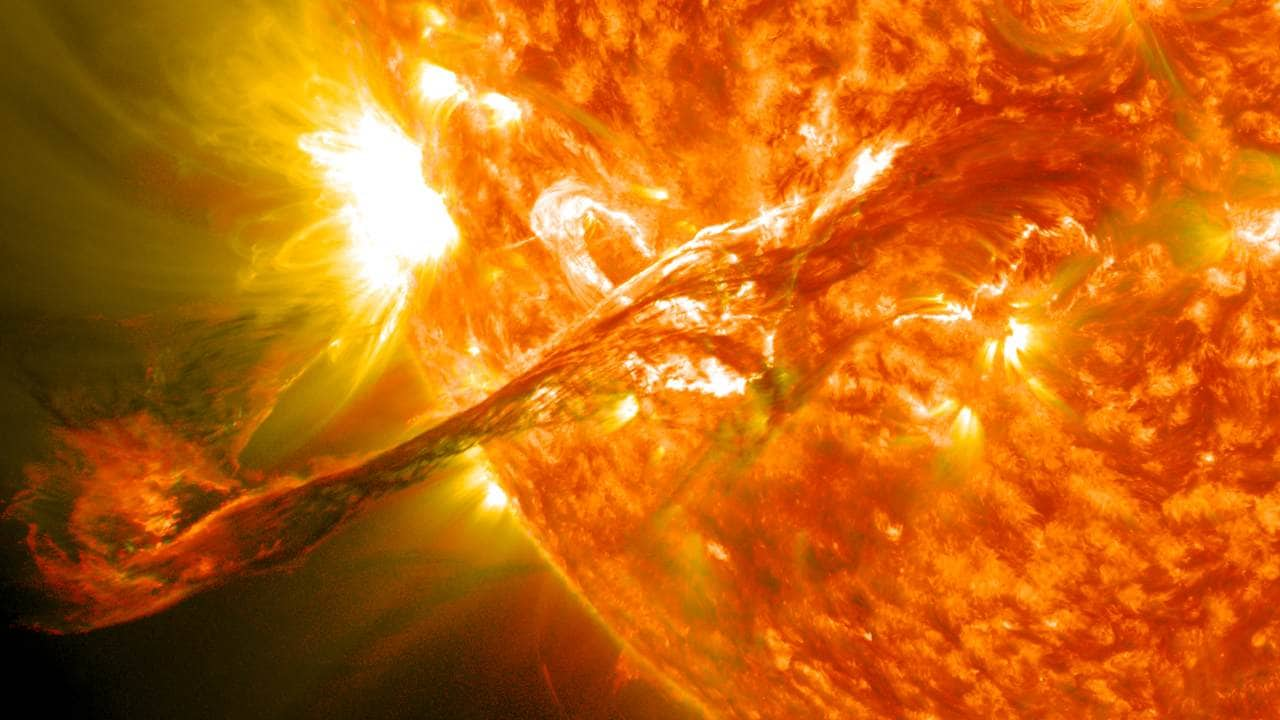
On 31 August 2012, a long prominence/filament of solar material that had been hovering in the Sun's atmosphere, the corona, erupted out into space at 4:36 p.m. EDT. Representational image. Image: Wikimedia Commons[/caption]It is expected that the solar winds may cause a geomagnetic storm in the magnetosphere. The storms which are caused by the efficient exchange of energy when solar winds enter the Earth’s space are called geomagnetic storms. According to a report in Outlook, this minor storm in the magnetosphere might result in auroras in north and south latitudinous regions.The Indian Express reports that the satellites which are in the upper layer of the atmosphere might get affected due to the geomagnetic storm. Technologies including mobile phone signal, satellite TV and GPS navigation may get affected due to the storm. It is likely that power grids might also not be operational due to the solar storm.Quoting the Space Weather Prediction Centre of the United States, the publication reported that high-frequency radio communication might also not be functional for one hour.The solar flares have been marked at X1 level by the Centre wherein X denotes the classification and the number denotes the strength of the flare. The smallest flares are from the A-class. It is followed by B, C, M and X.

Careless Whispers: Scientists discover that plants can 'talk' to each other using smells
Life on Mars? European Space Agency’s Orbiter discovers ice water deposits at equator
Microsoft briefly overtakes Apple as the most valuable company, Apple back on top again
Even NASA is facing a tough time, starts layoffs following major budget cuts
ISRO, NASA's NISAR satellite to get ready by Jan-end, will monitor Earth's snow-covered regions