


Six months after first Ebola case recorded, outbreak in Congo comes to an end
The WHO along with its partners have treated and vaccinated more than 40,000 people at high risk, across dense rainforests and crowded urban areas.

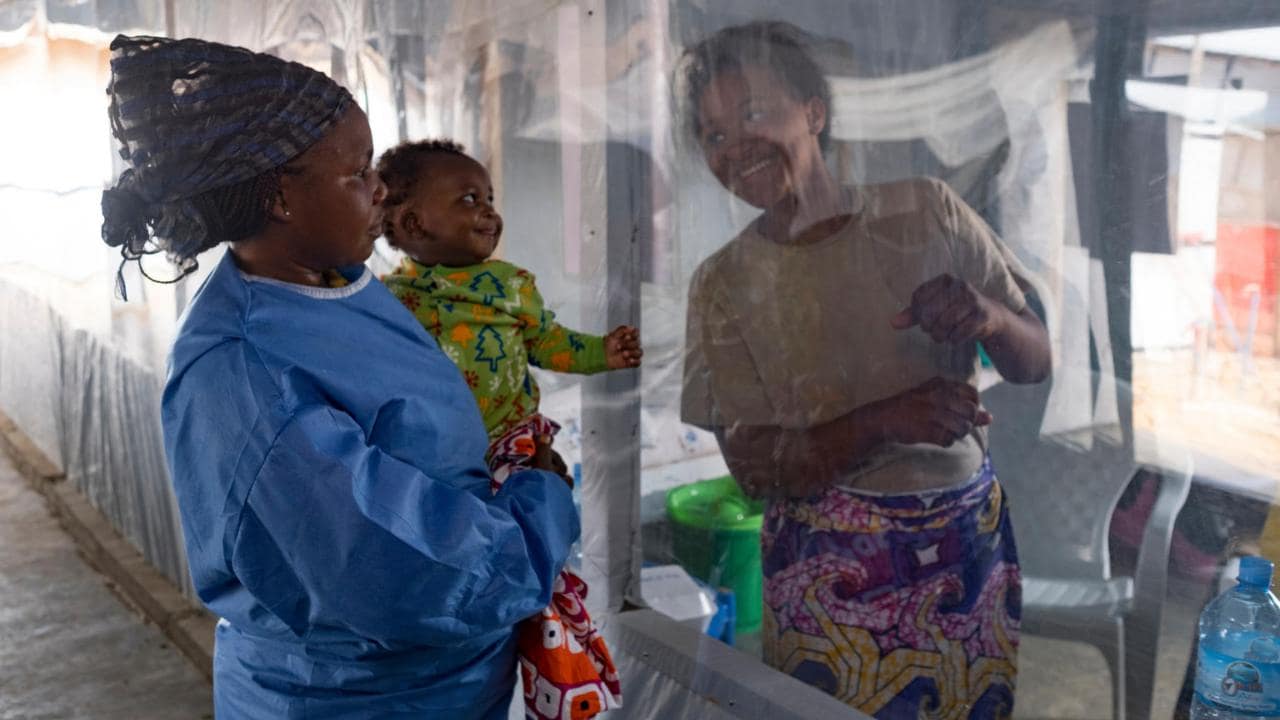
A plastic sheet separates 5 month-old Guerrishon from his mother, Collette, who is a patient at an Ebola Treatment Centre in Beni, North Kivu province. Image credit: UNICEF[/caption]According to UNICEF, Ebola is transmitted from sick or dead people or animals and causes fever, bleeding, weakness, and abdominal pain. The disease has a mortality rate between 50 and 60 percent but can be as high as 78 percent among children under 5."I am happy to solemnly declare the end of the 11th epidemic of the Ebola virus in Equateur province," Health Minister Eteni Longondo told journalists.As during the previous epidemic in the east of the country, the wide use of vaccinations helped curb the disease, the WHO said.The WHO along with its partners have treated and vaccinated more than 40,000 people at high risk, across dense rainforests and crowded urban areas. In its statement, the WHO made a special reference to a "cold chain" vaccine storage technology that is known as "Arktek". The cylinder-shaped “super thermos” can store 500 vaccine doses at -80°C for up to a week with no external power source. According to a report by the New Scientist, this thermos meets the cold temperature requirements of the Merck Ebola vaccine and Pfizer’s new COVID-19 vaccine as well.“Overcoming one of the world’s most dangerous pathogens in remote and hard to access communities demonstrates what is possible when science and solidarity come together,” said Dr Matshidiso Moeti, WHO Regional Director for Africa said in a statement.“The technology used to keep the Ebola vaccine at super-cold temperatures will be helpful when bringing a COVID-19 vaccine to Africa. Tackling Ebola in parallel with COVID-19 hasn’t been easy, but much of the expertise we’ve built in one disease is transferrable to another and underlines the importance of investing in emergency preparedness and building local capacity.”However, "there remains a high risk of a resurgence," the minister said.“Though the outbreak is over, children affected by the Ebola epidemic will still require special attention and care, as communities affected begin to return to normal life,” said Edouard Beigbeder, UNICEF Representative in the DRC.

Careless Whispers: Scientists discover that plants can 'talk' to each other using smells
Life on Mars? European Space Agency’s Orbiter discovers ice water deposits at equator
Microsoft briefly overtakes Apple as the most valuable company, Apple back on top again
Even NASA is facing a tough time, starts layoffs following major budget cuts
ISRO, NASA's NISAR satellite to get ready by Jan-end, will monitor Earth's snow-covered regions