


Seven rocky planets of TRAPPIST-1 might be similar but they aren't the same: Study
They have interest researchers since 2017 when it was discovered that three of the seven planets are located in the theoretical "habitable zone".

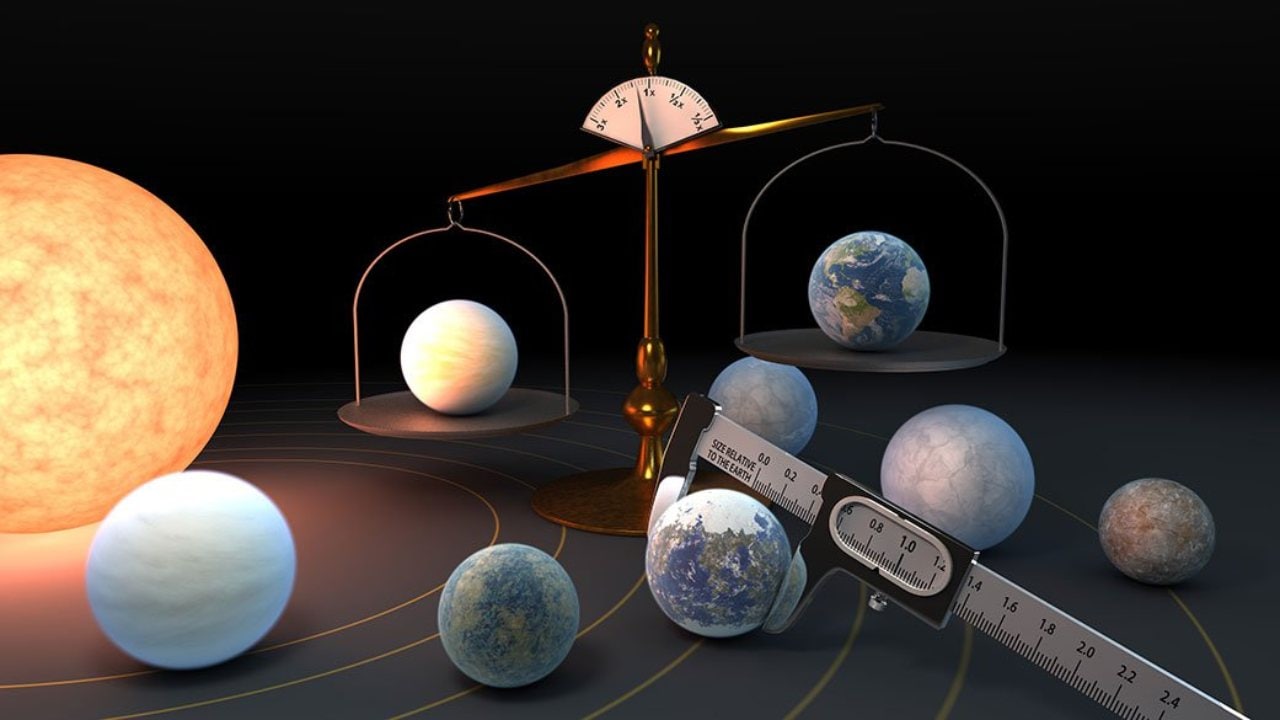
Measuring the mass and diameter of a planet reveals its density, which can give scientists clues about its composition. Scientists now know the density of the seven TRAPPIST-1 planets with a higher precision than any other planets in the universe, other than those in our own solar system. Credit: NASA/JPL-Caltech[/caption]According to the data, if one stands on the surface on one of the planets, they will be able to see some of the neighbouring planets hovering above like we see the Moon.These planets have commanded researchers interests since 2017 when it was discovered that three of the seven planets are located in the theoretical "habitable zone", which is the region where rocky planets are most likely to hold liquid water.Given their similarity with our planet, scientists were hoping for them to have similar densities as well. But the latest study has stated that is not the case. While all of the seven plants do have similar densities to each other (they differ by three percent) and to the Earth, (they differ by eight percent) it is expected that they were also made up of materials that compose most rocky planets such as iron, oxygen, magnesium, and silicon. And here lies the problem. If they were indeed made up of similar components as that of Earth, they would have been a fraction less dense.NASA says “TRAPPIST-1 planets are about eight percent less dense than they would be if they had the same makeup as our home planet”. This has led scientists to believe that there are other components and different mixtures of the known components that could have resulted in TRAPPIST-1’s planets’ density.The study was published in the Planetary Science Journal on 22 January.

Careless Whispers: Scientists discover that plants can 'talk' to each other using smells
Life on Mars? European Space Agency’s Orbiter discovers ice water deposits at equator
Microsoft briefly overtakes Apple as the most valuable company, Apple back on top again
Even NASA is facing a tough time, starts layoffs following major budget cuts
ISRO, NASA's NISAR satellite to get ready by Jan-end, will monitor Earth's snow-covered regions