


Seven billion-year-old stardust, older than our solar system, unearthed from meteorite
The grains of sand is about 2.5 billion years before the Sun, Earth and rest of our solar system were formed.

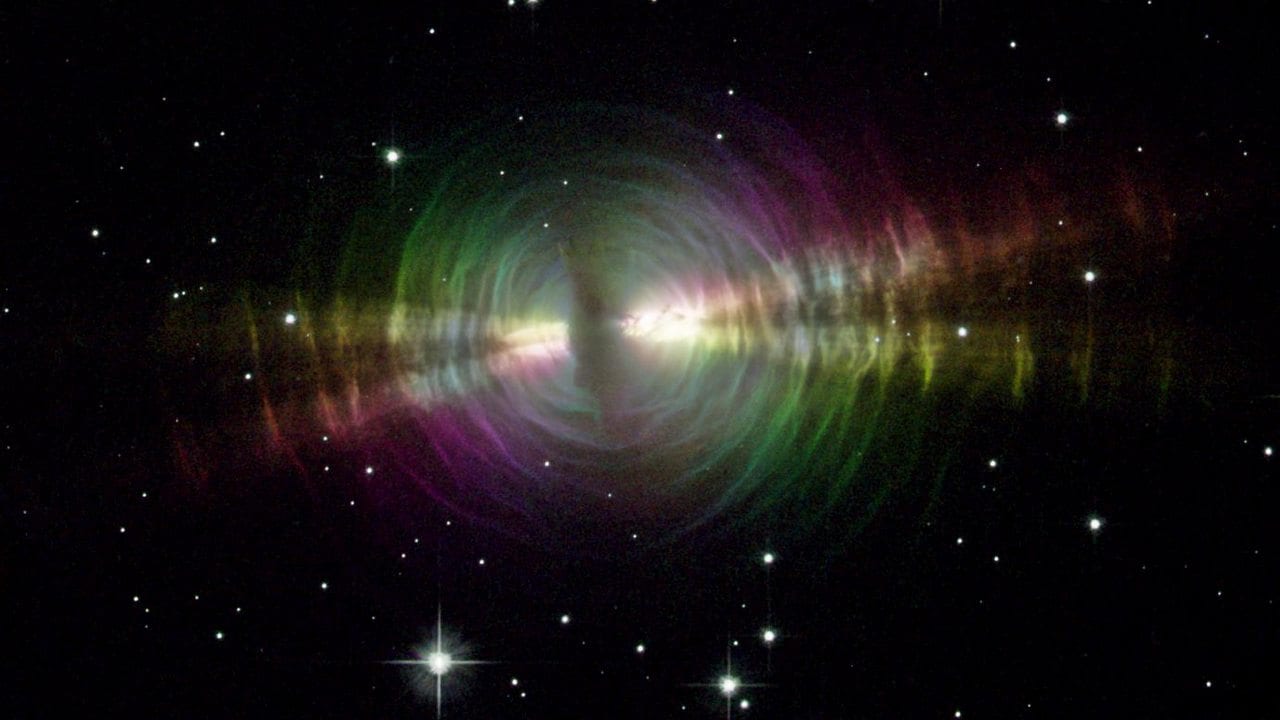
Dust-rich outflows of evolved stars similar to the pictured Egg Nebula are plausible sources of the large grains discovered in fallen Australian meteorites, thought to be the oldest known to date.
Image credit: NASA/ESA and The Hubble Heritage Team STScI/AURA[/caption]The stardust represented time capsules dating to before the solar system. The age distribution of the dust — many of the grains were concentrated at particular time intervals — provided clues about the rate of star formation in the Milky Way galaxy, the researchers said, hinting at bursts of stellar births rather than a constant rate."I find this extremely exciting," said Philipp Heck, an associate curator at the Field Museum in Chicago who led the research published in the scientific journal Proceedings of the National Academy of Sciences."Despite having worked on the Murchison meteorite and presolar grains for almost 20 years, I still am fascinated that we can study the history of our galaxy with a rock," Heck added.The grains are small, measuring from two to 30 micrometres in size. A micrometre is a one-thousandth of a millimetre or about 0.000039 of an inch.Stardust forms in the material ejected from stars and carried by stellar winds, getting blown into interstellar space. During the solar system's birth, this dust was incorporated into everything that formed including the planets and the sun but survived intact until now only in asteroids and comets.The researchers detected the tiny grains inside the meteorite by crushing fragments of the rock and then segregating the component parts in a paste they described as smelling like rotten peanut butter.[caption id="attachment_7903501" align="alignnone" width="1280"]
Scientists took electron microscope photos to be able to see the grains—this one is eight microns across, about the size of a single red blood cell.
Image credit: Janaína N. Ávila[/caption]Scientists have developed a method to determine stardust's age. Dust grains floating through space get bombarded by high-energy particles called cosmic rays. These rays break down atoms in the grain into fragments, such as carbon into helium.These fragments accumulate over time and their production rate is rather constant. The longer the exposure time to cosmic rays, the more fragments accumulate. The researchers counted these fragments in the laboratory, enabling them to calculate the stardust's age.Scientists previously had found a presolar grain in the Murchison meteorite that was about 5.5 billion years old, until now the oldest-known solid material on Earth. The oldest-known minerals that formed on Earth are found in rock from Australia's Jack Hills that formed 4.4 billion years ago, 100 million years after the planet formed.

Careless Whispers: Scientists discover that plants can 'talk' to each other using smells
Life on Mars? European Space Agency’s Orbiter discovers ice water deposits at equator
Microsoft briefly overtakes Apple as the most valuable company, Apple back on top again
Even NASA is facing a tough time, starts layoffs following major budget cuts
ISRO, NASA's NISAR satellite to get ready by Jan-end, will monitor Earth's snow-covered regions