


Scientists use New Horizon to find number of galaxies from glow of the universe
The ‘leftover glow’ is coming from some dwarf galaxies that are present in the nearby universe “just beyond detectability”

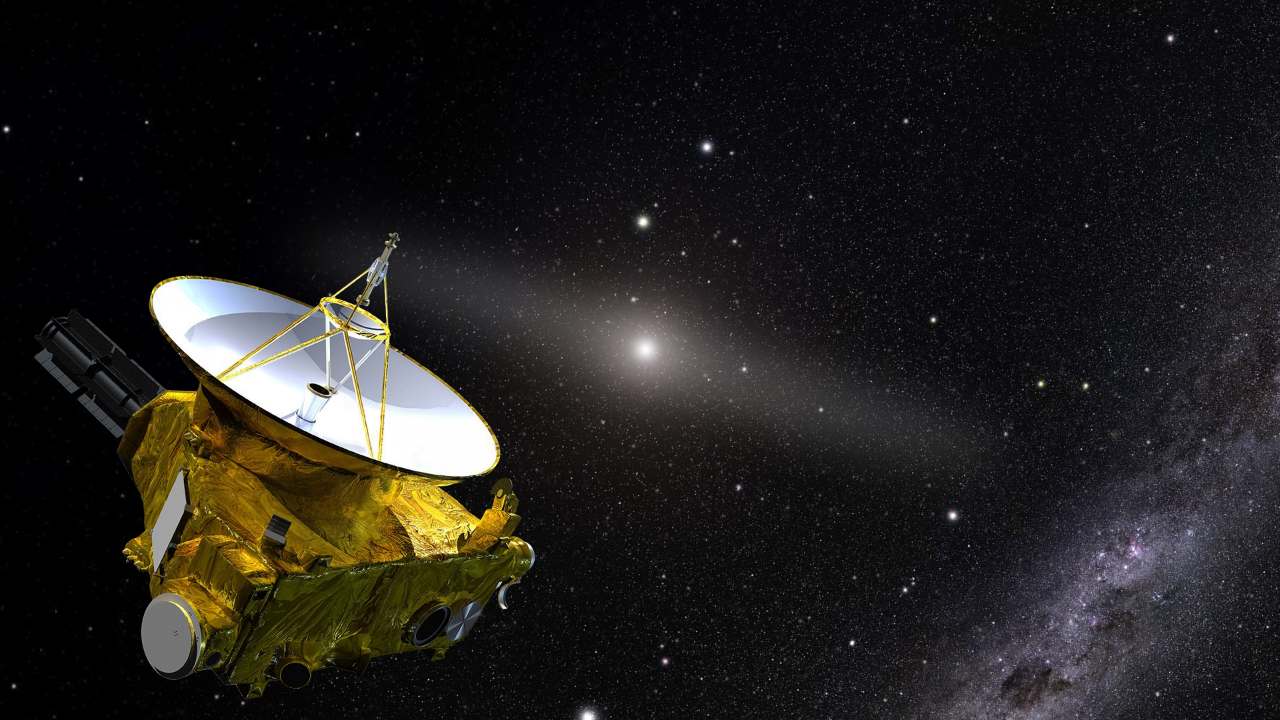
This artist’s illustration shows NASA’s New Horizons spacecraft in the outer solar system. In the background lies the Sun and a glowing band representing zodiacal light, caused by sunlight reflecting off of dust.
Credits: Joe Olmsted/STScI[/caption]According to NASA, while theoretical assumptions signalled at the number being two trillion, there are only about hundreds of billions of galaxies in the universe that are actually responsible for the glow. The earlier estimates were calculated using the very deep-sky observations by NASA’s Hubble Space Telescope and the team concluded that 90 percent of the galaxies in the universe were beyond Hubble’s ability to detect in visible light. The new findings used measurement from the New Horizons mission and show a much smaller number.The reason Hubble wasn't able to make an accurate calculation, NASA thinks is because it only orbits around the Earth and even though it is in space, it faces something called 'Light Pollution' which is caused by the multitudes of tiny particles that originate from disintegrated asteroids and comets which reflect sunlight "creating a glow called the zodiacal light that can be observed even by skywatchers on the ground."Using the New Horizon spacecraft was ideal since it is past the inner solar system and doesn't face the same issues Hubble does. It is more capable to provide much more accurate measurements. According to a NASA statement, itis more than four billion miles away when these observations were taken and experience an ambient sky 10 times darker than the darkest sky accessible to Hubble.Tod Lauer of NSF’s NOIRLab, a lead author on the study, said New Horizons provided them with a “vantage point to measure the cosmic optical background better than anyone has been able to do it.”The team is now dealing with the explanation of a ‘leftover glow’ and they opine that it is coming from some dwarf galaxies that are present in the nearby universe “just beyond detectability”. Another possibility is the diffusion of halos of stars that surround galaxies which are/ might be brighter than expected.The results of the latest study were disclosed at the 237th meeting of the American Astronomical Society on 13 January.

Careless Whispers: Scientists discover that plants can 'talk' to each other using smells
Life on Mars? European Space Agency’s Orbiter discovers ice water deposits at equator
Microsoft briefly overtakes Apple as the most valuable company, Apple back on top again
Even NASA is facing a tough time, starts layoffs following major budget cuts
ISRO, NASA's NISAR satellite to get ready by Jan-end, will monitor Earth's snow-covered regions