
Advertisement


Sections
Rocket Lab is set to launch 10 small research satellites or CubeSats for NASA
Owing to bad weather, Rocket Lab was forced to postpone the earlier decided launch on December 12.

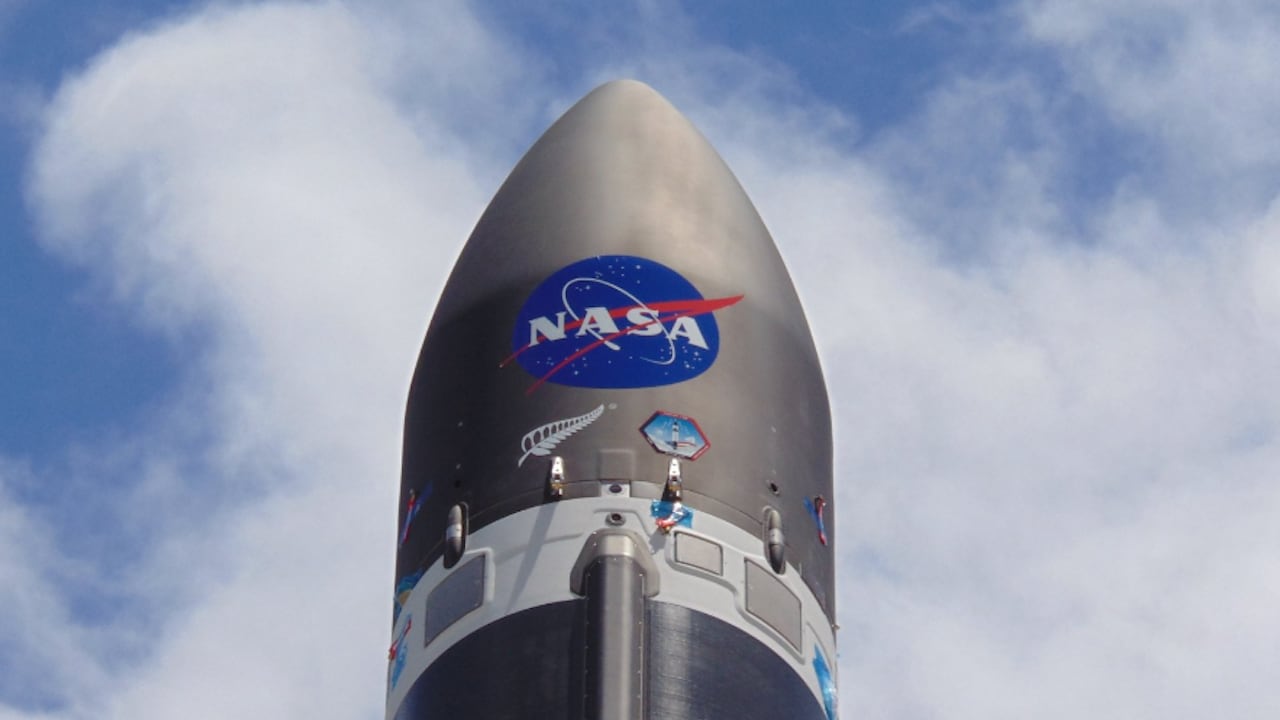
In its first mission for NASA, the American aerospace manufacturer Rocket Lab is set to launch 10 small research satellites, or CubeSats, from New Zealand, the US space agency said.Owing to bad weather, Rocket Lab was forced to postpone the earlier decided launch on December 12.Rocket Lab is now targeting the ELaNa-19 launch on December 15 with a launch window opening at 11 p.m. EST from the company's launch complex on the Mahia Peninsula in New Zealand, NASA said in a statement on Friday.The CubeSats were built by three NASA centres, seven universities, and a middle school under the NASA's Educational Launch of Nanosatellites, or (ELaNa-19) mission.ElaNa-19 is NASA's first to be completely dedicated to launching CubeSats under the agency's Venture Class Launch Services program for small-satellite launches.[caption id="attachment_5736261" align="alignnone" width="1280"]![Rocket Labs is launching CubeSats for NASA. Image: RocketLabs]() Rocket Labs is launching CubeSats for NASA. Image: RocketLabs[/caption]More than 250 students have been involved in the design, development and construction of the CubeSats scheduled to be flown as payloads on Rocket Lab's Electron rocket."The major difference between today's launch and previous #ELaNa missions is that for the first time, NASA will have a launch completely dedicated to CubeSats rather than having the small satellites ride along with a much larger spacecraft that is the primary mission," NASA Launch Services Program officials wrote on Twitter on December 12.The 10 CubeSats are named as CubeSail, CeREs, NMTSat, CHOMPTT, ALBus, STF-1, ISX, RSat, Shields-1 and DaVinci, NASA said.These are built to standard dimensions of one unit (1U), and can be 1U, 2U, 3U or 6U in size. They generally weigh less than 1.33 kg per U - 6U may be up to 12 kg.They will be placed in RailPODs aboard the Electron rocket that will ferry them to space.After the main payload deploys, the CubeSats will separate from their RailPODs. After 45 minutes in orbit, the CubeSat transmitters will turn on and university ground stations will listen for their beacons, determine their small satellites' functionality and announce operational status.CubeSat mission durations and orbital life vary but are anticipated to last at least three years. Upon mission completion, the CubeSats fall to Earth, burning up in the atmosphere, NASA noted.
Rocket Labs is launching CubeSats for NASA. Image: RocketLabs[/caption]More than 250 students have been involved in the design, development and construction of the CubeSats scheduled to be flown as payloads on Rocket Lab's Electron rocket."The major difference between today's launch and previous #ELaNa missions is that for the first time, NASA will have a launch completely dedicated to CubeSats rather than having the small satellites ride along with a much larger spacecraft that is the primary mission," NASA Launch Services Program officials wrote on Twitter on December 12.The 10 CubeSats are named as CubeSail, CeREs, NMTSat, CHOMPTT, ALBus, STF-1, ISX, RSat, Shields-1 and DaVinci, NASA said.These are built to standard dimensions of one unit (1U), and can be 1U, 2U, 3U or 6U in size. They generally weigh less than 1.33 kg per U - 6U may be up to 12 kg.They will be placed in RailPODs aboard the Electron rocket that will ferry them to space.After the main payload deploys, the CubeSats will separate from their RailPODs. After 45 minutes in orbit, the CubeSat transmitters will turn on and university ground stations will listen for their beacons, determine their small satellites' functionality and announce operational status.CubeSat mission durations and orbital life vary but are anticipated to last at least three years. Upon mission completion, the CubeSats fall to Earth, burning up in the atmosphere, NASA noted.
 Rocket Labs is launching CubeSats for NASA. Image: RocketLabs[/caption]More than 250 students have been involved in the design, development and construction of the CubeSats scheduled to be flown as payloads on Rocket Lab's Electron rocket."The major difference between today's launch and previous #ELaNa missions is that for the first time, NASA will have a launch completely dedicated to CubeSats rather than having the small satellites ride along with a much larger spacecraft that is the primary mission," NASA Launch Services Program officials wrote on Twitter on December 12.The 10 CubeSats are named as CubeSail, CeREs, NMTSat, CHOMPTT, ALBus, STF-1, ISX, RSat, Shields-1 and DaVinci, NASA said.These are built to standard dimensions of one unit (1U), and can be 1U, 2U, 3U or 6U in size. They generally weigh less than 1.33 kg per U - 6U may be up to 12 kg.They will be placed in RailPODs aboard the Electron rocket that will ferry them to space.After the main payload deploys, the CubeSats will separate from their RailPODs. After 45 minutes in orbit, the CubeSat transmitters will turn on and university ground stations will listen for their beacons, determine their small satellites' functionality and announce operational status.CubeSat mission durations and orbital life vary but are anticipated to last at least three years. Upon mission completion, the CubeSats fall to Earth, burning up in the atmosphere, NASA noted.
First Published:Dec 15, 2018, 17:04:08 IST
Advertisement
Advertisement

Careless Whispers: Scientists discover that plants can 'talk' to each other using smells
Japanese scientists have recorded a video that shows plants, in certain conditions, communicate with each other using mists that carry smells. The discovery, reveals that plants release a fine mist of airborne compounds, to warn nearby plants of potential dangers
Life on Mars? European Space Agency’s Orbiter discovers ice water deposits at equator
European Space Agency's Mars Express Orbiter has identified massive ice and ice water deposits beneath the surface of Mars. The Mars Express orbiter was also the first to confirmed the presence of ice on Mars in 2004
Microsoft briefly overtakes Apple as the most valuable company, Apple back on top again
At its peak during the session, Microsoft's value reached $2.903 trillion, with a 2% surge. As of writing this article, Apple closed at $2.89 trillion, whereas Microsoft closed at $2.86 trillion
Even NASA is facing a tough time, starts layoffs following major budget cuts
NASA is facing some massive budget cuts, because of which, it has been forced to postpone some upcoming missions. NASA's Jet Propulsion Laboratory has been hit hard by recent federal budget cuts, resulting in the layoff of 100 contractors last week
ISRO, NASA's NISAR satellite to get ready by Jan-end, will monitor Earth's snow-covered regions
The NISAR satellite which has been developed jointly ISRO and NASA, should be ready for launch by the end of January 2024. The collaboration between NASA and ISRO on NISAR is the first time the two agencies have cooperated on hardware development for an Earth-observing mission
Advertisement
Advertisement