


Rising sea levels serious threat to Asian cities, may put 15 mn people at risk by 2030: Greenpeace report
The report focuses on seven cities which are - Bangkok, Hong Kong, Tokyo, Jakarta, Seoul, Taipei and Manila.


People walk along a flooded highway in
Bangbuathong area, Nonthaburi province,
on the northern outskirts of Bangkok.
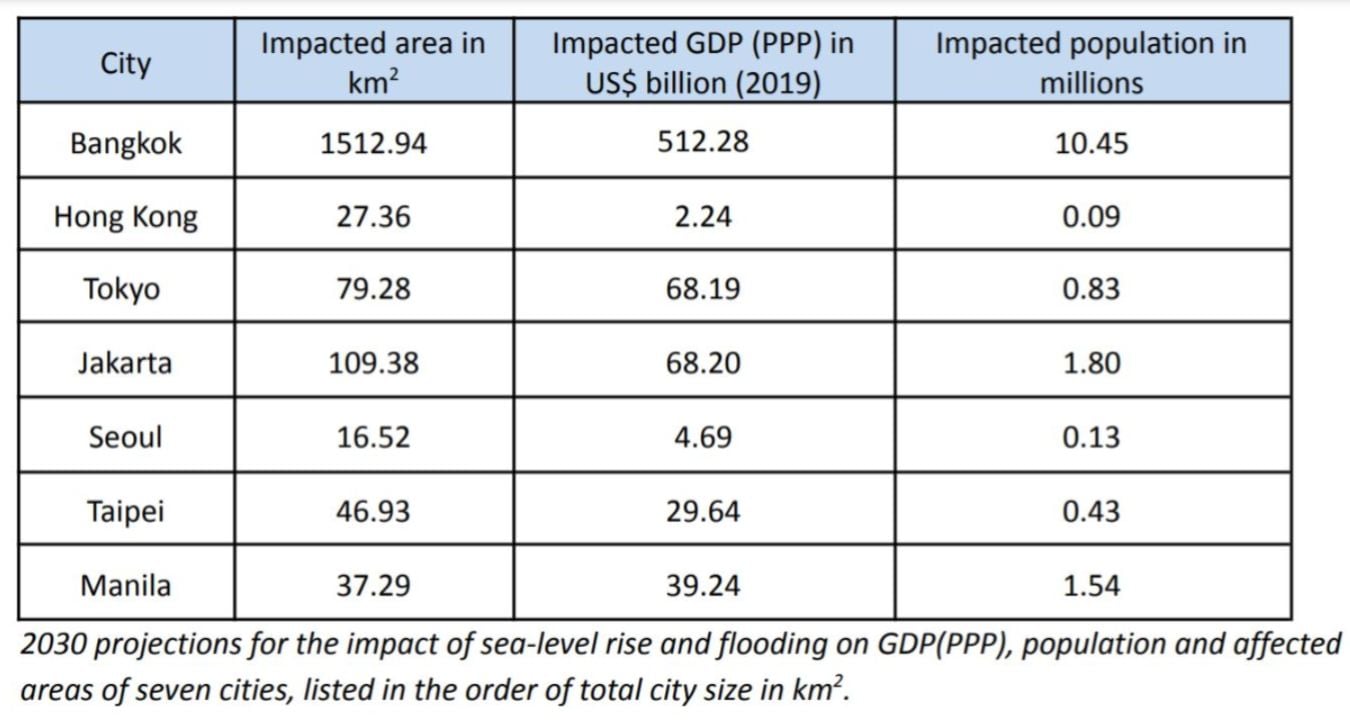 2030 predictions for sea level rise. Image credit: Greenpeace[/caption]The main findings from the report:
- If a 10-year flood occurs in 2030, more than 96 percent of Bangkok's land area might be flooded, including high-density residential and commercial sectors in the city centre.
- Jakarta is threatened by both rising sea levels and sinking. If a 10-year flood occurs in 2030, over 17 percent of Jakarta's total land area is below the level at which sea-water could reach, posing a US$68 billion GDP risk.
- Eastern Tokyo's low-lying neighbourhoods, including Sumida, Koto, Adachi, Katsushika, and Edogawa Wards (Sumida, Koto, Adachi, Katsushika, and Edogawa), are particularly vulnerable to increasing sea levels. Coastal flooding in Tokyo threatens $68 billion in GDP in 2030 or seven percent of the city's overall GDP.
- The ancient Datong District in Taipei, as well as Taipei Main Station, the most important transport hub in northern Taiwan, are at risk of flooding. It is anticipated that 24 percent of Taipei's overall GDP could be impacted.
- If a 10-year flood occurs in 2030, over 87 percent of Manila's land area is below the level to which sea-water could rise. A total of 1.54 million individuals and US$39 billion could be impacted.
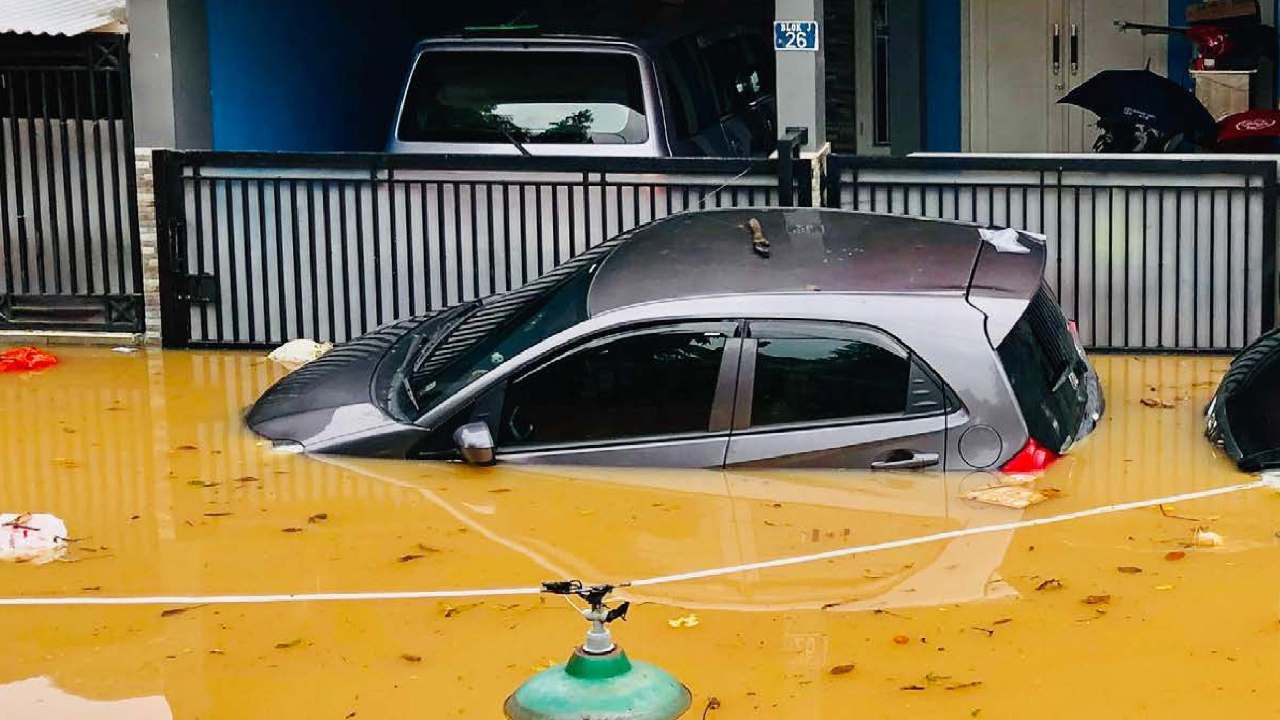 Floods in Jakarta in December 2019.
Image credit: Daviara/Greenpeace[/caption]
Conclusion
The report states that to ensure that these cities do not fall to constant flooding and rising sea levels, it is important for the government and private cooperations alike to stop the funding of fossil fuels in the country and overseas. This will protect the city’s economy and its residents while also working towards decreasing climate change.Greenpeace in their report asks the powers that be to develop a more ambitious "nationally determined contribution5 targets consistent with the Paris Agreement 1.5°C limit ahead of COP26.It is also important that the domestic energy transition is done by investing in clean and renewable energy. Before that, the new coal power plants projects need to be cancelled and those that exist should be phased out, along with nuclear power stations.They also ask that deforestation and conversion of peatlands should be stopped.Another important aspect that needs to be worked on is enabling cities and communities to become more climate-resilient. They can do this by updating their infrastructure to include early warning systems, decentralizing climate information that will allow everyone to plan for harmful climate impacts and strengthening community-based disaster risk reduction and response to climate impacts.Read about the city-specific finding from the report, here.

Careless Whispers: Scientists discover that plants can 'talk' to each other using smells
Life on Mars? European Space Agency’s Orbiter discovers ice water deposits at equator
Microsoft briefly overtakes Apple as the most valuable company, Apple back on top again
Even NASA is facing a tough time, starts layoffs following major budget cuts
ISRO, NASA's NISAR satellite to get ready by Jan-end, will monitor Earth's snow-covered regions