


Poaching may have forced female elephants in Africa to evolve away their tusks
Interestingly, the newfound rise in tuskless elephants is exclusively in females: Experts.

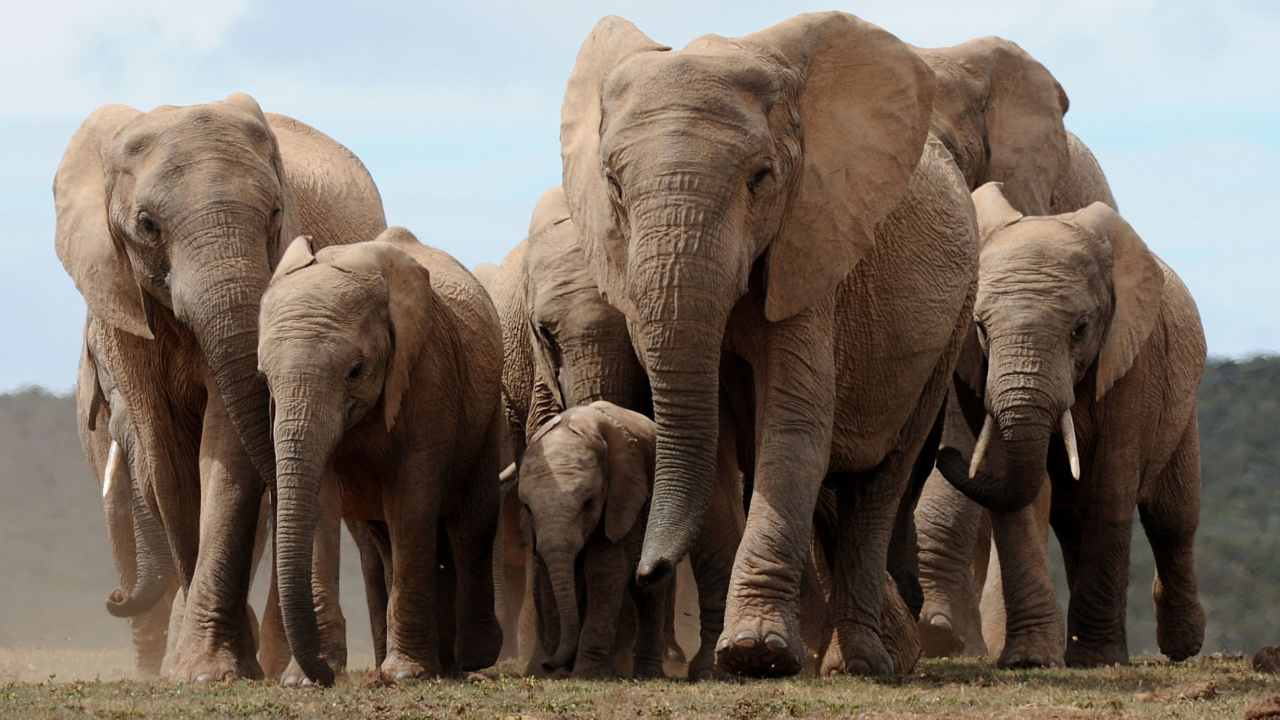
A herd of African elephants, some of which are tuskless, walking in Addo Elephant National Park in 2009. AFP[/caption]Some estimates report that nearly 90 percent of the area’s elephant population was slaughtered over the course of the war. The survivors were largely tuskless elephants, with little or no ivory to give.Now, these tuskless elephants have mated and grown in number in the area’s elephant population.“The prevalence of tusklessness in Addo is truly remarkable and underscores the fact that high levels of poaching pressure can do more than just remove individuals from a population,” says Ryan Long, a behavioral ecologist at the University of Idaho and a National Geographic Explorer.According to evolutionary biologist Shane Campbell-Staton at the University of California-Los Angeles, whose team studies tusklessness, it remains a mystery how the traits were passed on — genetically speaking. The newfound rise in tuskless elephants is exclusively in females since tusks are an important advantage in male mating practices.

Careless Whispers: Scientists discover that plants can 'talk' to each other using smells
Life on Mars? European Space Agency’s Orbiter discovers ice water deposits at equator
Microsoft briefly overtakes Apple as the most valuable company, Apple back on top again
Even NASA is facing a tough time, starts layoffs following major budget cuts
ISRO, NASA's NISAR satellite to get ready by Jan-end, will monitor Earth's snow-covered regions