


Pluto is moving away from the Sun and getting colder, its atmosphere is also disappearing finds study
Pluto’s atmosphere is already on the thin side and is made up of nitrogen, methane, and carbon monoxide, causes the planet’s atmosphere to fade.

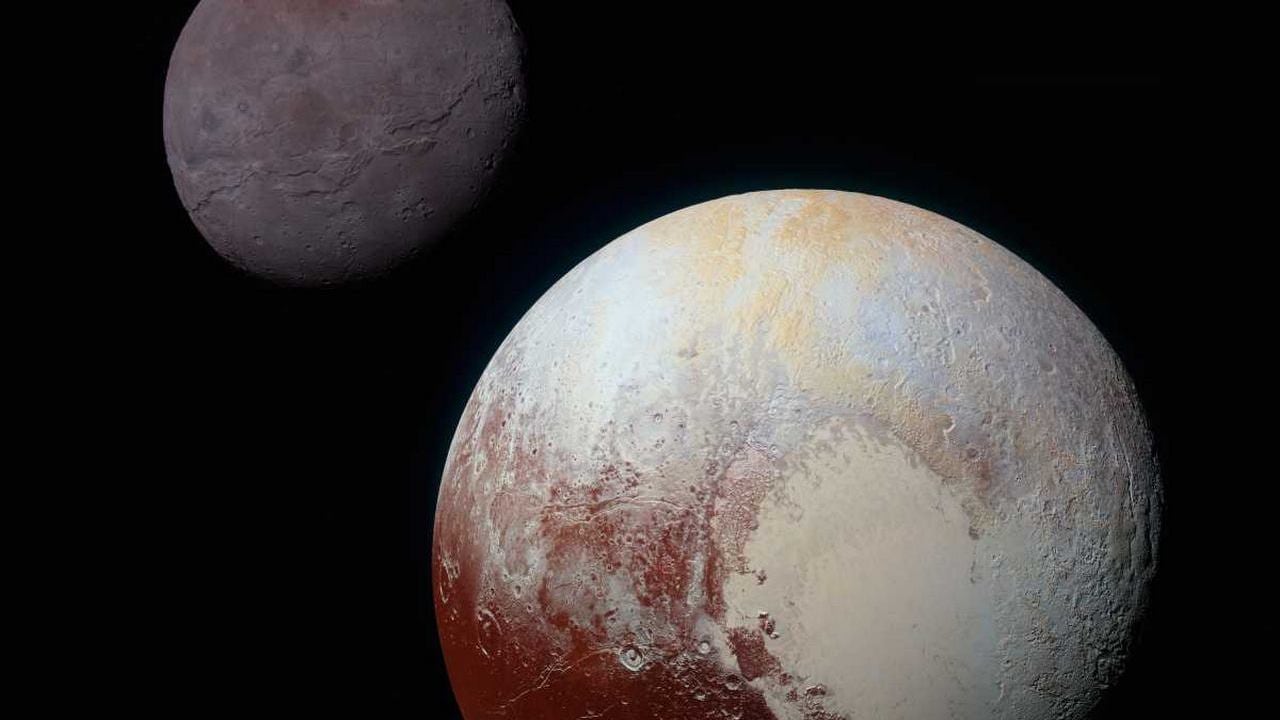
Pluto along with Charon in the background. Image credit: NASA[/caption]The time taken by Pluto to complete a single orbit of the Sun is 248 years. This long orbit and its distance from the star means that the surface temperature is between minus 378 and minus 396 degrees Fahrenheit.As the temperature of the planet drops, Pluto’s atmosphere, which is already on the thin side and is made up of nitrogen, methane, and carbon monoxide, causes the planet’s atmosphere to fade.The dwarf planet’s assessment was made through occultation, a procedure where a distant star is used as a backlight for telescopes on Earth to take a look at what happened on Pluto.Currently, Pluto can get as close as 30 astronomical units (AUs) from the Sun, which is 30 times the distance between the Earth and the Sun. This distance keeps increasing, pushing Pluto into less sunlight and low-temperature area.According to SwRI planetary scientist Leslie Young, Pluto’s continued persistence of the atmosphere suggests that there were nitrogen ice reservoirs on the surface and they were kept warm by the stored heat under the surface. Young also said that according to new studies and data obtained from them, the reservoirs are now starting to cool.If the planet ultimately freezes and collapses, it might appear brighter in the sky as it will then reflect more sunlight.

Careless Whispers: Scientists discover that plants can 'talk' to each other using smells
Life on Mars? European Space Agency’s Orbiter discovers ice water deposits at equator
Microsoft briefly overtakes Apple as the most valuable company, Apple back on top again
Even NASA is facing a tough time, starts layoffs following major budget cuts
ISRO, NASA's NISAR satellite to get ready by Jan-end, will monitor Earth's snow-covered regions