


Odd carbon-based molecule found in atmosphere of Saturn's moon Titan
Instead of oxygen in its atmosphere like Earth, Titan has small amounts of methane, much like the early stages of our home world.

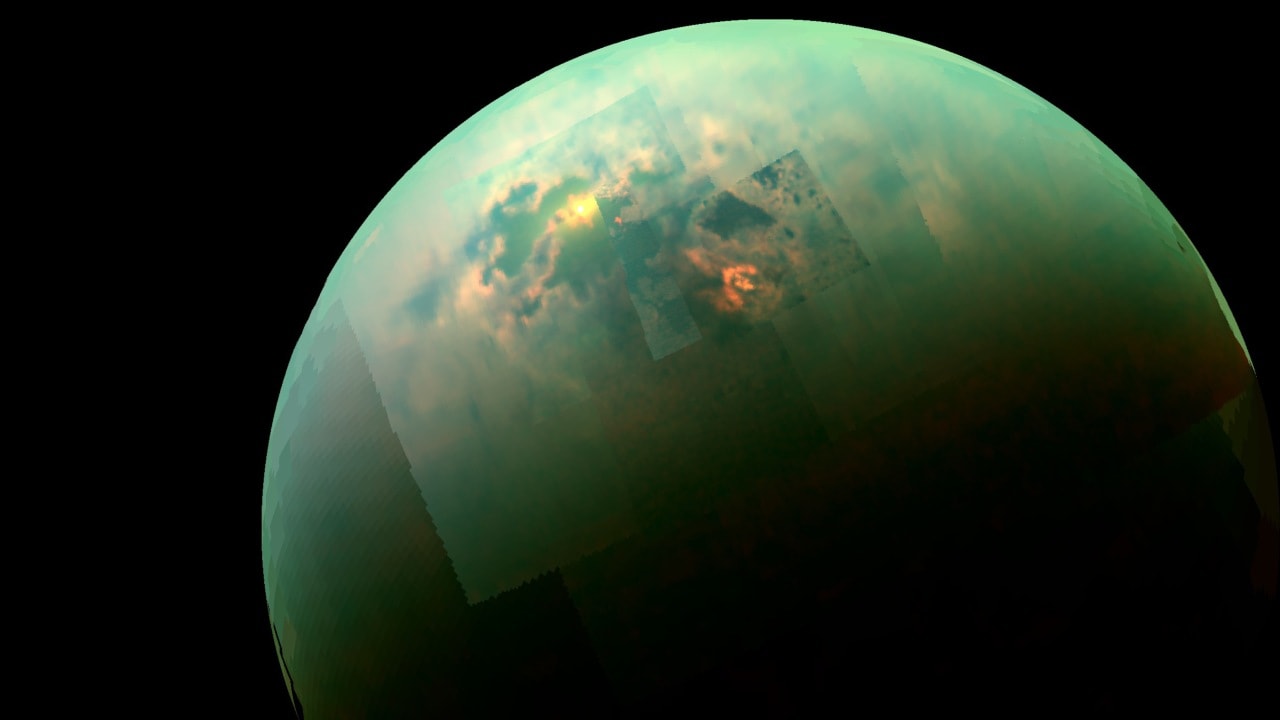
Cassini spacecraft catches a glimpse of bright sunlight reflecting off the hydrocarbon seas of Saturn's large moon Titan. Image: NASA[/caption]Researchers used a radio telescope observatory in northern Chile known as the Atacama Large Millimeter/Submillimeter Array (ALMA) to detect C3H2 from unique light signatures captured by the telescope. The molecule was present in small amounts in the upper layers of the moon’s atmosphere. This was most likely possible because there are fewer other gases for C3H2 to interact within the region.Titan has emerged as one of the most similar celestial bodies to Earth. Not only does the giant moon have clouds, rain, lakes and rivers, it also has a dense atmosphere which is mostly made up of nitrogen. But instead of the presence of oxygen in its atmosphere like Earth, Titan has little amounts of methane, much like the early stages of our home world. Hence, experts believe that a closer inspection of Titan can reveal the conditions that existed on Earth some billion years ago, and also lead to the most sought after question: can Titan sustain life?The study was published in the Astronomical Journal on 15 October.

Careless Whispers: Scientists discover that plants can 'talk' to each other using smells
Life on Mars? European Space Agency’s Orbiter discovers ice water deposits at equator
Microsoft briefly overtakes Apple as the most valuable company, Apple back on top again
Even NASA is facing a tough time, starts layoffs following major budget cuts
ISRO, NASA's NISAR satellite to get ready by Jan-end, will monitor Earth's snow-covered regions