


OCD Week 2019: A mental health condition that's far more than a knack for tidiness
This week is a chance to practice empathy & compassion toward people suffering from the disorder.

Many of you would have heard or used the term OCD, short for Obsessive-Compulsive Disorder, for someone in the family or your circle of friends. Causally, the statement refers to cleanliness, arranging things or checking of things. To the surprise of some, OCD is not a habit but a mental health condition that affects 2-3 percent of the population.Simply put, roughly 2 or 3 in every hundred people have OCD during their lifetimes. In the United States, it affects over 2 million adults. The World Health Organisation lists OCD as one of the top ten causes of disability, yet some people diminish or ridicule it as a personality quirk.So, the week from 19th to 25th February 2019 has been marked as the OCD Week of Action, a campaign that aims to change people’s perception about the illness and support those suffering from it and thereby take action against it.
What is OCD, really?
Obsessive-Compulsive Disorder is a mental health condition in which a person is constantly either repeating an action or a thought. Therefore, OCD is considered as a chronic disease of obsessive thoughts and compulsive behaviors that can make the person anxious until he/she takes a certain action. In fact, studies suggest that people with OCD are 10 times more likely to commit suicide than the general population.[caption id="attachment_6112731" align="alignnone" width="1280"]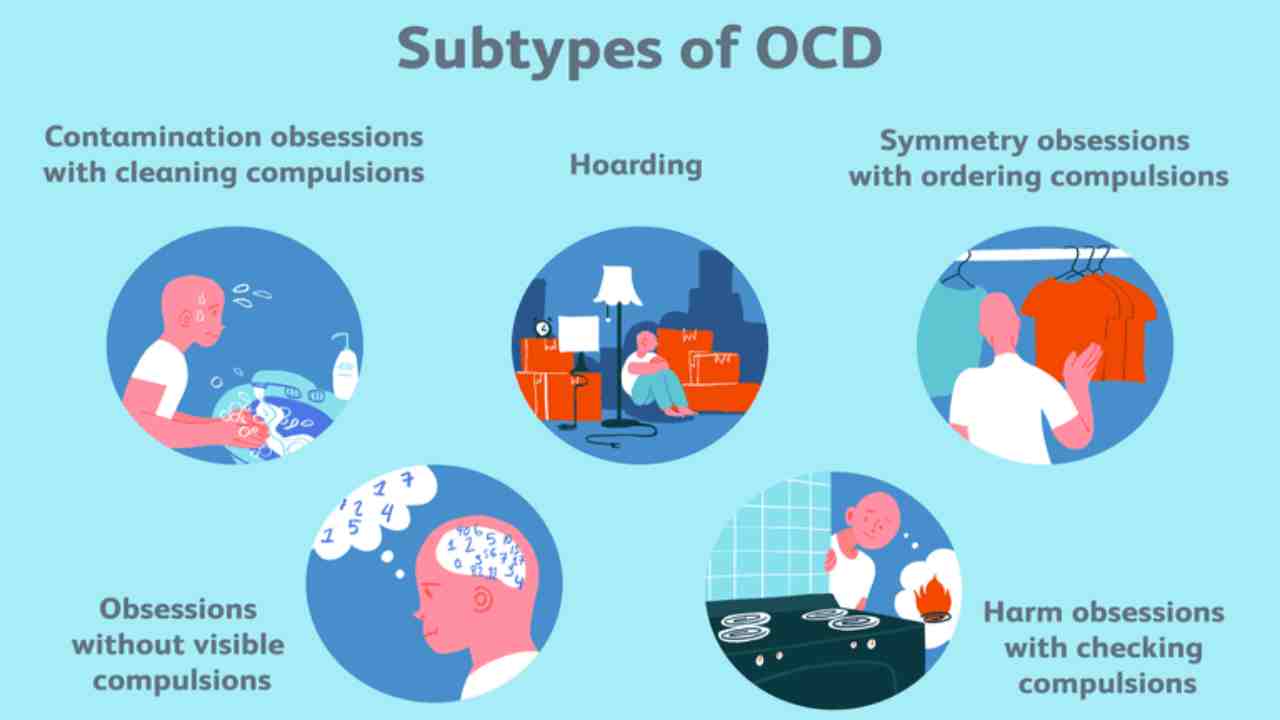
A few of the forms that OCD can take. Image credit: VeryWell[/caption]
What are the symptoms?
The common symptoms of OCD are repeating unwanted ideas, or arranging things in a certain way, negative thoughts about terrible things happening to the loved ones, aggressive moods towards others or self, intrusive sexually implicit thoughts and images. These signs may seem regular but, what sets them apart from a normal person doing the same thing is that those with OCD cannot ignore these thoughts. To overcome them, a person feels compelled to take action and has a constant urge to do it again.Another notable point is individuals suffering from it spends at least an hour, every day on these notions and behaviors. Also, performing them does not give them any pleasure but only relaxes them from their distress. Thus, the person finds himself stuck in a paralyzing vicious circle of obsessions and compulsions.Some people have apparent symptoms like a tic disorder like blinking of eyes, facial twisting, shoulder shrugging, sudden jerking of head or shoulder or vocal tics like repetitive throat-clearing, sniffing, or grunting sounds.[caption id="attachment_6112721" align="alignnone" width="1280"]
Image credit: Mayumi Haryoto/Illustration Rally[/caption]
What causes OCD?
There is no particular cause of OCD but some factors that can lead to one developing it are-• Genetics: People who have a family history or have first-degree relatives i.e. those related by blood are at a higher risk of this disorder. These individuals have a likelihood of getting it as children or in their teens.• Brain structure: It is said to occur to those who have a difference in the cerebral cortex and subcortical structures of the brain. Though research is underway for this, such abnormalities can result in OCD.• External environment: A person who has faced sexual or physical abuse or any other trauma during childhood is also prone to developing it.
 More from Science
How is OCD diagnosed and treated?

Careless Whispers: Scientists discover that plants can 'talk' to each other using smells
Life on Mars? European Space Agency’s Orbiter discovers ice water deposits at equator
Microsoft briefly overtakes Apple as the most valuable company, Apple back on top again
Even NASA is facing a tough time, starts layoffs following major budget cuts
ISRO, NASA's NISAR satellite to get ready by Jan-end, will monitor Earth's snow-covered regions