


Nuclear-powered ‘tunnelbot’ to search for signs of life on Jupiter’s moon Europa
Europa has been studied, but never sampled because of Europa's thick and dense ice shelf.

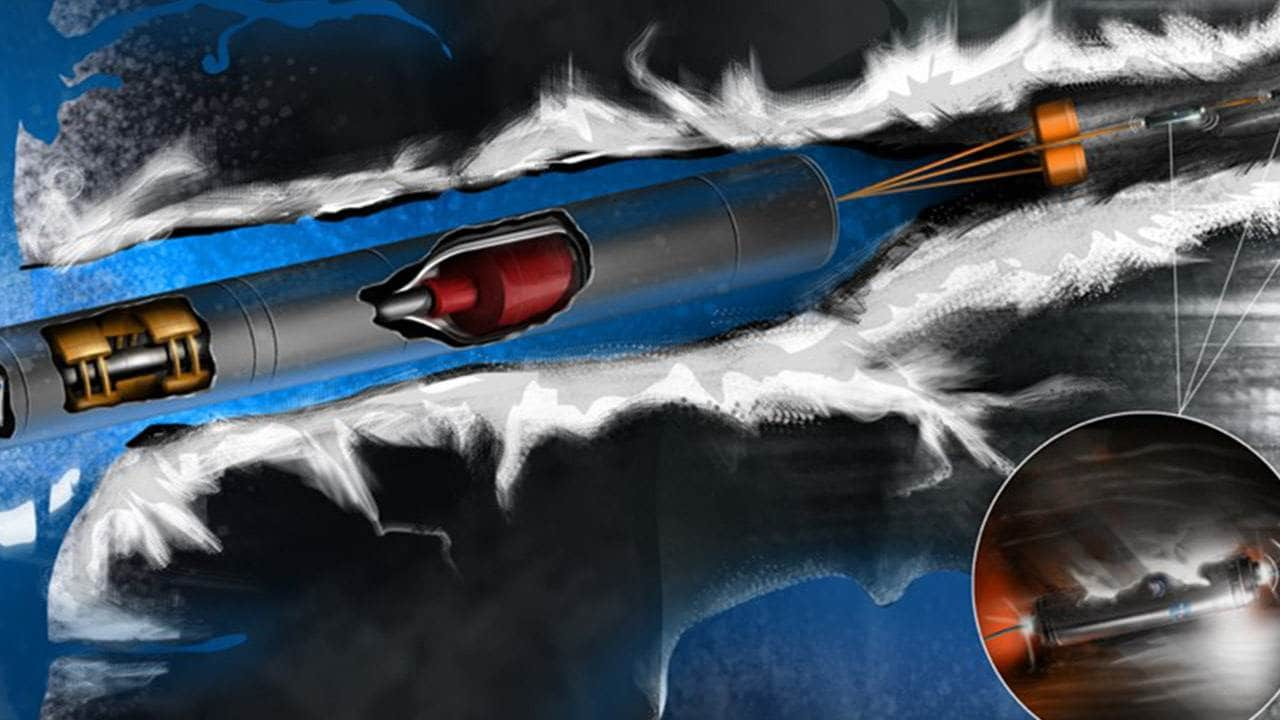
Artist’s rendering of the Europa tunnelbot. Image credit: NASA Glenn Research Centre[/caption]“Estimates of the thickness of the ice shell range between 2 and 30 kilometers, and is a major barrier any lander will have to overcome in order to access areas we think have a chance of holding biosignatures representative of life on Europa,” said Andrew Dombard, associate professor at the University of Illinois at Chicago in the US.Dombard and his team are tasked with designing technology and solutions for space exploration and science missions. The group performed a concept study for a nuclear-powered “tunnelbot” that can penetrate the ice shell and reach the top of Europa’s ocean while carrying devices and instruments that can be used to search for signs of life or extinct life.The bot would also evaluate the habitability of the ice shelf itself. “We didn’t worry about how our tunnelbot would make it to Europa or get deployed into the ice. We just assumed it could get there and we focused on how it would work during descent to the ocean,” said Dombard.

Careless Whispers: Scientists discover that plants can 'talk' to each other using smells
Life on Mars? European Space Agency’s Orbiter discovers ice water deposits at equator
Microsoft briefly overtakes Apple as the most valuable company, Apple back on top again
Even NASA is facing a tough time, starts layoffs following major budget cuts
ISRO, NASA's NISAR satellite to get ready by Jan-end, will monitor Earth's snow-covered regions