


NASA's longest living observatory — Hubble space telescope celebrates its 30th birthday
Hubble is the first major optical telescope to be placed in space and has an unobstructed view of the universe.

Thirty years ago on, 24 April, NASA had launched Hubble Space Telescope and it fundamentally changed the way humans thought about the cosmos. With repairs and upgrades, Hubble has been one of the space agency’s longest-living observatories and has been beaming images to Earth for decades.
NASA said Hubble’s launch and deployment in April 1990 marked the most significant advancement in astronomy since Galileo’s telescope.
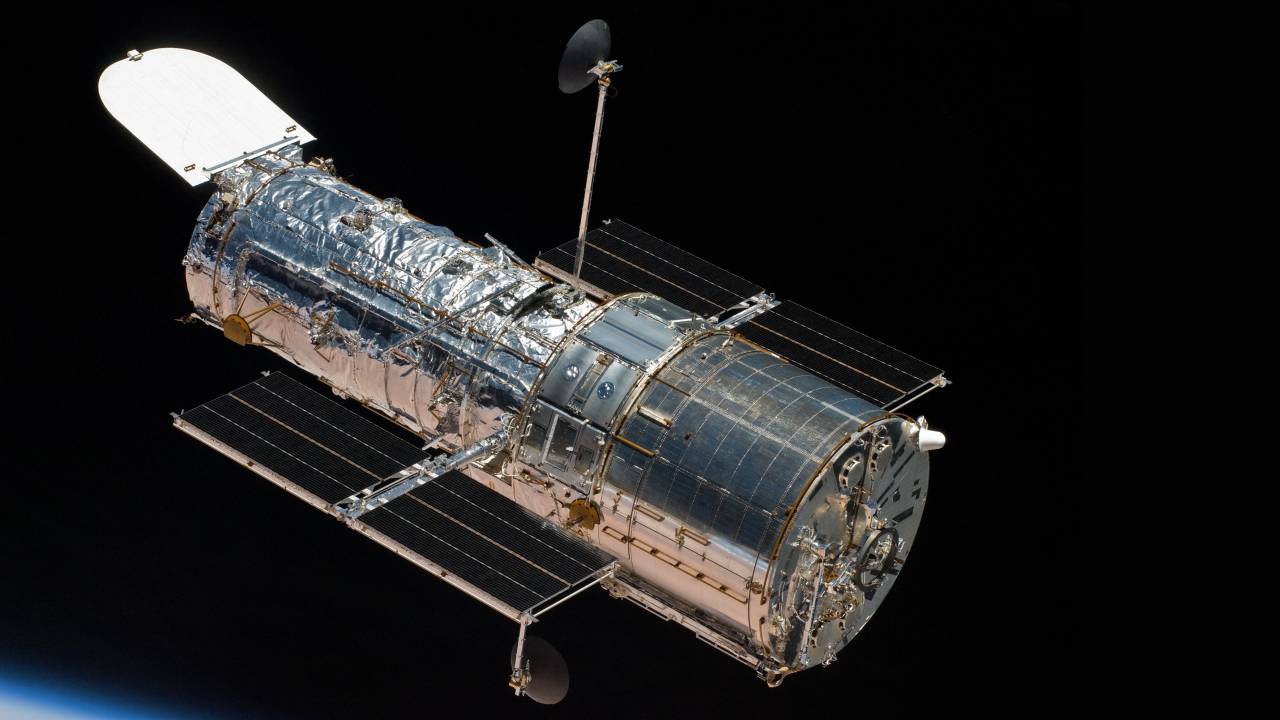
The Hubble Space Telescope has completed 30 years in space. Image courtesy: NASA[/caption]According to a report by the BBC, NASA, which runs the observatory in partnership with the European Space Agency (ESA), has said that the operations of Hubble will continue for as long it remains productive.
It also mentions that data from the Hubble telescope resulted in almost 1,000 scientific papers being published last year, making its relevance unquestionable.
The report said that Hubble played a central role in revealing the Nobel Prize-winning discovery of the accelerating expansion of the cosmos. It also provided evidence for the existence of supermassive black holes at the centres of galaxies.
 More from Science
An article by National Geographic notes the story behind the discovery of black holes. It says that in 1995, astronomer Bob Williams had the idea of NASA pointing the Hubble at a dark spot in the sky, resulting in humans realising there are thousands of galaxies in existence.
Next year, NASA plans to launch the more sensitive James Webb Space Telescope, but Hubble will not be put out of use.

Careless Whispers: Scientists discover that plants can 'talk' to each other using smells
Life on Mars? European Space Agency’s Orbiter discovers ice water deposits at equator
Microsoft briefly overtakes Apple as the most valuable company, Apple back on top again
Even NASA is facing a tough time, starts layoffs following major budget cuts
ISRO, NASA's NISAR satellite to get ready by Jan-end, will monitor Earth's snow-covered regions