


NASA's Juno spacecraft captures ominous images of black spot on Jupiter's surface
Before you start sputtering about HAL 9000, monoliths and Europa, that's Io's shadow we're looking at.

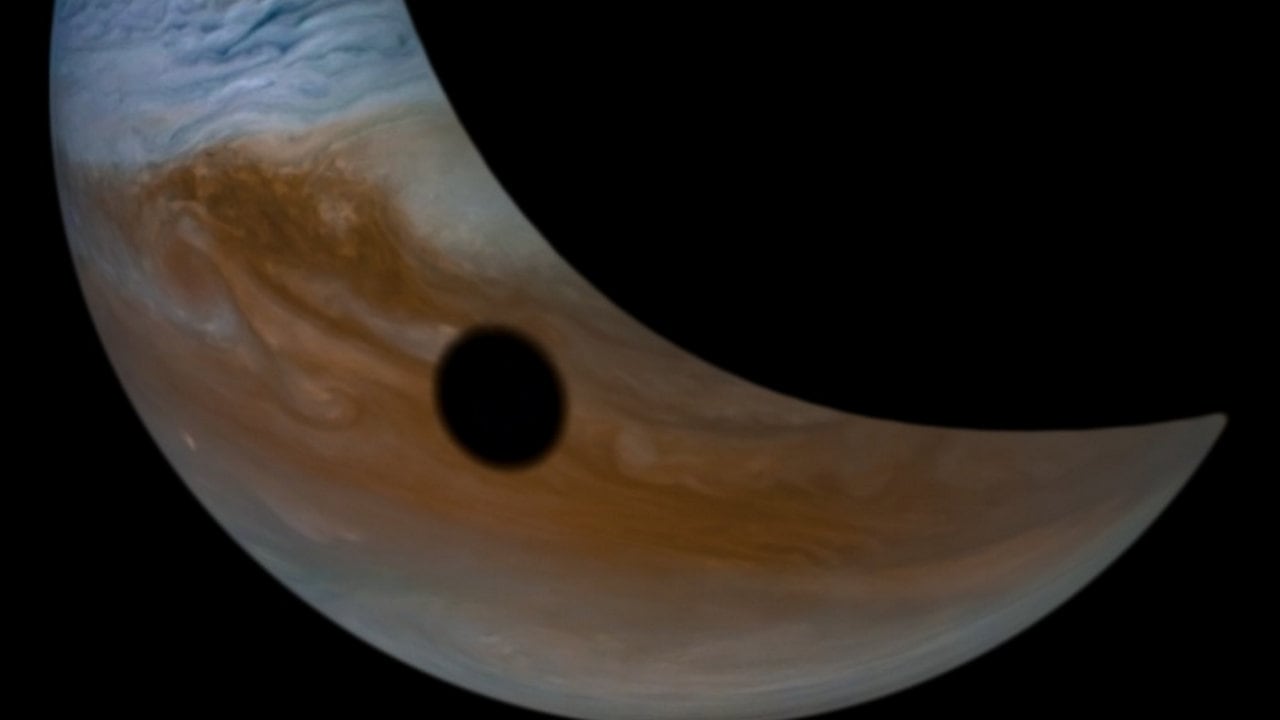
The shadow that was seen on Jupiter by Juno satellite. Enhanced to highlight features, clouds, colours, and the beauty of Jupiter. image credit: NASA/JunoCam[/caption]Io is a little bigger than Earth’s moon but Jupiter is 11 times the size of the Earth, making the shadow seem relatively small.A solar eclipse takes place when the moon comes in front of the Sun, blocking out its light. The moon then casts a shadow on the planet, in this case, Jupiter.
About Juno
Jupiter has 79 moons, of which 53 have been named. Out of these, scientists on Earth are only interested in its four moons — the so-called Galilean satellites Io, Europa, Ganymede and Callisto.Juno’s main goal is to understand Jupiter, its origin and evolution and how giant planets help in the formation of the solar system.[caption id="attachment_7386621" align="alignnone" width="1280"]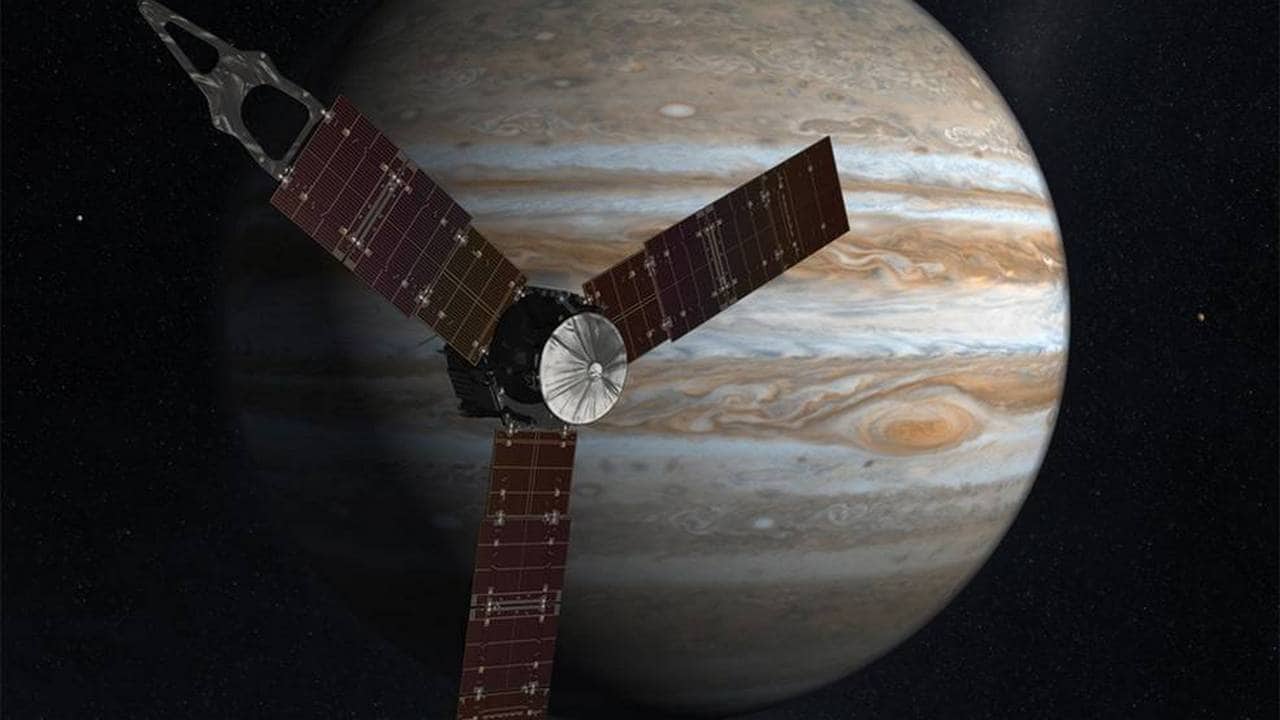
Artist illustration of the Juno satellite with Jupiter in the background. image credit: NASA[/caption]The spacecraft was launched in 2011 and took five years to reach its destination in 2016. It has an elliptical orbit that lasts 53 days which puts it in close contact with the planet. Juno swoops in close to Jupiter to observe and then backs off to a safe distance of eight million kilometres. Its instruments are placed inside titanium coverings to protect them from radiation.The mission is said to end by July 2021 and the satellite will be destroyed in Jupiter’s atmosphere to avoid contaminating the moons.

Careless Whispers: Scientists discover that plants can 'talk' to each other using smells
Life on Mars? European Space Agency’s Orbiter discovers ice water deposits at equator
Microsoft briefly overtakes Apple as the most valuable company, Apple back on top again
Even NASA is facing a tough time, starts layoffs following major budget cuts
ISRO, NASA's NISAR satellite to get ready by Jan-end, will monitor Earth's snow-covered regions