


NASA's Hubble captures haunting glimpse of bright blue cluster of objects in space
The objects are made by jets of ionized gases thrown out of a nreborn star, NASA said.

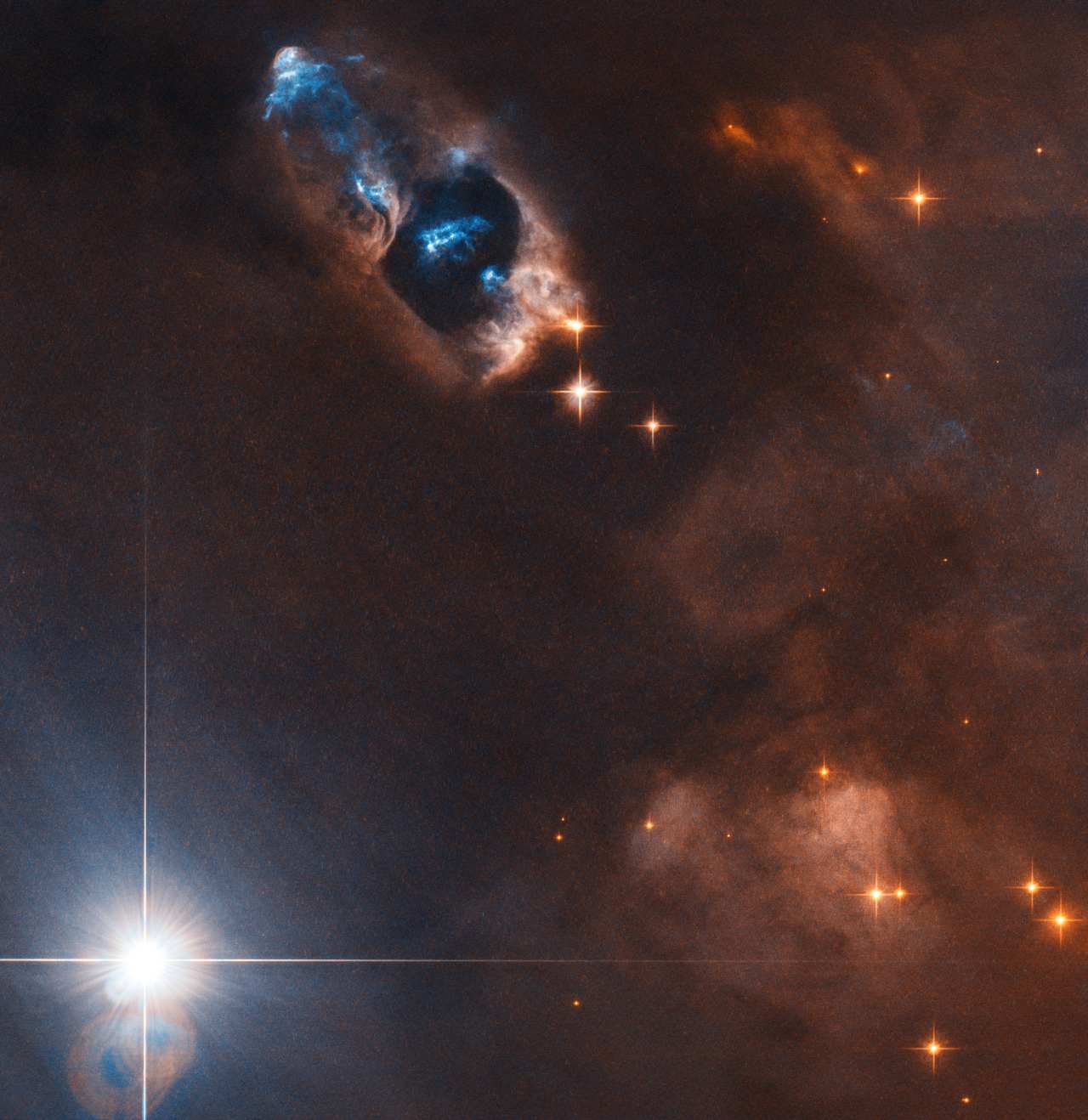
In this image the NASA/ESA Hubble Space Telescope has captured the smoking gun of a newborn star, the Herbig–Haro objects numbered 7 to 11 (HH 7–11). These five objects, visible in blue in the top centre of the image, lie within NGC 1333, a reflection nebula full of gas and dust found about a thousand light-years away from Earth. Herbig-Haro objects like HH 7–11 are transient phenomena. Image credit: NASA/ESA Hubble[/caption]Herbig-Haro objects are a common sight near newborn stars – shooting out and travelling far from the stars that created them. These transient objects can move at speeds of 2,40,000 kilometres per hour before vanishing into the cosmos over a few thousand years, a NASA report said.The young star in the image creating the Herbig–Haro objects is the SVS 13, from which the bright blue objects are jetting out. The distance between each of these objects and SVS13 is roughly 20,000 times that of the Sun and the Earth.

Careless Whispers: Scientists discover that plants can 'talk' to each other using smells
Life on Mars? European Space Agency’s Orbiter discovers ice water deposits at equator
Microsoft briefly overtakes Apple as the most valuable company, Apple back on top again
Even NASA is facing a tough time, starts layoffs following major budget cuts
ISRO, NASA's NISAR satellite to get ready by Jan-end, will monitor Earth's snow-covered regions