


NASA’s Curiosity rover finds that Martian rocks are more porous than expected
The discovery also gives scientists a novel technique to use in future as the rover continues its trek.

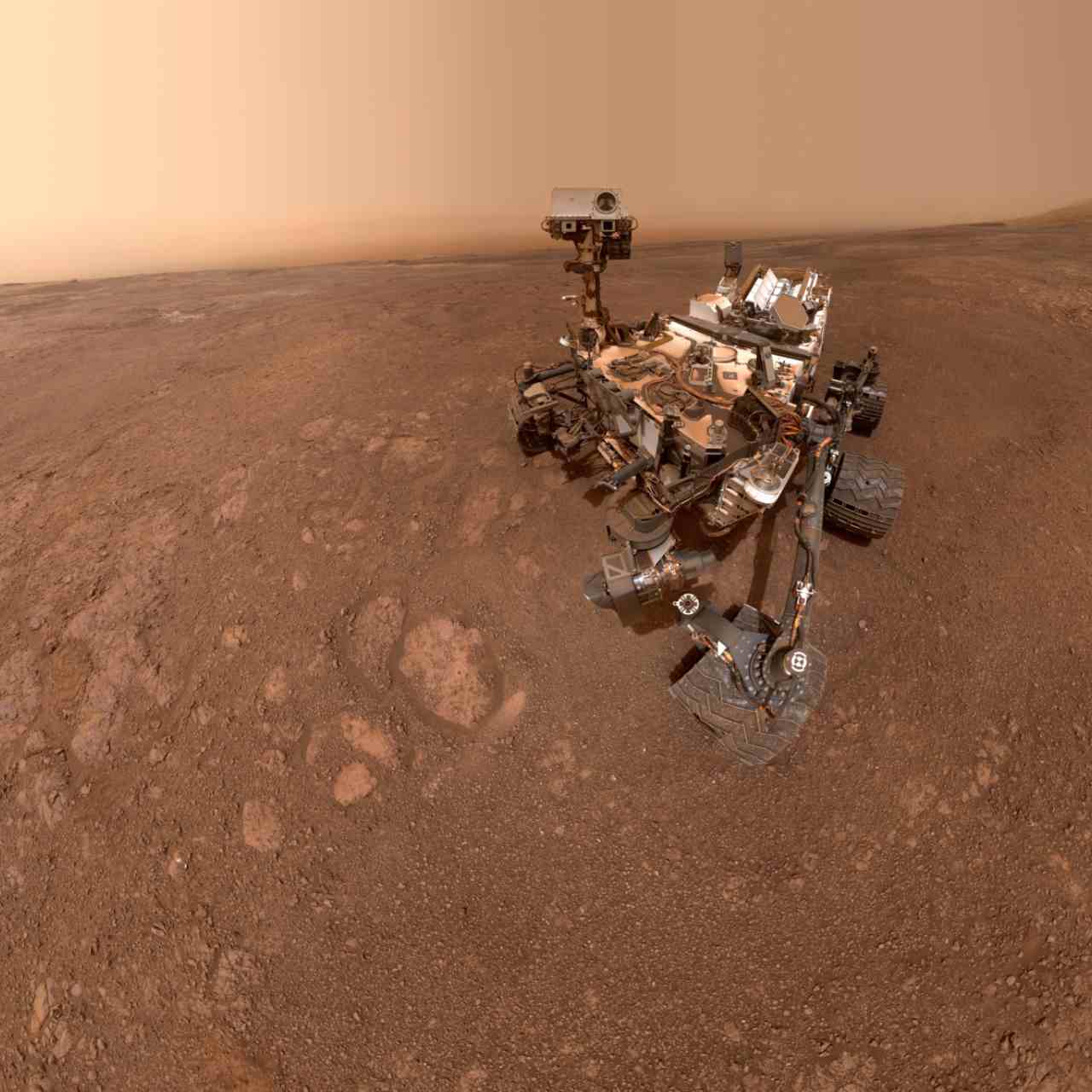
A selfie taken by NASA's Curiosity rover on Mars Sol 2291 (15 January) at the "Rock Hall" drill site on Vera Rubin Ridge. Image Credit: NASA/JPL-Caltech[/caption]"What we were able to do is measure the bulk density of the material in Gale Crater," said Travis Gabriel, a graduate student at ASU.Gabriel worked on computing what the grain density should be for the rocks and ancient lake-bed sediments the rover has been driving over."Working from the rocks' mineral abundances as determined by the chemistry and mineralogy instrument, we estimated a grain density of 2810 kilogrammes per cubic metre," he said in a statement."However, the bulk density that came out of our study is a lot less—1680 kilogrammes per cubic metre," said Gabriel.The much lower figure shows that the rocks have a reduced density, most likely resulting from the rocks being more porous.This means the rocks have been compressed less than scientists have thought.The engineering sensors used in the study were accelerometers, much like those found in every smartphone to determine its orientation and motion.Curiosity's sensors do the same, but with much greater precision, helping engineers and mission controllers navigate the rover across the Martian surface.However, while the rover is standing still, the accelerometers also measure the local force of gravity at that spot on Mars.The team took the engineering data from the first five years of the mission and used it to measure the gravitational tug of Mars at more than 700 points along the rover's track.As Curiosity has been ascending Mount Sharp, the mountain began to tug on it, as well—but not as much as scientists expected."The lower levels of Mount Sharp are surprisingly porous," said Kevin Lewis of Johns Hopkins University in the US."We know the bottom layers of the mountain were buried over time. That compacts them, making them denser. But this finding suggests they weren't buried by as much material as we thought," Lewis said.

Careless Whispers: Scientists discover that plants can 'talk' to each other using smells
Life on Mars? European Space Agency’s Orbiter discovers ice water deposits at equator
Microsoft briefly overtakes Apple as the most valuable company, Apple back on top again
Even NASA is facing a tough time, starts layoffs following major budget cuts
ISRO, NASA's NISAR satellite to get ready by Jan-end, will monitor Earth's snow-covered regions