


NASA underestimating the time, money needed to bring Mars rocks back to Earth: Report
NASA and the ESA should consider moving the next sample-return efforts from 2026 to 2028, due to the technological challenges, the panel said.

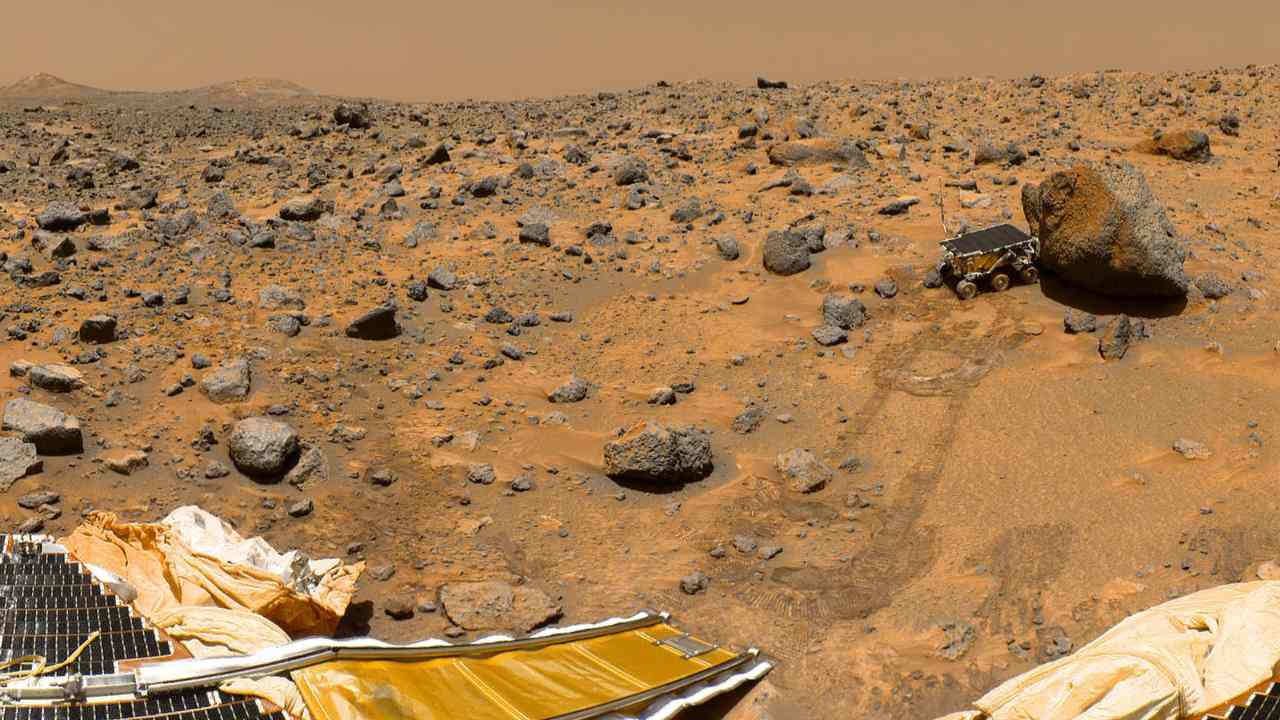
This portion of a classic 1997 panorama from the IMP camera on the mast of NASA's Mars Pathfinder lander includes "Twin Peaks" on the horizon, and the Sojourner rover next to a rock called "Yogi." Image credit: NASA/JPL[/caption]In order to do that, the space agencies have teamed up to develop a lander to fetch the samples, a rocket to get them off the Martian surface and an orbiting spacecraft to accept them and return them to Earth. All this gear will require two separate launches from Earth.The chairman of the review board, David Thompson, retired chief executive of Orbital ATK, told reporters a two-year launch delay is advisable for the best chances of success. At the same time, however, no one is suggesting that NASA slow down, stressed panel member Maria Zuber of the Massachusetts Institute of Technology.NASA's science mission chief, Thomas Zurbuchen, said the space agency will reassess the mission dates and consider all options. But for now, it's full steam ahead ... we're not taking a break in any fashion.

Careless Whispers: Scientists discover that plants can 'talk' to each other using smells
Life on Mars? European Space Agency’s Orbiter discovers ice water deposits at equator
Microsoft briefly overtakes Apple as the most valuable company, Apple back on top again
Even NASA is facing a tough time, starts layoffs following major budget cuts
ISRO, NASA's NISAR satellite to get ready by Jan-end, will monitor Earth's snow-covered regions