


NASA renames ice world, visited by New Horizon, 'Arrokoth' after Nazi-link backlash
The planet was named Ultima Thule after a mythical European land that is beyond the borders of the known world.

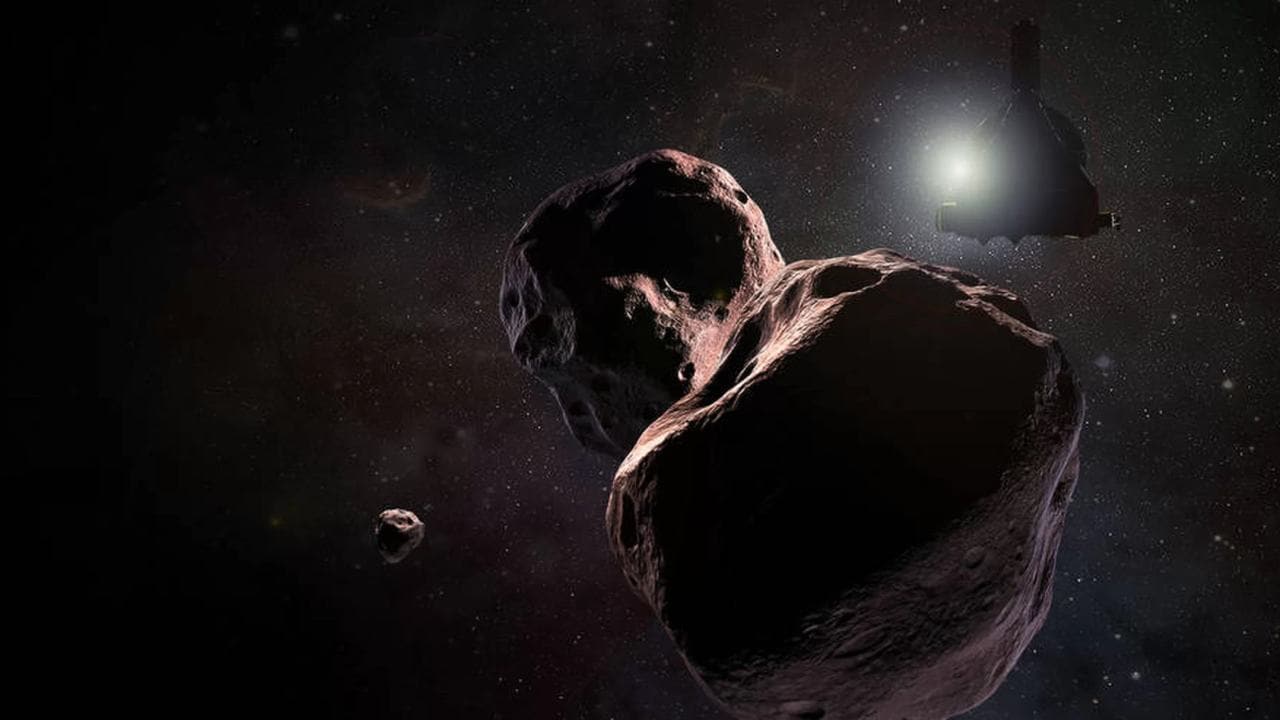
Artist's concept of the close encounter between New Horizons and the oddly-shaped Ultima Thule. Image: NASA[/caption]That name sparked an angry reaction as it was co-opted by far-right German occultists in the early 20th century as the fabled ancestral home of "Aryan" people — the term they used to describe proto-Indo-Europeans.Members of Thule Society founded a political party that evolved into Adolf Hitler's Nazi Party, and the term remains popular in alt-right circles.It is, for example, also the name of a Swedish white-power rock group.The new official name, which was chosen by the New Horizons team and ratified by the International Astronomical Union, was announced in a ceremony at NASA headquarters Tuesday.A NASA statement made no mention of the controversy."The name 'Arrokoth' reflects the inspiration of looking to the skies and wondering about the stars and worlds beyond our own," said Alan Stern, New Horizons principal investigator from Southwest Research Institute, Boulder, Colorado.Phoebe Farris, a professor emeritus in art and design at Purdue University who is herself of Powhatan-Pamunkey heritage, told AFP she was asked by NASA to approach Powhatan elders for their consent, and "all the feedback was positive and perceived as an honouring."Since we are the original inhabitants of what is now called North America, known to us as Turtle Island, it is fitting that 'discoveries' over our skies, on our land and in our waters should be given indigenous names," she added.Both the Hubble Space Telescope, which found the object in 2014, and the New Horizons mission at the Johns Hopkins Applied Physics Laboratory are operated out of Maryland, whose Chesapeake Bay region is home to the Powhatan people.Responding to a query by AFP, NASA emphasized Ultima Thule was only ever a nickname — but did not comment on whether the Nazi controversy played a role in it being discarded.
Negative context
But astrophysicist Simon Porter, part of the team that made the discovery and co-investigator for New Horizons' current mission as it exits the solar system, told AFP: "Basically, not enough due diligence was done."Historically that name was very positive and (we) realized afterwards that under certain contexts it was negative."[caption id="attachment_4500593" align="alignnone" width="1280"]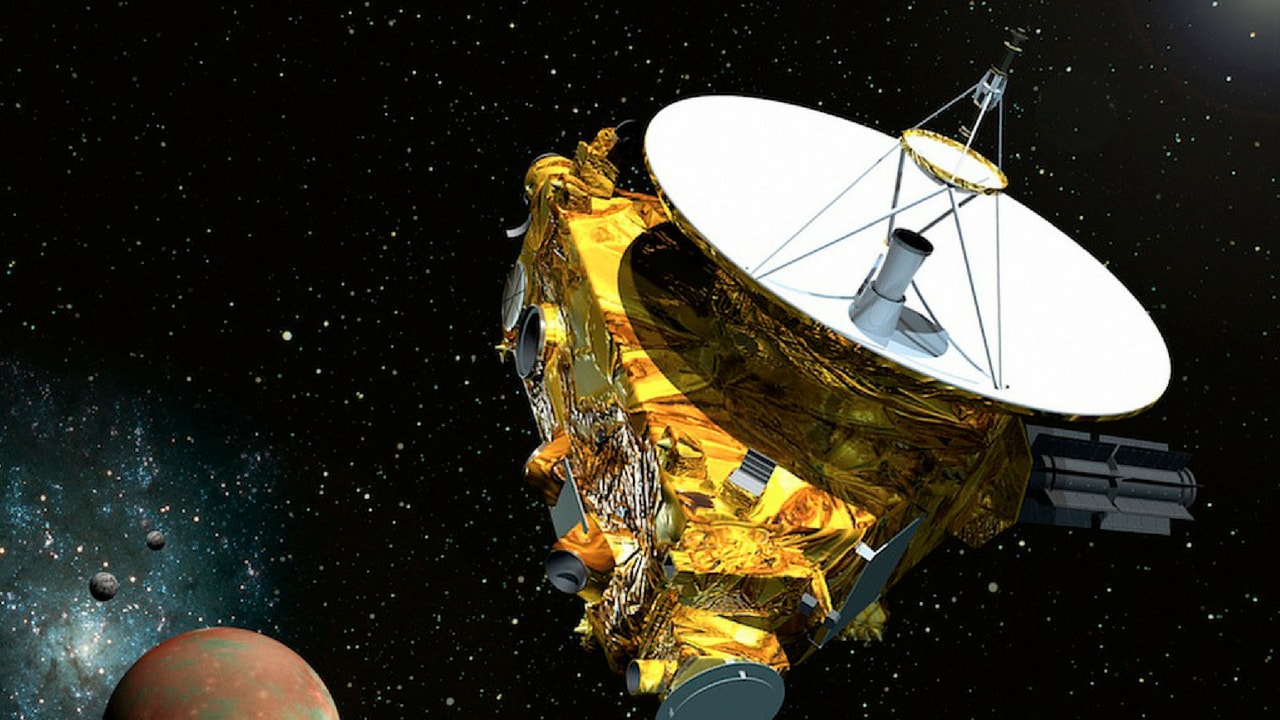
An artist impression of the New Horizons probe when it did a fly-by study of Ultima Thule. Image credit: NASA[/caption]Arrokoth is an example of a "cold classical object" which has remained undisturbed since the solar system formed some 4.5 billion years ago."So you're looking basically back in time at a snapshot of how the planets formed," said Porter. "We're studying the surfaces of the object, studying what it's made out of, to try and figure out how the entire solar system was built."The New Horizons spacecraft is now at the outer edges of the Kuiper Belt that extends from the orbit of Neptune and will join Voyager 1 and 2 beyond the Sun's sphere of influence and into interstellar space.

Careless Whispers: Scientists discover that plants can 'talk' to each other using smells
Life on Mars? European Space Agency’s Orbiter discovers ice water deposits at equator
Microsoft briefly overtakes Apple as the most valuable company, Apple back on top again
Even NASA is facing a tough time, starts layoffs following major budget cuts
ISRO, NASA's NISAR satellite to get ready by Jan-end, will monitor Earth's snow-covered regions