


NASA's Cassini mission data is still helping scientists understand the rings of Saturn
Cassini was in space for 20 years and has provided information that scientists are still studying and understanding.

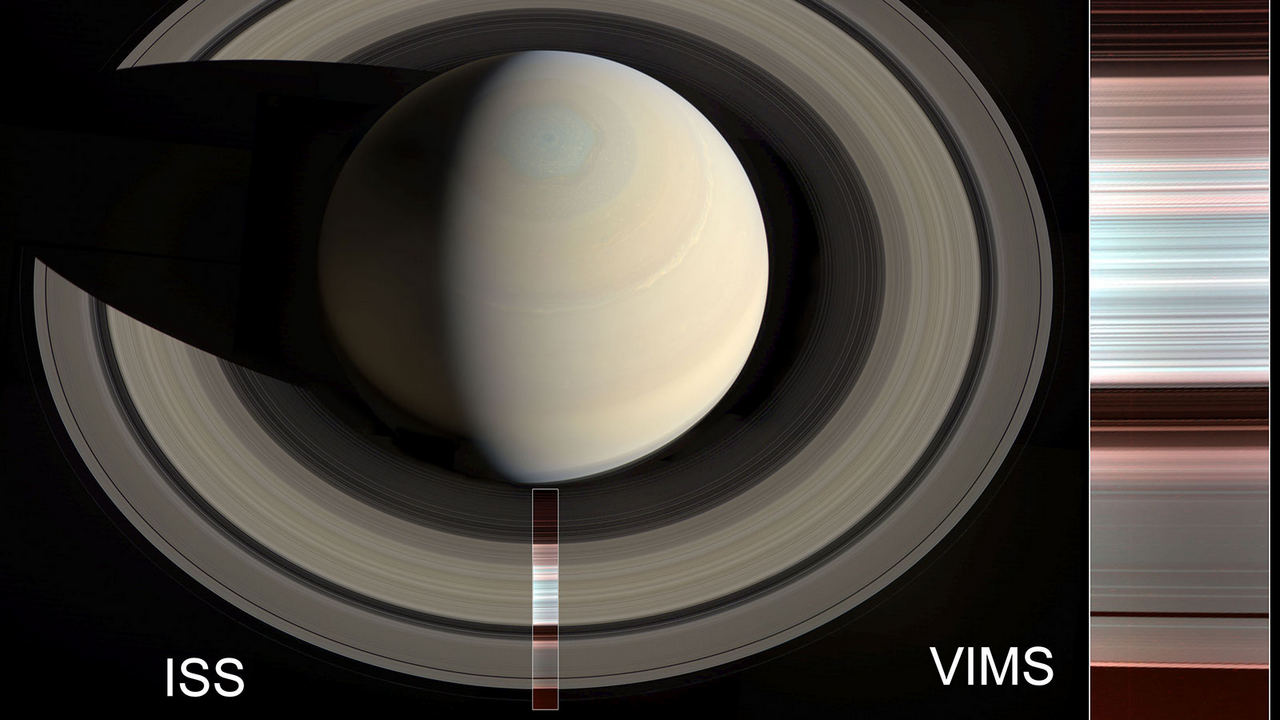
This false-color image to the right shows an infrared spectral map of Saturn's A, B and C rings, captured by Cassini's VIMS. Infrared image credit: NASA/JPL-Caltech/University of Arizona/CNRS/LPG-Nantes Saturn image credit: NASA[/caption]The outer-most ring, F-ring, was formed by impacts that struck the ring at the same time. The ring is formed by objects that orbit Saturn and they are not just debris that just crashed into the ring and stayed there.Another observation made was that there is a lot of texture in the belts. In an interview with Space.com, Spilker said, "What's fascinating is as we got ever closer, we just saw more and more structure in the rings.” They are clumpy, smooth and streaky. They have patterns and pop out of the images.The reason they formed this way is not clear and Spilker wants to revisit Saturn in the future so that they can get answers to all their questions.All the observations that Cassini provided are still helping scientists understand Saturn, its rings, and moons but also the solar system on the whole.Cassini's dive into the atmosphere was intentional. It was running out of fuel and the scientists managing the probe decided to take the plunge while gathering as much information as possible. It sent information about Saturn's atmosphere as it fell. The probe was handled by three agencies — NASA, European Space Agency and Italian Space Agency as well as the Jet Propulsion Laboratory in Caltech, USA.

Careless Whispers: Scientists discover that plants can 'talk' to each other using smells
Life on Mars? European Space Agency’s Orbiter discovers ice water deposits at equator
Microsoft briefly overtakes Apple as the most valuable company, Apple back on top again
Even NASA is facing a tough time, starts layoffs following major budget cuts
ISRO, NASA's NISAR satellite to get ready by Jan-end, will monitor Earth's snow-covered regions