


Massive shifts on Jupiter's moon Europa among recent events to fracture its icy shell, study claims
If proven true, researchers predict that any asymmetry in craters and thickness of the ice shell measured by satellites could be partially inaccurate.

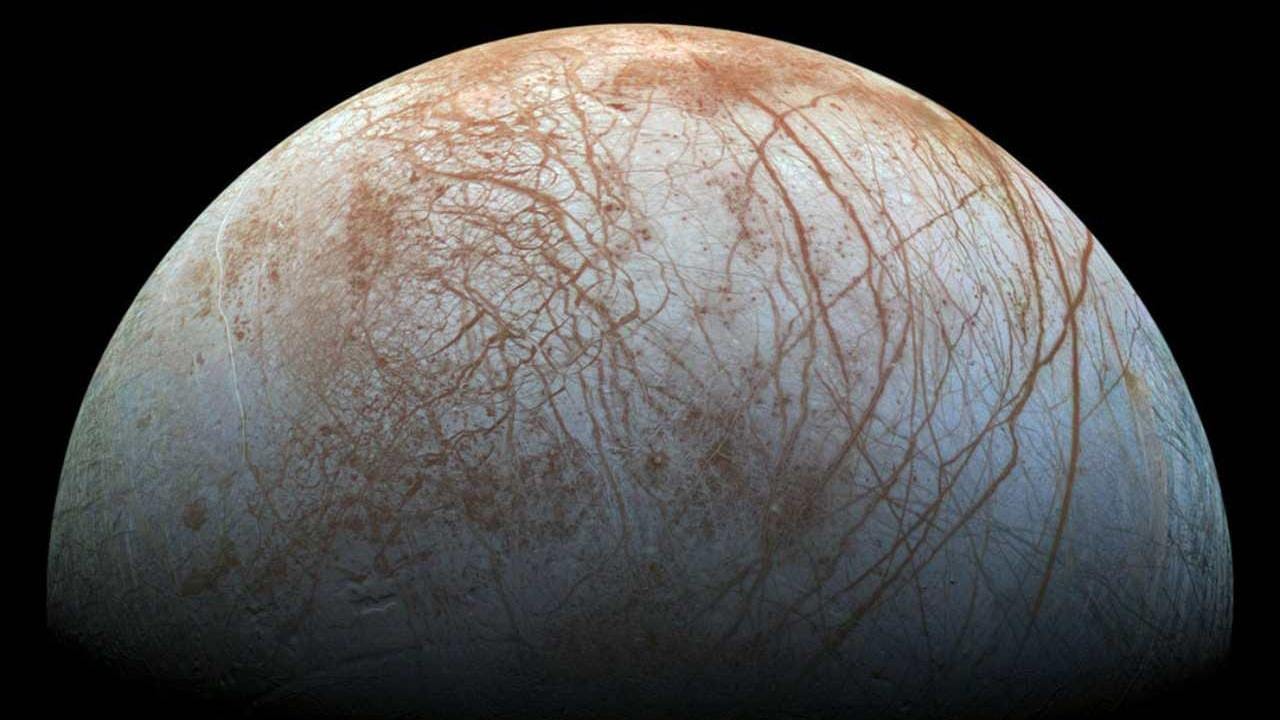
In this image captured during the Galileo mission in the 1990s, Europa's icy surface and the long fissures cutting through them are evident. Image courtesy: NASA[/caption]"Our key finding is that the fractures associated with true polar wander on Europa cross-cut all terrains. This means that the true polar wander event is very young and that the ice shell and all features formed on it have moved more than 70° of latitude from where they first formed," a statement in the research paper reads.If proven true that the shifts and fissures were recent, researchers predict that any asymmetry in craters and thickness of the ice shell measured by satellite data of the moon [particularly from the Europa Clipper mission] might be potentially inaccurate.The research team was led by Dr Paul Schenk, a senior staff scientist at the Lunar and Planetary Institute (LPI) under the Universities Space Research Association. True polar wander caused the Europa's spin axis to reorient, which led to the circular patterns in fissures, he explained. This process would only be possible if the icy shell is separated from the rocky core of the planet, similar to the tectonic plates here on Earth that are subject to shifts and earthquake fault lines.The study was published in the journal Geophysical Research Letters on 29 July.

Careless Whispers: Scientists discover that plants can 'talk' to each other using smells
Life on Mars? European Space Agency’s Orbiter discovers ice water deposits at equator
Microsoft briefly overtakes Apple as the most valuable company, Apple back on top again
Even NASA is facing a tough time, starts layoffs following major budget cuts
ISRO, NASA's NISAR satellite to get ready by Jan-end, will monitor Earth's snow-covered regions