


Mars’ magnetic field was active for a longer time that previously calculated, finds a study
Solar winds can heavily harm a planet’s atmosphere and its magnetic field helps deflect these charged particles released by the sun.

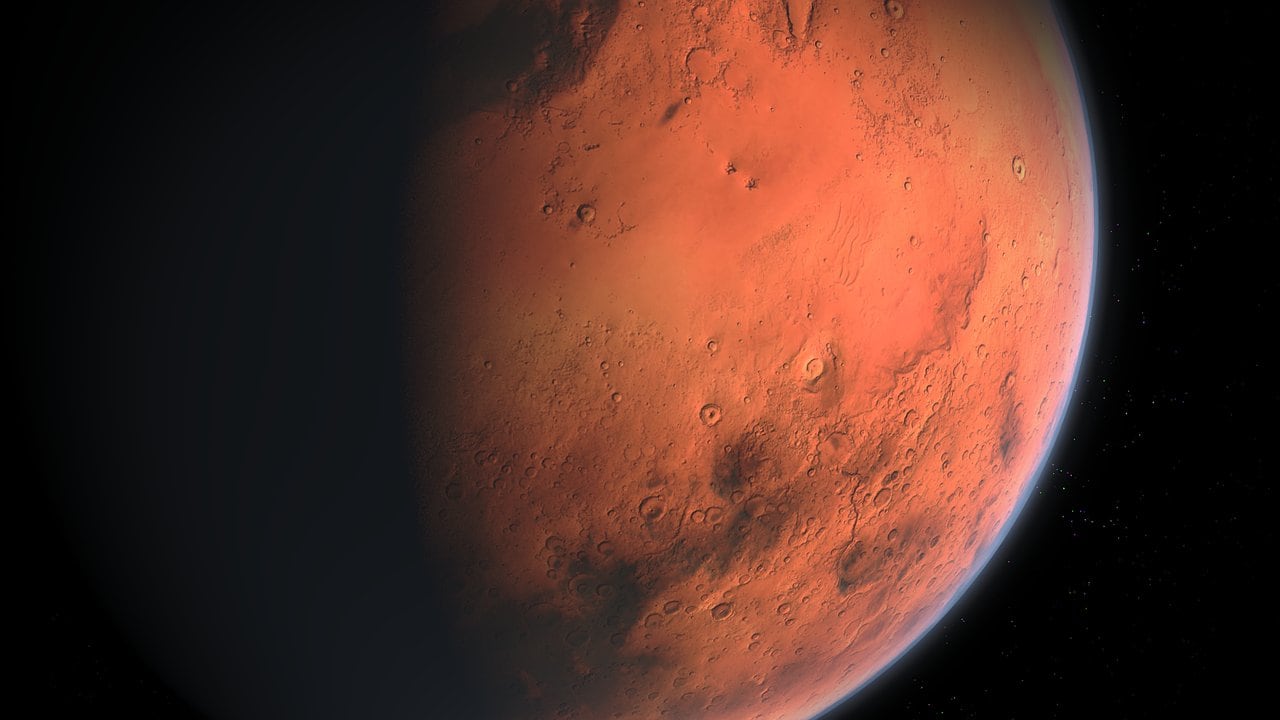
A planet’s global magnetic field is the magnetic field that extends from its interior and to outer space.[/caption]The magnetic field helps deflect solar wind or the charged particles released from the sun. Solar winds can heavily harm a planet’s atmosphere. While Earth has a working global magnetic field, Mars had it eons ago. Mercury, Jupiter, Saturn, Uranus and Neptune also have magnetic fields.In order to shield itself from the Sun’s wrath, Mars has powerful magnetic crustal fields working to create fields of magnetism.In the recent paper published in Science Advances, the absence of crustal magnetic fields over some Martian basins formed 3.9 billion years ago, led researchers around the world to believe that the dynamo on Mars was inactive by then.The timeline of the dynamo was expected to be in between 4.3 and 4.2 billion years ago. Researchers of the UBC analyzed the magnetic field data from the Mars Atmosphere and Volatile Evolution (MAVEN) satellite.They found that weak magnetic fields were present over one of the oldest features on the planet, Borealis basin, which is 4.5 billion years old, and also the 3.7 billion years old Lucus Planum.So, it showed that a dynamo was present on the planet both before and after the formation of the Hellas, Utopia, Argyre and Isidis basins.This can happen in two scenarios, according to scientists. One possibility is that the dynamo may have stopped before the formation of the basins and restarted before Lucus Planum formed. Or, the creation of the basins somehow displaced the crust that had the minerals required to carry magnetism.

Careless Whispers: Scientists discover that plants can 'talk' to each other using smells
Life on Mars? European Space Agency’s Orbiter discovers ice water deposits at equator
Microsoft briefly overtakes Apple as the most valuable company, Apple back on top again
Even NASA is facing a tough time, starts layoffs following major budget cuts
ISRO, NASA's NISAR satellite to get ready by Jan-end, will monitor Earth's snow-covered regions