


Listening to nature: How sound can help us understand environmental change
UNESCO has a 'sound charter' to promote the importance of sound in environmental health & planning.

Our hearing tells us of a car approaching from behind, unseen, or a bird in a distant forest.Everything vibrates, and sound passes through and around us all the time. Sound is a critical environmental signifier.Increasingly, we are learning that humans and animals are not the only organisms that use sound to communicate. So do plants and forests.Plants detect vibrations in a frequency-selective manner, using this “hearing” sense to find water by sending out acoustic emissions and to communicate threats.We also know that clear verbal communication is critical, but is easily degraded by extraneous sounds, otherwise known as “noise.” Noise is more than an irritant: It also threatens our health. Average city sounds levels of 60 decibels have been shown to increase blood pressure and heart rate and induce stress, with sustained higher amplitudes causing cumulative hearing loss. If this is true for humans, then it might also be true for animals and even plants.Conservation research puts a heavy emphasis on sight – think of the inspiring vista, or the rare species caught on film with camera traps – but sound is also a critical element of natural systems. I study digital sound and interactive media and co-direct Arizona State University’s Acoustic Ecology Lab.We use sound to advance environmental awareness and stewardship, and provide critical tools for deeper consideration of sound in nature preserves, urban and industrial design.
Sound as a sign of environmental change
Sound is a powerful indicator of environmental degradation and an effective tool for developing more sustainable ecosystems. We often hear changes in the environment, such as shifts in bird calls, before we see them.The United Nations Educational, Scientific and Cultural Organization (UNESCO) has recently formed a sound charter to promote awareness of sound as a critical signifier in environmental health and urban planning.I have spent decades making field recordings in which I create a setup before dawn or dusk, then lie on the ground listening for several uninterrupted hours. These projects have taught me how the density of the air changes as the sun rises or sets, how animal behavior shifts as a result, and how all of these things are intricately linked.For example, sound travels further through denser material, such as cold air, than through warm summer air. Other factors, such as changes in a forest’s foliage density from spring to fall, also change a site’s reverberation characteristics. Exploring these qualities has led me to think about how perceptual measures of sound inform our understanding of environmental health, opening a new angle of inquiry around psychoacoustic properties of environmental sound.Coyotes in Usery Mountain Regional Park, Arizona.Garth Paine, CC BY-ND1.25 MB (download)
Altering sound environments affects survival
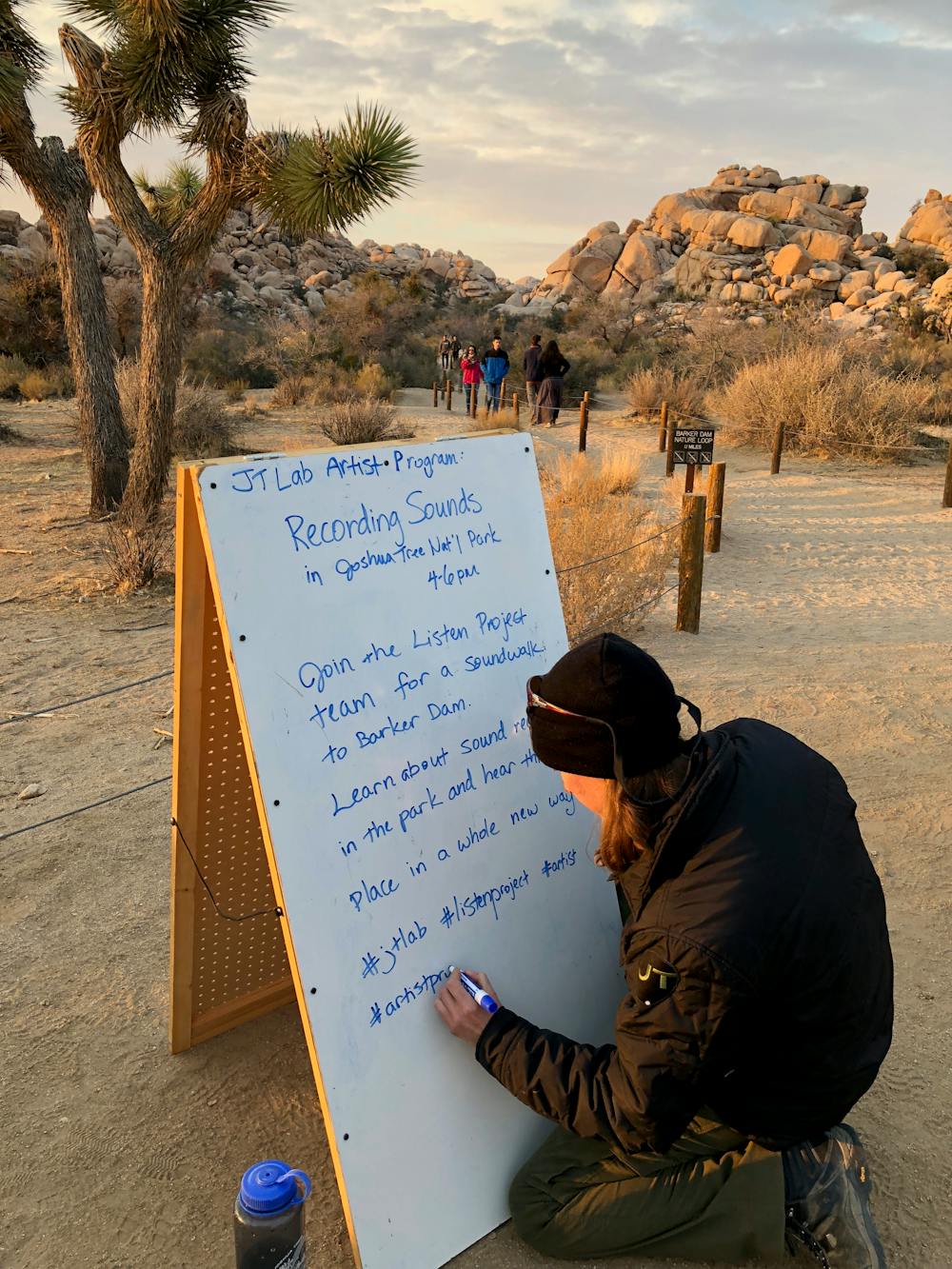
To engage the public and scientific communities in this research, the Acoustic Ecology Lab embarked in 2014 on a large-scale, crowd-sourced project teaching listening skills and sound recording techniques to communities adjacent to national parks and national monuments in the southwestern United States.After completing a listening and field recording workshop, community members volunteer to record at fixed locations in the parks every month, building a large collection of sound captures that is both a joy to listen to and a rich source of data for scientific analysis.
Mapping sound and weather characteristics
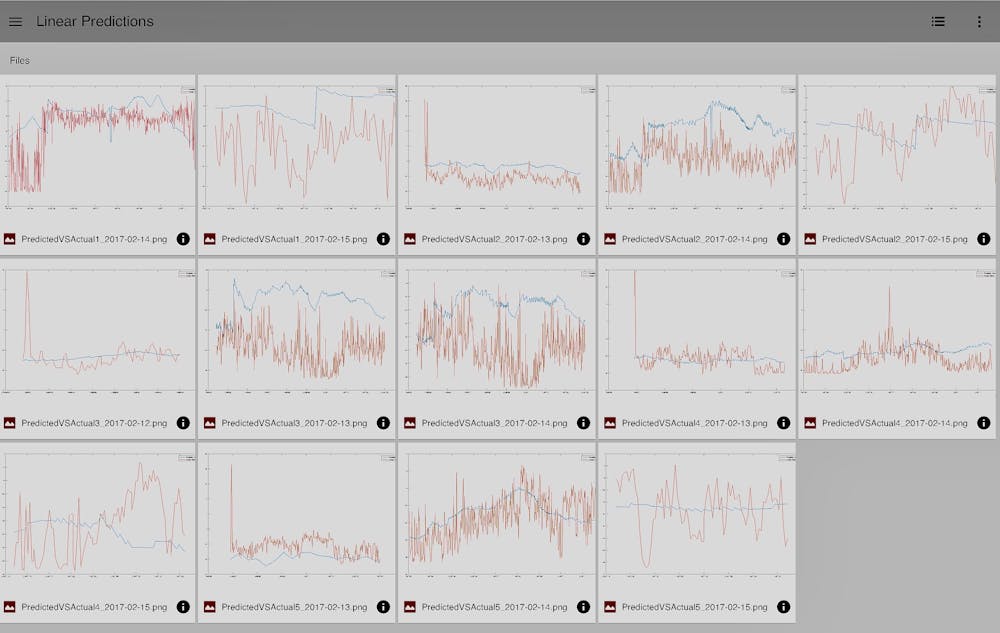
I also lead a research project called EcoSonic, which asks whether psychoacoustic properties of environmental sound correlate with weather conditions. If they do, we want to know whether we can use models or regular sound recordings to predict long-term impacts of climate change on the acoustic properties of environments.This work draws on psychoacoustics – the point where sound meets the brain. Psychoacoustics is applied in research on speech perception, hearing loss and tinnitus, or ringing in the ears, and in industrial design. Until now, however, it has not been applied broadly to environmental sound quality.We use psychoacoustic analysis to assess qualitative measures of sound, such as loudness, roughness and brightness. By measuring the number of unique signals at a specific location, we can create an Acoustic Diversity Index for that place. Then we use machine learning – training a machine to make predictions based on past data – to model the correlation between local weather data and the Acoustic Diversity Index.Our initial tests show a positive, statistically significant relationship between acoustic diversity and cloud cover, wind speed and temperature, meaning that as these variables increase, acoustic diversity does too. We also are finding an inverse, statistically significant relationship between acoustic diversity and dewpoint and visibility: As these factors increase, acoustic diversity decreases.
Sounding futures: Art, science and community
Sound quality is critical to our everyday experience of the world and our well-being. Research at the Acoustic Ecology Lab is driven from the arts and based on sensed experience of being present, listening, feeling the density of the air, hearing clarity of sound and perceiving variations in animal behavior.Without the arts, we would not be asking these perceptual questions. Without science, we would not have sophisticated tools to undertake this analysis and build predictive models. And without neighboring communities we would not have data, local observations or historical knowledge of patterns of change.All humans have the capacity to pause, listen and recognize the diversity and quality of sound in any given space. Through more active listening, each of us can find a different connection to the environments we inhabit. Garth Paine, Associate Professor of Digital Sound and Interactive Media, Arizona State UniversityThis article is republished from The Conversation under a Creative Commons license. Read the original article. 2018 has been an eventful year and here's our comprehensive list of year ender stories.

Careless Whispers: Scientists discover that plants can 'talk' to each other using smells
Life on Mars? European Space Agency’s Orbiter discovers ice water deposits at equator
Microsoft briefly overtakes Apple as the most valuable company, Apple back on top again
Even NASA is facing a tough time, starts layoffs following major budget cuts
ISRO, NASA's NISAR satellite to get ready by Jan-end, will monitor Earth's snow-covered regions