


Japan's Hayabusa2 brings back black sandy dust from asteroid Ryugu
The dust was found in the capsule's outer shell, agency officials said, with more substantial samples expected to be found when they open the inner container.

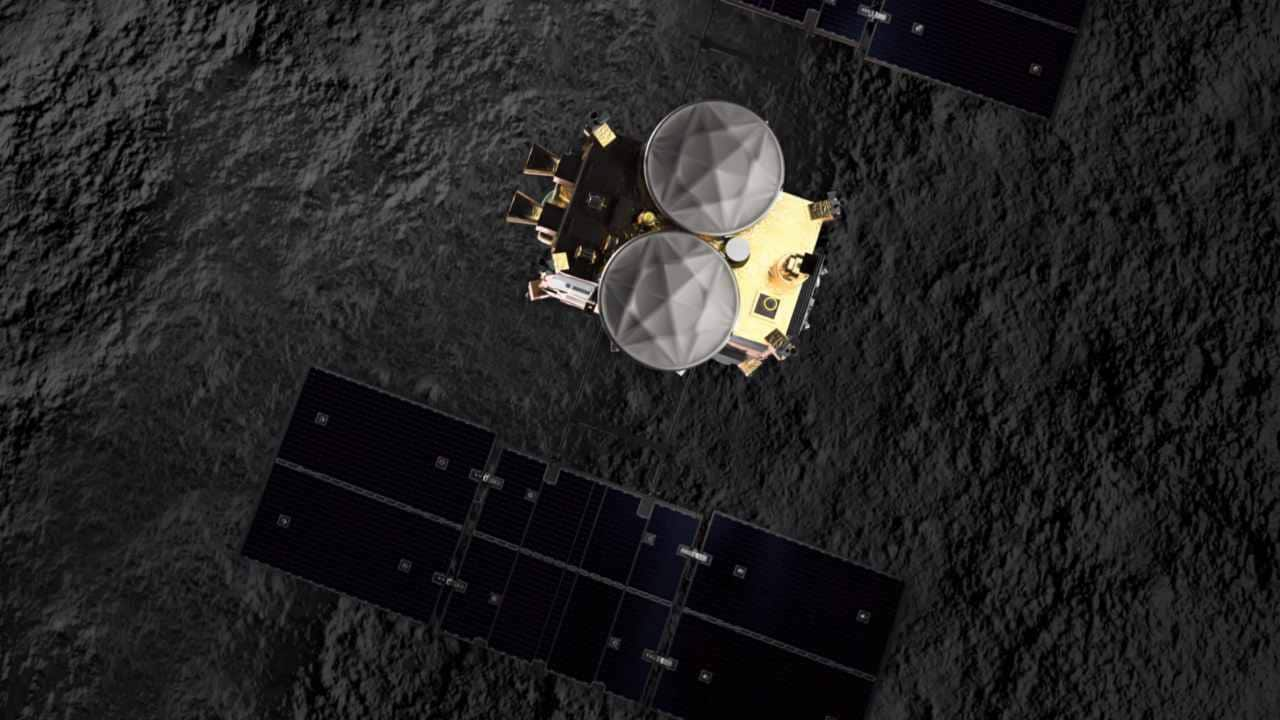
Hayabusa-2 attempting to touchdown on Ryugu. Image credit: DLR[/caption]"We were able to confirm black, sand-like particles which are believed to be derived from the asteroid Ryugu."Hayabusa-2 travelled about 300 million kilometres (200 million miles) from Earth to collect the samples, which scientists hope could help shed light on the origin of life and the formation of the universe.The probe collected both surface dust and pristine material from below the surface that was stirred up by firing an "impactor" into the asteroid."We will continue our work to open the sample-catcher within the sample container. Extraction of the sample and analysis of it will be carried out," JAXA said.Half of Hayabusa-2's samples will be shared between JAXA, US space agency NASA and other international organisations, and the rest kept for future study as advances are made in analytic technology.But work is not over for the probe, which will now begin an extended mission targeting two new asteroids.

Careless Whispers: Scientists discover that plants can 'talk' to each other using smells
Life on Mars? European Space Agency’s Orbiter discovers ice water deposits at equator
Microsoft briefly overtakes Apple as the most valuable company, Apple back on top again
Even NASA is facing a tough time, starts layoffs following major budget cuts
ISRO, NASA's NISAR satellite to get ready by Jan-end, will monitor Earth's snow-covered regions