


Indian Science Congress 2020: PM launches I-STEM website, allows researchers access to equipment in all educational institutions
Scientists can find the equipment, check its availability, book their reservation and pay for it all in one go.

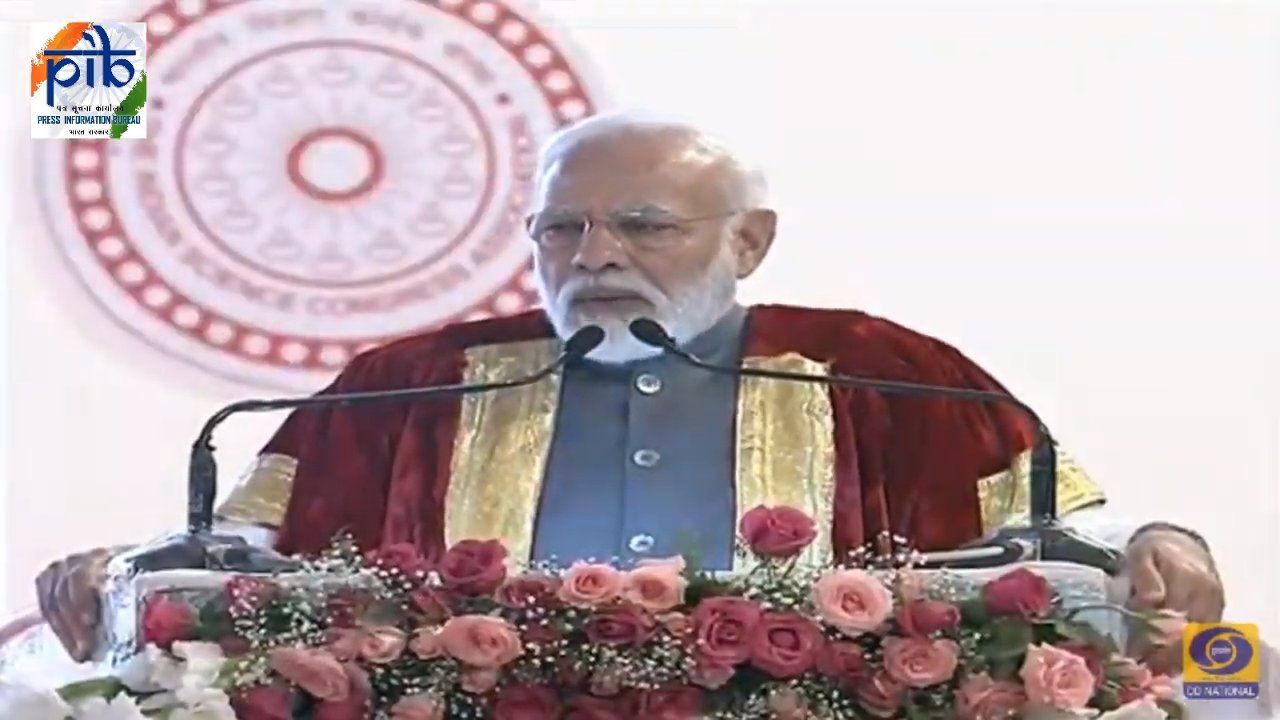
PM Narendra Modi speaks at the 107th India Science Congress in Bangalore. Image credit: YouTube[/caption]“State universities, where 95 percent of our students go, have little awareness of where they can access certain equipment needed for their experiments. We wanted to bridge that gap between researchers and resources," K Vijay Raghavan, principal scientific advisor to the Prime Minister told Livemint.The idea was initiated by the Office of the Principal Scientific Advisor (PSA) and approved by the Government of India (GoI) in 2018.The website has information on all the research and development (R&D) facilities present in institutions around the country. Scientists can log on to the site and use a map to find the specific facility they require and check its availability. They can then book their reservation for the equipment and pay for it through the online portal. The idea is to make the process as smooth and hassle-free for the researcher.
Shared equipment
According to a government statement, all academic institutions, national research labs, and aided/affiliated institutions with R&D facilities funded by agencies of the GoI, will be required to list them on the I-STEM Portal. Currently, more than 17,000 equipment located at about 427 institutions across India have already been listed on the site. The IP protected Portal has been built by and is managed by, Nanoscience Centre of Indian Institute of Science, Bengaluru.[caption id="attachment_7855671" align="alignnone" width="1280"]
A screengrab of the I-STEM website.[/caption]Through this initiative, the hope is that institutes won’t have to buy expensive machines that are already present in other institutions and smaller academic universities will be relieved of huge financial pressure. This site is supposed to do away with the duplication of the equipment and will also ensure that they are being used to their full potential.“This initiative will have many benefits. It will provide access to researchers to any equipment or facility that has been procured using public funds, the equipment will be better utilised and it will avoid duplication of expensive equipment as much as possible,” Dr Sanjeev Kumar Shrivastava of CeNSE, one of the two researchers who came up with this idea told The Hindu. “Sharing expensive equipment can bring down the cost of doing research in India.”The portal also has a panel of experts from various fields of science, engineering and technology that researchers can reach out to and seek their advice for their R&D projects.

Careless Whispers: Scientists discover that plants can 'talk' to each other using smells
Life on Mars? European Space Agency’s Orbiter discovers ice water deposits at equator
Microsoft briefly overtakes Apple as the most valuable company, Apple back on top again
Even NASA is facing a tough time, starts layoffs following major budget cuts
ISRO, NASA's NISAR satellite to get ready by Jan-end, will monitor Earth's snow-covered regions