


India to conduct first scientific estimation of its elephant population in 2022
The Union Environment Minister said that local and indigenous people should be involved in the conservation efforts.


More than 60 percent of the Asian elephant population resides in India.[/caption]“Headcount is not a scientific method for population estimation. We have realised that we can conduct a very scientific population estimation if we followed estimation methods used for tigers and leopards," SP Yadav, member secretary, National Tiger Conservation Authority and head of Central Zoo Authority told Hindustan Times.The assessment will be conducted in three phases: ground surveys, analyses of remotely sensed data and camera traps."So now we will apply a statistical framework and conduct double sampling. First ground surveys will be conducted, indirect elephant signs will be recorded like broken branches, footprints, dung etc. Camera trapping will also be conducted along with DNA analysis of dung samples. Then the numbers will be extrapolated to give a range for each region. Such a scientific method will definitely improve our understanding of elephants and the issues facing them."Elephants will be identified via their herds, health and nutrition level, body characteristics such as their ears and tusk size.
The population estimation
The Union Environment Minister said that a bottom-up approach is the way forward, and local and indigenous people should be involved in the conservation efforts.“It is important to have a scientific approach to conservation. But it is also equally important to involve local communities and their traditions as a part of the conservation,” Yadav said."There has been a pressing need to improve and harmonise the population estimation methods along more scientific lines in various states across India," he added.Yadav, along with Minister of State Ashwini Kumar Chaubey, also released the fourth edition of the Elephant Division's quarterly newsletter Trumpet. The newsletter highlights the various conservation regimes that have been adopted by the State Forest Departments along with other institutions and organisations.Some of the conservation policies to help elephants include improving enforcement policies to prevent illegal poaching and trade of ivory, conserving elephant habitats, providing better treatment for captive elephants and reintroducing some captive elephants into sanctuaries.Chaubey said that saving Elephants is saving forests and saving forests leads to saving the entire ecosystems. He exhorted all, especially the youth, to nurture and carry forward the traditional ethos of Indian culture of living in harmony with nature and wildlife.
About the Asian elephants
Asian elephants used to be found in West Asia along the Iranian coast into the Indian subcontinent, eastwards into Southeast Asia and into China, covering over nine million km.They are now listed as 'Endangered' on the International Union for Conservation of Nature (ICUN) Red List. This means these animals are considered to be 'threatened with global extinction' as their numbers dwindle.Currently, according to ICUN, Asian elephant populations can be found in these places:- Bangladesh
- Bhutan
- Cambodia
- China
- India
- Indonesia
- Lao People's Democratic Republic
- Malaysia
- Myanmar
- Nepal
- Sri Lanka
- Thailand
- Vietnam
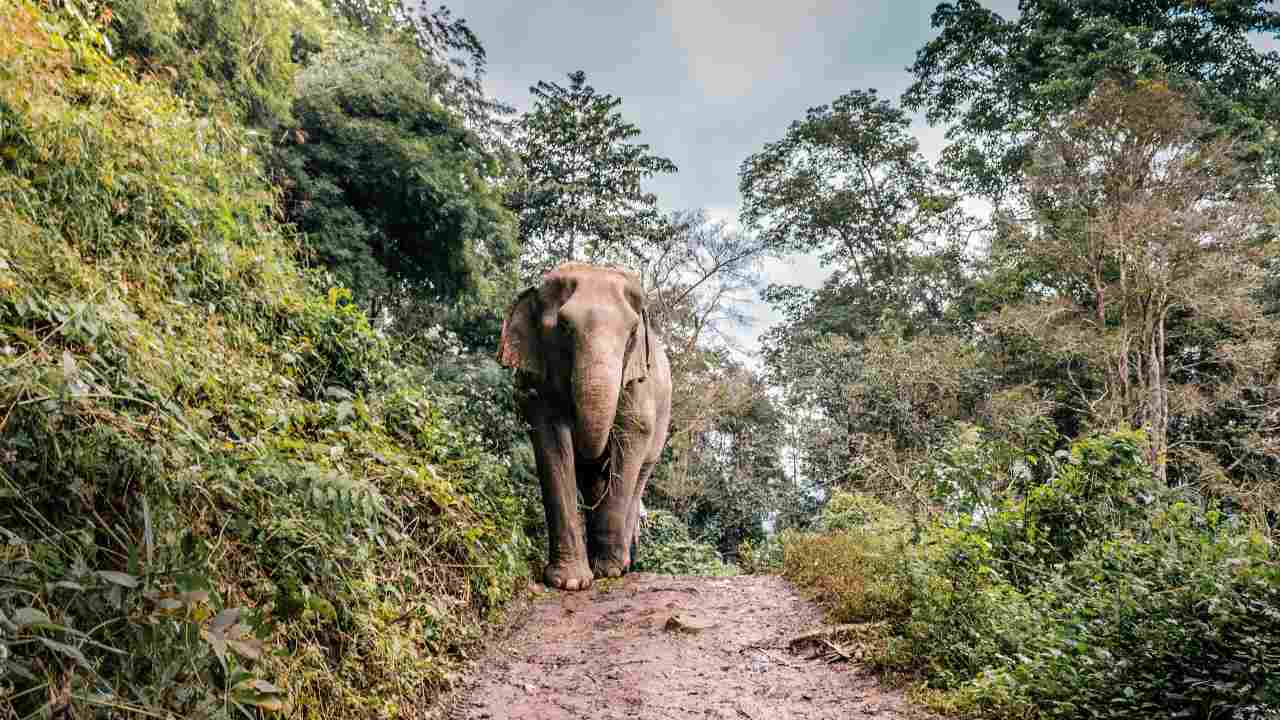
A population size estimate conducted in 2018, showed there is a global Asian elephant population of 48,323–51,680 elephants in the wild.[/caption]
Asian Elephants in India
- Uttarakhand
- Uttar Pradesh
- Haryana
- Himachal Pradesh
- Odisha
- Jharkhand
- Bihar
- Southern Bengal
- Chattisgarh
- Assam
- Arunachal Pradesh
- Northern Bengal
- Meghalaya
- Nagaland
- Tripura
- Mizoram
- Manipur
- Karnataka
- Kerala
- Tamil Nadu
- Andhra Pradesh
- Maharashtra
- Andaman and Nicobar islands

Careless Whispers: Scientists discover that plants can 'talk' to each other using smells
Life on Mars? European Space Agency’s Orbiter discovers ice water deposits at equator
Microsoft briefly overtakes Apple as the most valuable company, Apple back on top again
Even NASA is facing a tough time, starts layoffs following major budget cuts
ISRO, NASA's NISAR satellite to get ready by Jan-end, will monitor Earth's snow-covered regions