


Human immune system is not prepared to detect and respond to space germs
Microorganisms could exist beyond Earth and they could be based on different amino acids than the life forms on Earth.

A new study now says that the human immune system is not adapted to detect and respond to germs from other planets.
With two new missions launched to go to Mars and a third on the way, the search for life on other planets is well underway. Researchers from the universities of Aberdeen and Exeter in the UK wondered what would happen if human beings were exposed to a microorganism that had been retrieved from another planet or moon.
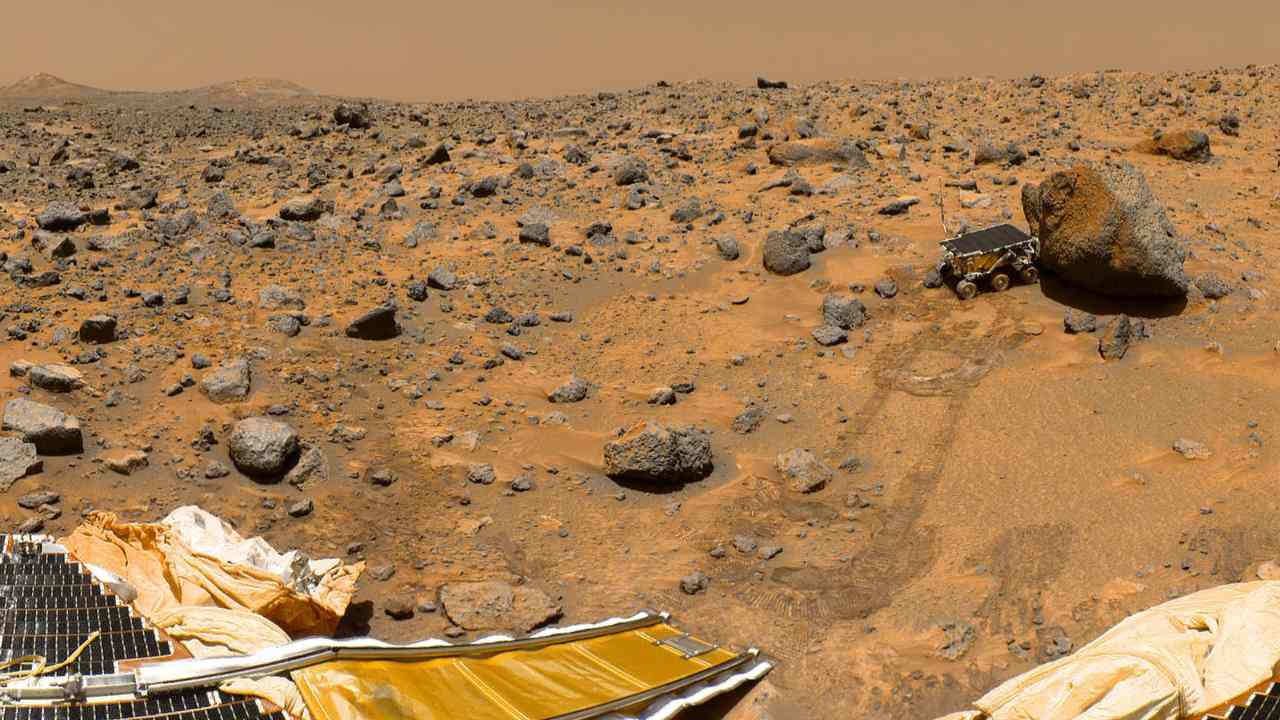
This portion of a classic 1997 panorama from the IMP camera on the mast of NASA's Mars Pathfinder lander includes "Twin Peaks" on the horizon, and the Sojourner rover next to a rock called "Yogi." Image credit: NASA/JPL[/caption]As per a statement by the University of Exeter, microorganisms could exist beyond Earth and they could be based on different amino acids than those that form life on Earth.
In their study, researchers found that the immune response to 'alien' peptides was less efficient than reactions to those on Earth.
Researchers examined how the T cells (key to immune responses) reacted to peptides containing amino acids isovaline and α-aminoisobutyric acids. These amino acids are commonly found on meteorites.
Dr Katja Schaefer, of the University of Exeter, said that the research showed that while the mammal immune system could detect the chemically synthesised exo-peptides, but the responses were less efficient.
 More from Science
"We, therefore, speculate that contact with extra-terrestrial microorganisms might pose an immunological risk for space missions aiming to retrieve organisms from exoplanets and moons," she added.
While Professor Gow mentioned that the last few months have clearly highlighted how dangerous a novel pathogen can be, in an earlier interaction with IFL Science, Dr Dominic Sparkes, a specialist in infectious diseases wanted to clarify that SARS-CoV-2 (the virus that causes COVID-19) didn’t come from a meteorite as it is too closely related to other known coronaviruses found on Earth.
The finding from this study was published in the scientific journal Microorganisms.

Careless Whispers: Scientists discover that plants can 'talk' to each other using smells
Life on Mars? European Space Agency’s Orbiter discovers ice water deposits at equator
Microsoft briefly overtakes Apple as the most valuable company, Apple back on top again
Even NASA is facing a tough time, starts layoffs following major budget cuts
ISRO, NASA's NISAR satellite to get ready by Jan-end, will monitor Earth's snow-covered regions