


Human, animal footprints dating back 1,20,000 years found in Saudi Arabia's Nefud Desert
The fossils were first recorded for Homo sapiens outside of Africa between roughly 210 and 180 thousand years in southern Greece and the Levant.

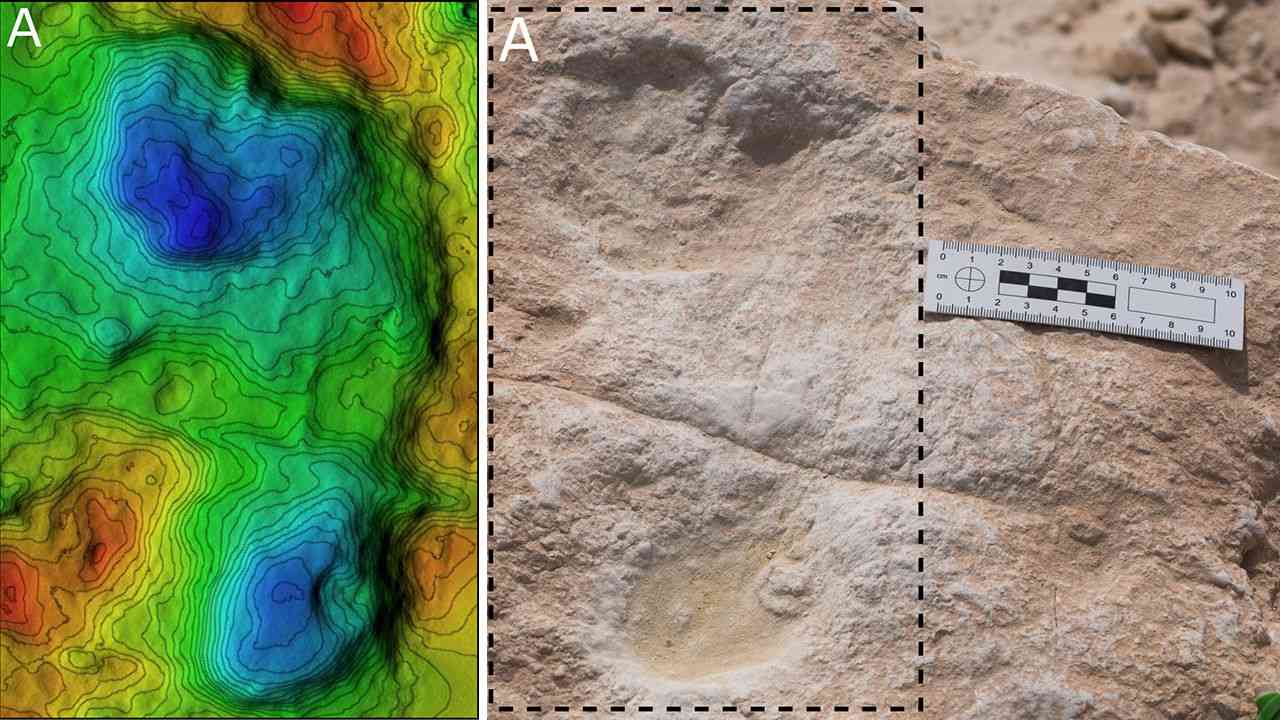
These footprints were made by ancient humans’ muddy feet as they traversed a lakeshore in Saudi Arabia about 120,000 years ago. Image credit: Mathew Stewart[/caption]Today, the Arabian Peninsula is characterized by vast, arid deserts that would have been inhospitable to early people and the animals they hunted down. Research over the last decade has shown this wasn't always the case –natural climate variation in the Peninsula once favoured a much greener, more humid environment in a period known as the last interglacial."At certain times in the past, the deserts that dominate the interior of the peninsula transformed into expansive grasslands with permanent freshwater lakes and rivers," study co-author Richard Clark-Wilson of Royal Holloway, told AFP. "Footprints are a unique form of fossil evidence in that they provide snapshots in time, typically representing a few hours or days, a resolution we tend not to get from other records."The prints were dated using a technique called optical stimulated luminescence – where light is blasted at quartz grains to measure the amount of energy they emit from them. In addition to the footprints, some 233 fossils were also recovered. These likely belong to predators of herbivorous animals in savannas, like the African savannas in the modern day.The new paper demonstrates "inland routes, following lakes and rivers, may have been particularly important to humans dispersing out of Africa" too, the study authors said."The presence of large animals such as elephants and hippos, together with open grasslands and large water resources, may have made northern Arabia a particularly attractive place to humans moving between Africa and Eurasia," senior author of the study, Michael Petraglia of the Max Planck Institute for the Science of Human History, told AFP.

Careless Whispers: Scientists discover that plants can 'talk' to each other using smells
Life on Mars? European Space Agency’s Orbiter discovers ice water deposits at equator
Microsoft briefly overtakes Apple as the most valuable company, Apple back on top again
Even NASA is facing a tough time, starts layoffs following major budget cuts
ISRO, NASA's NISAR satellite to get ready by Jan-end, will monitor Earth's snow-covered regions