


Huge cosmic collision in an alien galaxy hints at a new theory in astronomy
The events could also be behind some puzzling features in our solar system, the researchers reckon.

Looking thousands of light years into the universe, scientists have found a pair of planets so unusual that the only explanation they have is a massive cosmic collision in the alien galaxy.What makes these planets so strange is their density. While both planets are similar in size and very close to each other, one of them is twice as dense as the other.The researchers studying this anomaly think that the stark difference comes from a huge collision that stripped away the mantle – the dense outer layer of rocky planets – from one of them.[caption id="attachment_6029941" align="alignnone" width="1280"]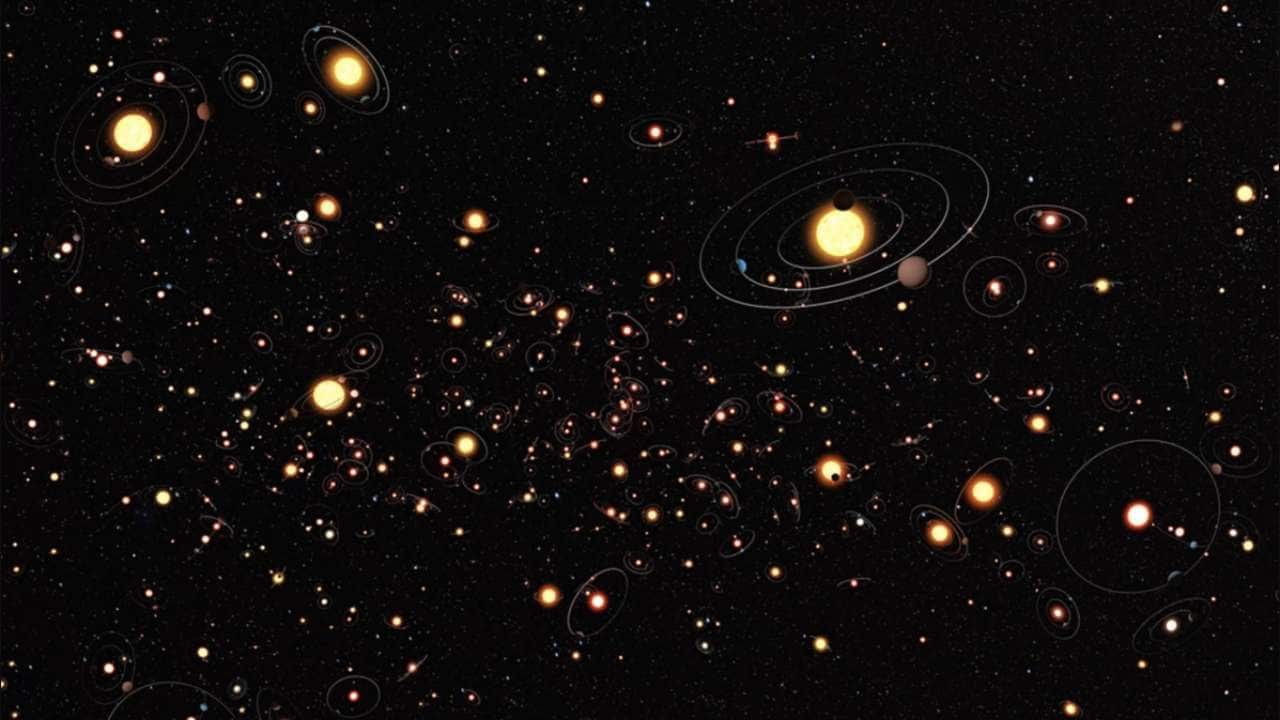 An artist's depiction of alien solar systems of exoplanets. Image courtesy: ESO[/caption]The planets are part of the Kepler-107 system 2000 light years away, first discovered in 2014 by NASA's Kepler telescope. The two planets in the study, Kepler-107b and c, were the closest planets orbiting their star Kepler-107.The denser of the two planets – Kepler-107b – is also the one further away from its star than its less dense neighbour, which the researchers found equally intriguing. The exact opposite has been true for all the other planets discovered so far – an inner planet is less dense than its outer-planet neighbour.This got the researchers suspecting that the inner planet Kepler-107c, is denser because its less-dense layers were stripped away in a giant impact or collision.[caption id="attachment_6030031" align="alignnone" width="1280"]
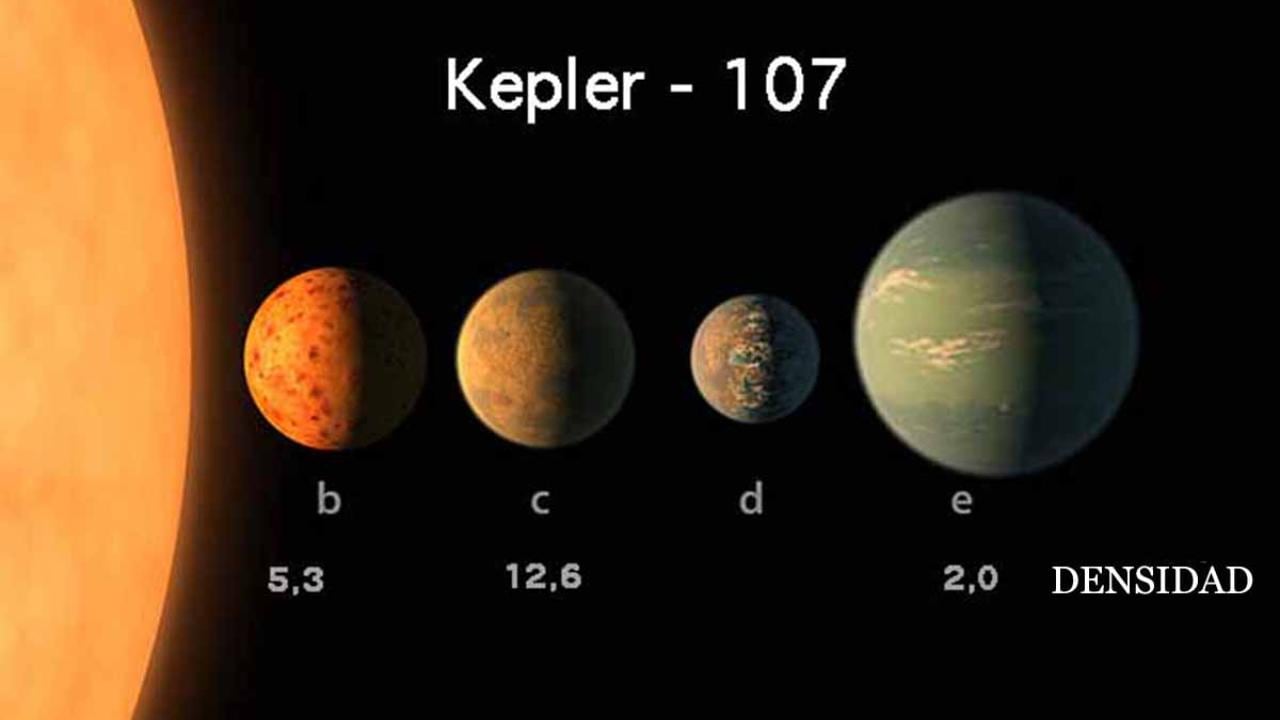 An illustration of the Kepler-107 system. Image courtesy: Tendencias[/caption]Giant cosmic collisions and planets ramming into each other are fairly common in the universe. In fact, scientists studying them suspect these events are also responsible for some puzzling features in our universe – like Mercury's huge core, which is similar to Earth's and the moon's in composition, the strange tilt of Uranus.Just last month, a different team of researchers argued at a meeting of the American Astronomical Society that clouds of dust and debris around a nearby star are most likely from repeated asteroid collisions in the system.Chaos and mess are evidently pretty normal in solar systems.The study and its findings were published on 4 February in the journal Nature Astronomy.

Careless Whispers: Scientists discover that plants can 'talk' to each other using smells
Life on Mars? European Space Agency’s Orbiter discovers ice water deposits at equator
Microsoft briefly overtakes Apple as the most valuable company, Apple back on top again
Even NASA is facing a tough time, starts layoffs following major budget cuts
ISRO, NASA's NISAR satellite to get ready by Jan-end, will monitor Earth's snow-covered regions