
Advertisement


Sections
Holographic 'acoustic tweezers' can levitate multiple different objects in 3D space
Apparently, Professor Flitwick's wasn't the only route to levitate things. Sound can do it too!

A pair of engineers have accomplished a feat like none before by making multiple objects levitate independently of one another.They used sound from an array of hundreds of speakers in a system that finds many different uses in design, engineering, even medical procedures.The experiment was laid out in a paper published in the Proceedings of the National Academy of Sciences on Monday.[caption id="attachment_5772511" align="alignnone" width="1280"]![Wingardium Leviosa! Image: UNavarra]() Wingardium Leviosa! Image: Public University of Navarra[/caption]Researchers Asier Marzo Pérez of the Public University of Navarra and Bruce Drinkwater from the University of Bristol begun their first "acoustic tweezer" experiment by building two arrays, each with 256 speakers, each just 1-centimetre-wide.By tuning the speakers using a computer to produce sound waves in the 40-kilohertz region on the spectrum and then changing the sound's frequency, they exerted a small force enough to lift very small objects off the surface.The pair of them successfully levitated styrofoam balls, which look a lot like dancing balls of snow in suspension mid-air.While that's certainly a treat for the eyes, the researchers think the future of this technology is most massive in healthcare. It could be used to carry out medical treatments without the need to cut people open, they said according to a press release.“The flexibility of ultrasonic waves allows us to operate at micrometric scales to move cells inside 3D printed structures or living tissue,” Marzo said.[caption id="attachment_5772521" align="alignnone" width="1280"]
Wingardium Leviosa! Image: Public University of Navarra[/caption]Researchers Asier Marzo Pérez of the Public University of Navarra and Bruce Drinkwater from the University of Bristol begun their first "acoustic tweezer" experiment by building two arrays, each with 256 speakers, each just 1-centimetre-wide.By tuning the speakers using a computer to produce sound waves in the 40-kilohertz region on the spectrum and then changing the sound's frequency, they exerted a small force enough to lift very small objects off the surface.The pair of them successfully levitated styrofoam balls, which look a lot like dancing balls of snow in suspension mid-air.While that's certainly a treat for the eyes, the researchers think the future of this technology is most massive in healthcare. It could be used to carry out medical treatments without the need to cut people open, they said according to a press release.“The flexibility of ultrasonic waves allows us to operate at micrometric scales to move cells inside 3D printed structures or living tissue,” Marzo said.[caption id="attachment_5772521" align="alignnone" width="1280"]![The acoustic tweezers are work. Image courtesy: UNavarra]() The acoustic tweezers are work. Image courtesy: Public University of Navarra[/caption]Since living tissues are far denser than air, the pair is now getting the setup to work in water to have the technology partially adapt to work inside living systems.They're hoping to have a model for living tissue in a year's time from now. 2018 has been an eventful year, and here's our comprehensive list of year ender stories.
The acoustic tweezers are work. Image courtesy: Public University of Navarra[/caption]Since living tissues are far denser than air, the pair is now getting the setup to work in water to have the technology partially adapt to work inside living systems.They're hoping to have a model for living tissue in a year's time from now. 2018 has been an eventful year, and here's our comprehensive list of year ender stories.
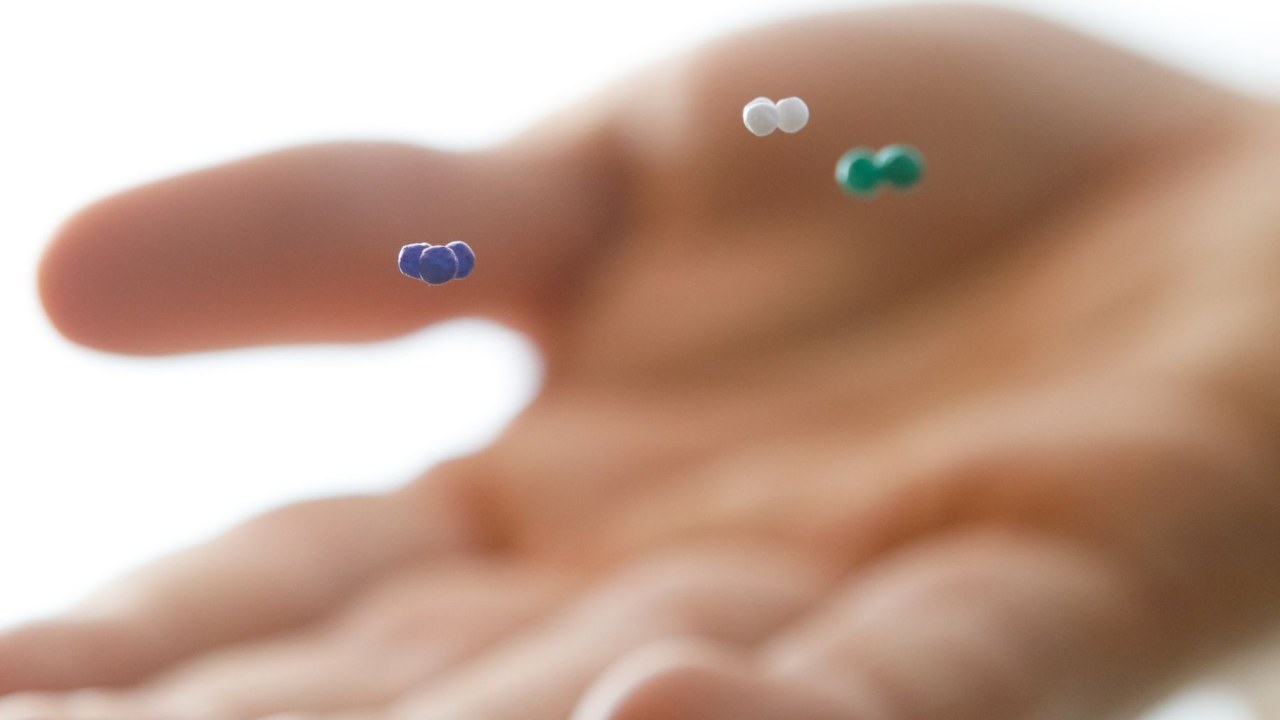 Wingardium Leviosa! Image: Public University of Navarra[/caption]Researchers Asier Marzo Pérez of the Public University of Navarra and Bruce Drinkwater from the University of Bristol begun their first "acoustic tweezer" experiment by building two arrays, each with 256 speakers, each just 1-centimetre-wide.By tuning the speakers using a computer to produce sound waves in the 40-kilohertz region on the spectrum and then changing the sound's frequency, they exerted a small force enough to lift very small objects off the surface.
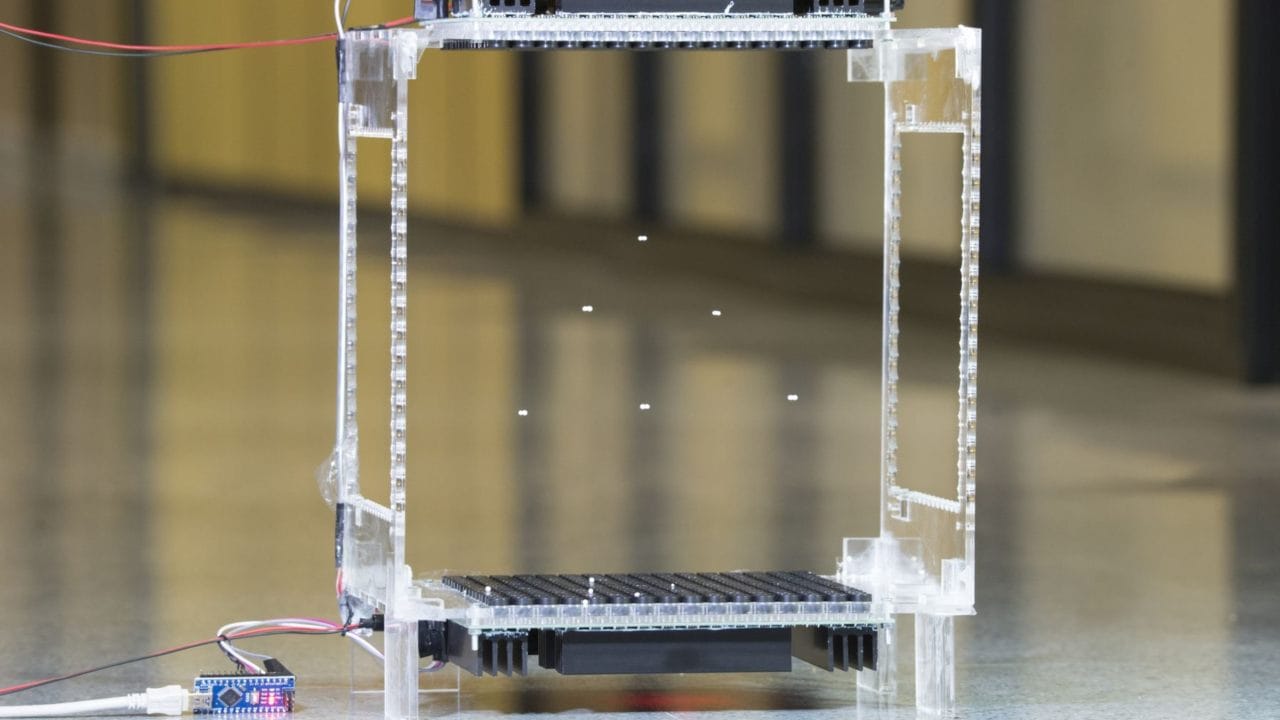 The acoustic tweezers are work. Image courtesy: Public University of Navarra[/caption]Since living tissues are far denser than air, the pair is now getting the setup to work in water to have the technology partially adapt to work inside living systems.They're hoping to have a model for living tissue in a year's time from now. 2018 has been an eventful year, and here's our comprehensive list of year ender stories.
First Published:Dec 22, 2018, 09:14:03 IST
Advertisement
Advertisement

Careless Whispers: Scientists discover that plants can 'talk' to each other using smells
Japanese scientists have recorded a video that shows plants, in certain conditions, communicate with each other using mists that carry smells. The discovery, reveals that plants release a fine mist of airborne compounds, to warn nearby plants of potential dangers
Life on Mars? European Space Agency’s Orbiter discovers ice water deposits at equator
European Space Agency's Mars Express Orbiter has identified massive ice and ice water deposits beneath the surface of Mars. The Mars Express orbiter was also the first to confirmed the presence of ice on Mars in 2004
Microsoft briefly overtakes Apple as the most valuable company, Apple back on top again
At its peak during the session, Microsoft's value reached $2.903 trillion, with a 2% surge. As of writing this article, Apple closed at $2.89 trillion, whereas Microsoft closed at $2.86 trillion
Even NASA is facing a tough time, starts layoffs following major budget cuts
NASA is facing some massive budget cuts, because of which, it has been forced to postpone some upcoming missions. NASA's Jet Propulsion Laboratory has been hit hard by recent federal budget cuts, resulting in the layoff of 100 contractors last week
ISRO, NASA's NISAR satellite to get ready by Jan-end, will monitor Earth's snow-covered regions
The NISAR satellite which has been developed jointly ISRO and NASA, should be ready for launch by the end of January 2024. The collaboration between NASA and ISRO on NISAR is the first time the two agencies have cooperated on hardware development for an Earth-observing mission
Advertisement
Advertisement