
Advertisement


Sections
Fusion reactor — KSTAR sets new world record by running for 20 seconds
The main goal for KSTAR is to run for five minutes at a stretch at extreme temperature by 2025.

Korea Superconducting Tokamak Advanced Research (KSTAR) device recently set a world record by maintaining its plasma with an ion temperature at over 100 million degrees Celsius (180 million degrees Fahrenheit) for 20 seconds. According to a report by Engadget, no previous fusion machine lasted for more than 10 seconds in those conditions. Back in 2019, KSTAR had managed to hold out for just eight seconds. The report adds that it is an important step towards improving the Internal Transport Barrier (ITB) that helps with plasma confinement and stability.The main goal for KSTAR is to run for five minutes at a stretch at extreme temperature by 2025 and the breakthrough is an important step in that direction. It could prove to be vital if fusion reactors became a reality.[caption id="attachment_9172441" align="alignnone" width="1280"]![KSTAR is one of the most advanced superconducting tokamak-style nuclear fusion research device for the development of fusion energy. Image credit: KSTAR project]()
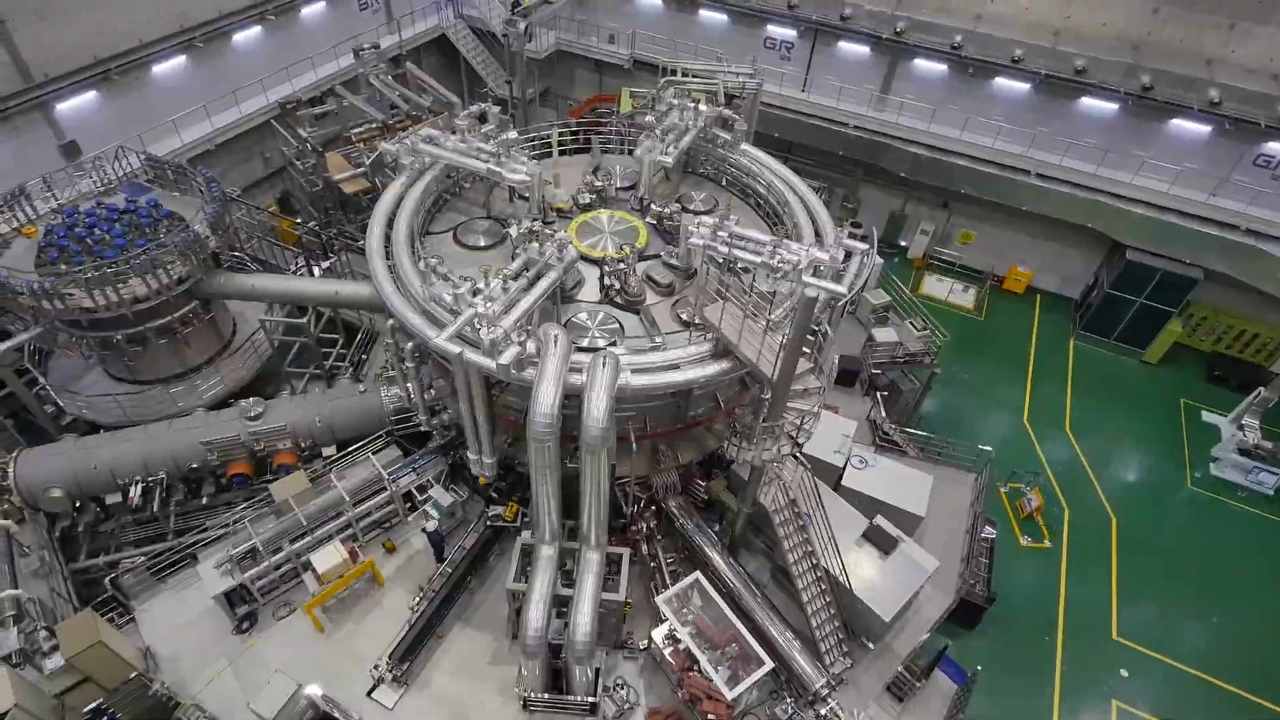
KSTAR is one of the most advanced superconducting tokamak-style nuclear fusion research device for the development of fusion energy. Image credit: KSTAR project[/caption]This new step was a joint effort between the KSTAR Research Center at the Korea Institute of Fusion Energy (KFE), the Seoul National University (SNU) and Columbia University of the United States.
What is KSTAR?
As per a report in Extreme Tech, KSTAR is one of the most advanced superconducting tokamak-style nuclear fusion research device for the development of fusion energy. A tokamak is an experimental machine designed to harness the energy of fusion. Inside a tokamak, the energy produced through the fusion of atoms is absorbed as heat in the walls of the vessel. The KSTAR is also known as the Korean artificial sun.This reactor uses powerful magnetic fields to shape super-heated plasma into a ring shape. It is a magnetic fusion device at the National Fusion Research Institute in Daejeon, South Korea.The team has stated that an improved ITB performance was the key to the most recent improvement since ITB reduces movement of ions inside the plasma leading to improved confinement and stability of the plasma.As per the report, the longer plasma remains active in the reactor, the more likely atoms will undergo fusion and produce usable amounts of energy. However, at present, current fusion reactors like KSTAR consume more power than they produce.
First Published:Jan 05, 2021, 12:34:03 IST
Advertisement
Advertisement

Careless Whispers: Scientists discover that plants can 'talk' to each other using smells
Japanese scientists have recorded a video that shows plants, in certain conditions, communicate with each other using mists that carry smells. The discovery, reveals that plants release a fine mist of airborne compounds, to warn nearby plants of potential dangers
Life on Mars? European Space Agency’s Orbiter discovers ice water deposits at equator
European Space Agency's Mars Express Orbiter has identified massive ice and ice water deposits beneath the surface of Mars. The Mars Express orbiter was also the first to confirmed the presence of ice on Mars in 2004
Microsoft briefly overtakes Apple as the most valuable company, Apple back on top again
At its peak during the session, Microsoft's value reached $2.903 trillion, with a 2% surge. As of writing this article, Apple closed at $2.89 trillion, whereas Microsoft closed at $2.86 trillion
Even NASA is facing a tough time, starts layoffs following major budget cuts
NASA is facing some massive budget cuts, because of which, it has been forced to postpone some upcoming missions. NASA's Jet Propulsion Laboratory has been hit hard by recent federal budget cuts, resulting in the layoff of 100 contractors last week
ISRO, NASA's NISAR satellite to get ready by Jan-end, will monitor Earth's snow-covered regions
The NISAR satellite which has been developed jointly ISRO and NASA, should be ready for launch by the end of January 2024. The collaboration between NASA and ISRO on NISAR is the first time the two agencies have cooperated on hardware development for an Earth-observing mission
Advertisement
Advertisement