


Full faith in Russia-made Soyuz rocket says crew ahead of first launch since failure
Russian investigators said the rocket failure was caused by a sensor that was damaged during the assembly at the Soviet era-cosmodrome

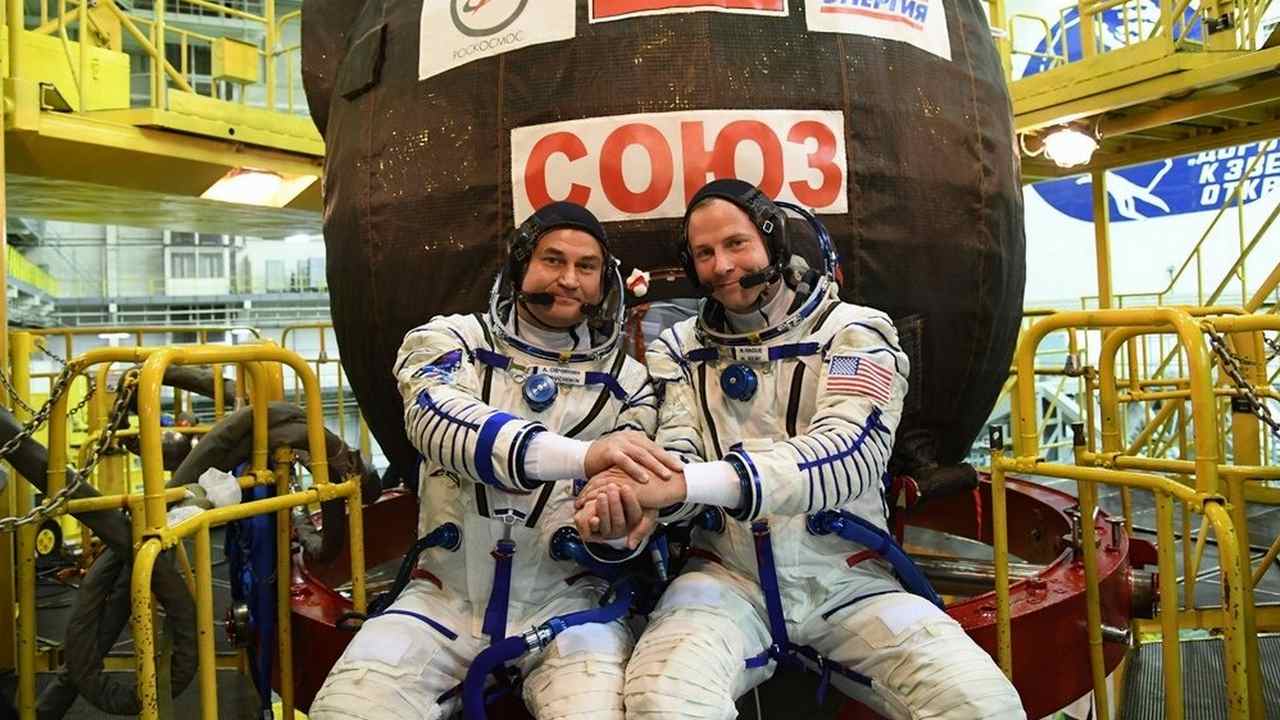
Alexey Ovchinina and Nick Hague, the two astronauts that survived the Soyuz fiasco on 11 October. Image: Reuters[/caption]Two minutes into that launch, a rocket failure forced Russian cosmonaut Alexei Ovchinin and US astronaut Nick Hague to abort their mission and hurtle back to Earth in a capsule that landed in the Kazakh steppe. The two were unharmed.Speaking at a news conference in Star City near Moscow, McClain said that occasional failures were inevitable, but that the mishap with the Soyuz-FG in October had demonstrated the reliability of its emergency safety mechanisms.“We trust our rocket. We’re ready to fly,” she said at the conference also attended by her colleagues Kononenko and Saint-Jacques.“A lot of people called it an accident or an incident, or maybe want to use it as an example of it not being safe, but for us, it’s exactly the opposite because our friends came home,” McClain told reporters.Russian investigators said the rocket failure was caused by a sensor that was damaged during the assembly at the Soviet era-cosmodrome at Baikonur from where McClain, Saint Jacques and Kononenko are due to launch.Ahead of their mission, an unmanned rocket carrying cargo is due to launch on 16 November in what will be the first Soyuz-FG take-off from Baikonur since the mishap.

Careless Whispers: Scientists discover that plants can 'talk' to each other using smells
Life on Mars? European Space Agency’s Orbiter discovers ice water deposits at equator
Microsoft briefly overtakes Apple as the most valuable company, Apple back on top again
Even NASA is facing a tough time, starts layoffs following major budget cuts
ISRO, NASA's NISAR satellite to get ready by Jan-end, will monitor Earth's snow-covered regions