


Fastest-orbiting asteroid discovered in Solar System; takes 113 Earth days to complete one lap around Sun
The asteroid is also very close to the Sun’s massive gravitational field, where it faces the largest general relativistic effects of any known Solar System object so far.

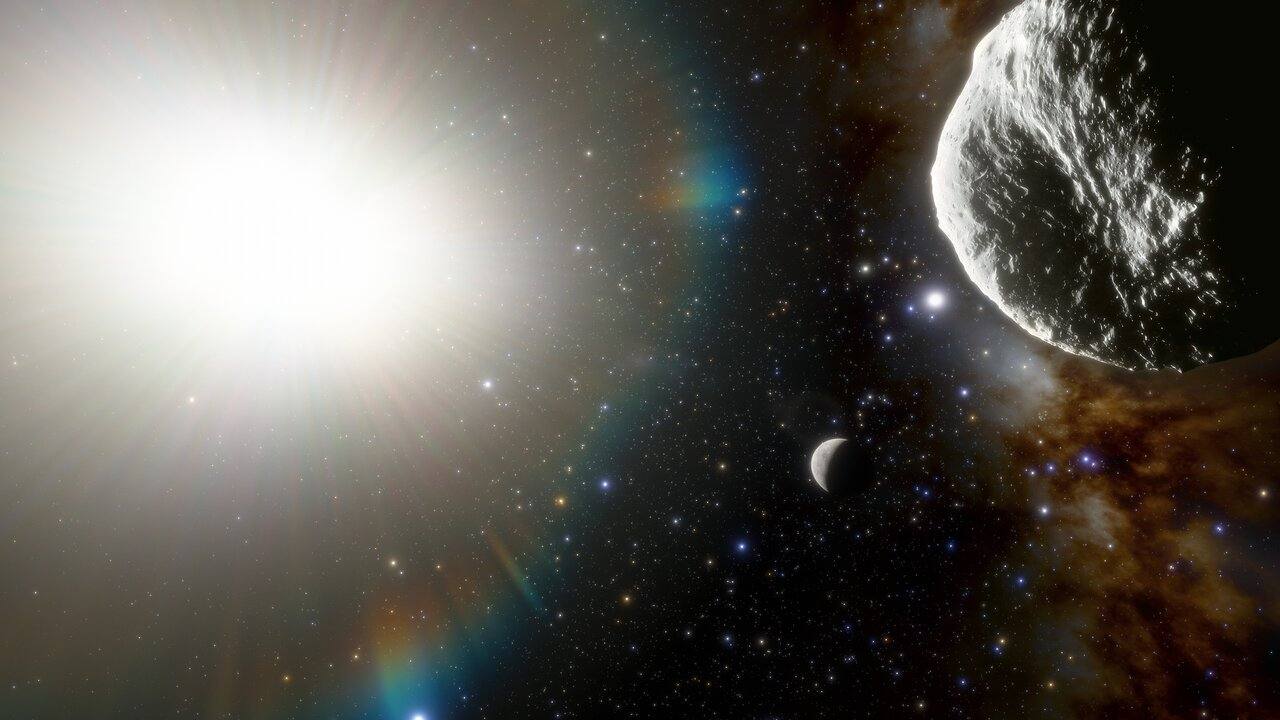
illustration showing the asteroid 2021 PH27 inside Mercury’s orbit Image credit: NSF’s NOIRLab[/caption]With its latest update, 2021 PH27 travels on a more elliptical path than the planet Mercury does. Consequently, this asteroid gets closer to the sun which is about 12.4 million miles (20 million kilometres) at the closest approach, when compared to 29 million miles (47 million km) for the solar system's innermost planet.This year, on 13 August, the 2021 PH27 was first spotted by astronomers using the Dark Energy Camera (DECam). It is a powerful multipurpose instrument that is placed on the Víctor M Blanco 4-meter Telescope in Chile’s Cerro Tololo Inter-American Observatory.Over the next few days, a team of experts was able to locate the asteroid's orbit and its details. “Though telescope time for astronomers is very precious, the international nature and love of the unknown make astronomers very willing to override their own science and observations to follow up new, interesting discoveries like this,” team leader Scott Sheppard, an astronomer at the Carnegie Institution for Science in Washington, DC, notified in a statement.During their observation through the powerful 570-megapixel DECam, astronomers revealed images acquired during twilight. The asteroid is also very close to the Sun’s massive gravitational field, where it faces the largest general relativistic effects of any known Solar System object so far.Meanwhile, the team members asserted that the 2021 PH27 postponed a few scheduled observations with those high-end instruments, but the end result was worth it. They also revealed that 2021 PH27 is currently moving behind the sun, and won't re-emerge until early 2022.

Careless Whispers: Scientists discover that plants can 'talk' to each other using smells
Life on Mars? European Space Agency’s Orbiter discovers ice water deposits at equator
Microsoft briefly overtakes Apple as the most valuable company, Apple back on top again
Even NASA is facing a tough time, starts layoffs following major budget cuts
ISRO, NASA's NISAR satellite to get ready by Jan-end, will monitor Earth's snow-covered regions