
Advertisement


Sections
Earth’s new mini moon might be space junk that was made in the 1960s
Astronomers using the Catalina Sky Survey in Arizona first detected the object, saying it could be a possible mini-moon and named it 2020 SO.

Many asteroids or natural satellites get sucked into Earth’s orbit for a short while and end up revolving around our planet while revolving around our star. These then either manage to leave the orbit and get back on track revolving around the Sun or get sucked into Earth’s atmosphere.A similar object has been spotted now and it could enter Earth’s orbit sometime this year. Observers are of the opinion that it could be a mini-moon. But it has a very similar orbit to that of the Earth, prompting observers to count in the chance for the object to be a space junk that was made by humans in the 1960s.[caption id="attachment_8850961" align="alignnone" width="1280"]![This image shows the far side of the Moon, illuminated by the Sun. Image credit: NASA]()
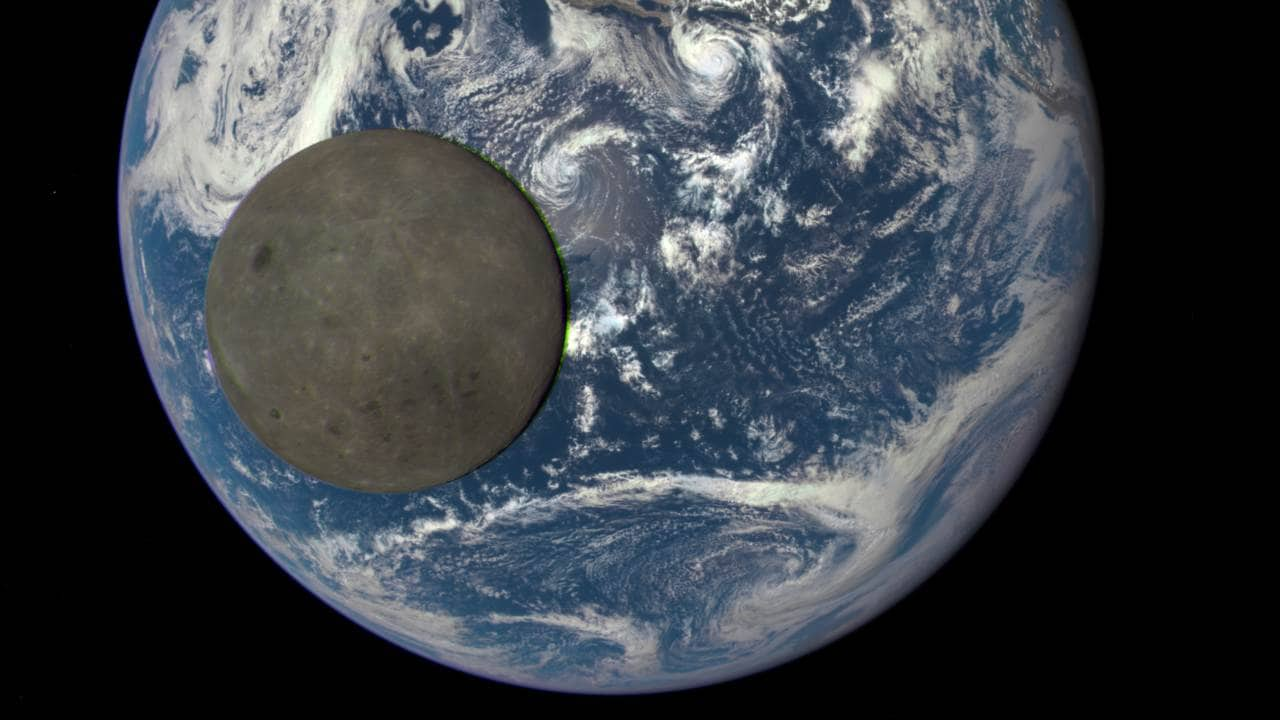
This image shows the far side of the Moon, illuminated by the Sun. Image credit: NASA[/caption]Back in February this year, a couple of astronomers at the Catalina Sky Survey in Arizona first detected the new object and said that it could be a possible mini-moon. It was named 2020 SO by the Jet Propulsion Laboratory (JPL), NASA. In the series of images shared by the astronauts, the object appeared as a flash of light darting across space.
Owing to the similarity in its orbit, observers analyzed 2020 SO’s current movements and extrapolated them backwards in time by using computer simulations. These experiments have revealed that this object would have last orbited Earth in 1966 or 1967, reported Live Science. Now, this can mean two things: either 2020 SO is a natural satellite that last orbited Earth in the 1960s or it is part of a man-made rocket that was launched during this period.Dr Paul Chodas, director of NASA’s Center for Near-Earth Object Studies, shared his calculations about the object being a booster rocket. Speaking to CNN, the scientist said 2020 SO’s “nearly circular” orbit is “precisely the kind of orbit that a rocket stage separated from a lunar mission would follow, once it passes by the Moon and escapes into orbit about the Sun. It's unlikely that an asteroid could have evolved into an orbit like this, but not impossible.”He linked the object with the launch of Surveyor 2 on 20 September 1966.First Published:Sep 25, 2020, 11:36:21 IST
Advertisement
Advertisement

Careless Whispers: Scientists discover that plants can 'talk' to each other using smells
Japanese scientists have recorded a video that shows plants, in certain conditions, communicate with each other using mists that carry smells. The discovery, reveals that plants release a fine mist of airborne compounds, to warn nearby plants of potential dangers
Life on Mars? European Space Agency’s Orbiter discovers ice water deposits at equator
European Space Agency's Mars Express Orbiter has identified massive ice and ice water deposits beneath the surface of Mars. The Mars Express orbiter was also the first to confirmed the presence of ice on Mars in 2004
Microsoft briefly overtakes Apple as the most valuable company, Apple back on top again
At its peak during the session, Microsoft's value reached $2.903 trillion, with a 2% surge. As of writing this article, Apple closed at $2.89 trillion, whereas Microsoft closed at $2.86 trillion
Even NASA is facing a tough time, starts layoffs following major budget cuts
NASA is facing some massive budget cuts, because of which, it has been forced to postpone some upcoming missions. NASA's Jet Propulsion Laboratory has been hit hard by recent federal budget cuts, resulting in the layoff of 100 contractors last week
ISRO, NASA's NISAR satellite to get ready by Jan-end, will monitor Earth's snow-covered regions
The NISAR satellite which has been developed jointly ISRO and NASA, should be ready for launch by the end of January 2024. The collaboration between NASA and ISRO on NISAR is the first time the two agencies have cooperated on hardware development for an Earth-observing mission
Advertisement
Advertisement