


Earth's collapsing systems led to dinosaurs dying out – we're headed the same way
Humans are prove to be ultimate generalists owing more to technology than evolution.

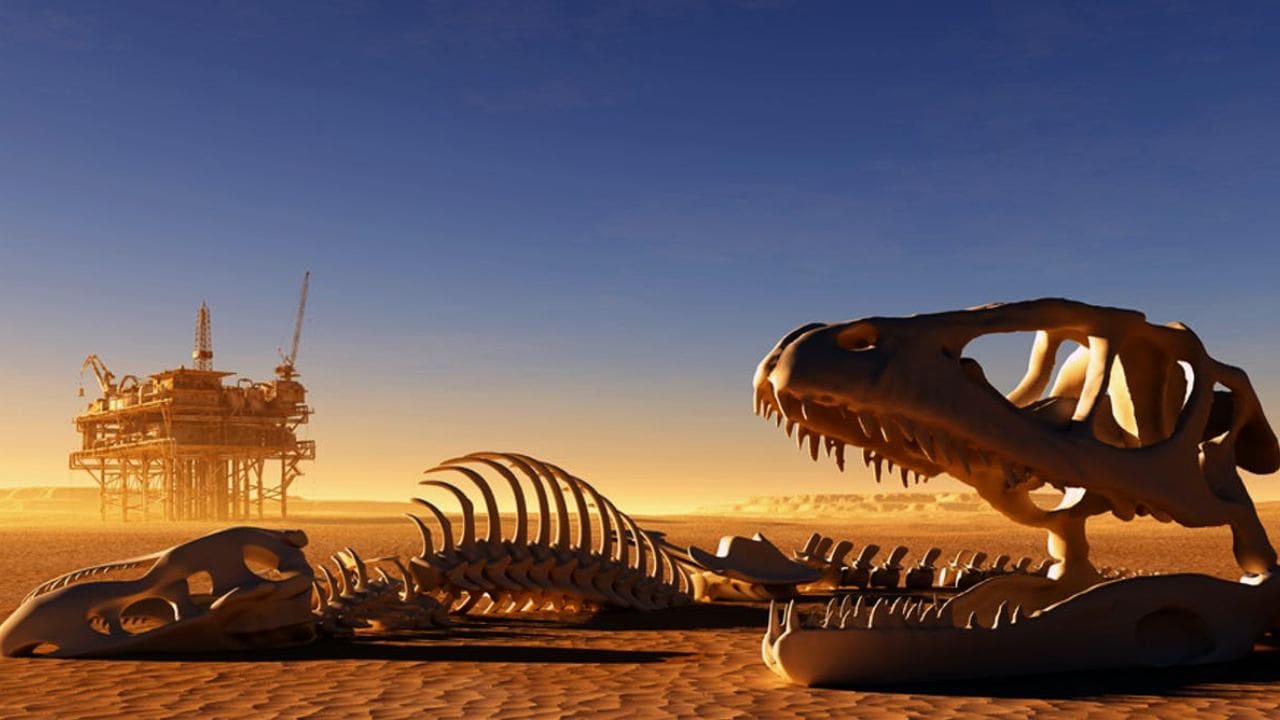
But this was not the only dramatic event to coincide with the death of the dinosaurs. At around the same time, in central India, a truly colossal series of volcanoes were spewing out over a million cubic kilometres of lava together with sulphur and carbon dioxide that changed the climate and caused global acid rain. Meanwhile, a slowing of undersea tectonic activity led to one of the most rapid periods of falling sea levels in the history of the planet, devastating coastal ecosystems.This has led to some pretty heated debates about what “really” killed the dinosaurs, especially as there have been times when similarly dramatic events occurred without seeming to cause nearly so much harm.Perhaps this is the wrong question to ask.
Profound, complex, interconnected change
Growing evidence now suggests that these events were interconnected and that the dinosaurs’ extinction cannot be explained as a simple process during which one “bad thing” fell out of a clear blue sky and everything died. Rather, it involved profound, complex and interconnected changes to the global systems that support life.For instance, the late cretaceous period saw a gradual and subtle restructuring of terrestrial ecosystems, making them more vulnerable to catastrophic collapse. Such restructuring was potentially brought about by multiple evolutionary and ecological changes related to climate change, the increasing dominance of flowering plants, and fluctuations in the diversity and abundance of particular dinosaur groups.[caption id="" align="aligncenter" width="600"]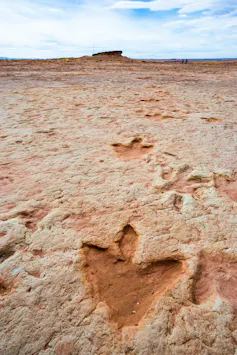
Dinosaur tracks in remote Arizona, US. Image: Asif Islam/Shutterstock[/caption]Nor is this complexity an unusual feature of mass extinctions. Across all five of Earth’s devastating global catastrophes, there is a veritable whodunit of possible causes. These include asteroids, volcanoes, climate change (both warming and cooling), the evolution of new species such as deep-rooted plants that turned bare rock into rich soil for the first time, and even the effects of nearby exploding stars.Yet, the biggest of all mass extinction events, the “Great Dying” at the end of the Permian period 250m years ago – which killed 90% of all species on Earth – looks even more complex. No fewer than seven potentially catastrophic events are associated with this period in geological history. These include the evolution of new strains of microorganism, an asteroid impact, and a humongous area of volcanic activity in present-day Siberia that erupted for a million years.With so much going on, it is less surprising that 90 percent of all species died out than that 10 percent survived.
Precarious times
What does this imply about our current age, which many now see as constituting a “sixth” mass extinction?
![]()
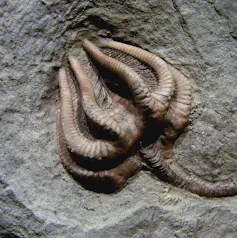
- Carboniferous crinoid or ‘sea lily’ significantly decreased after the End-Permian extinction. Image: Wikipedia Commons
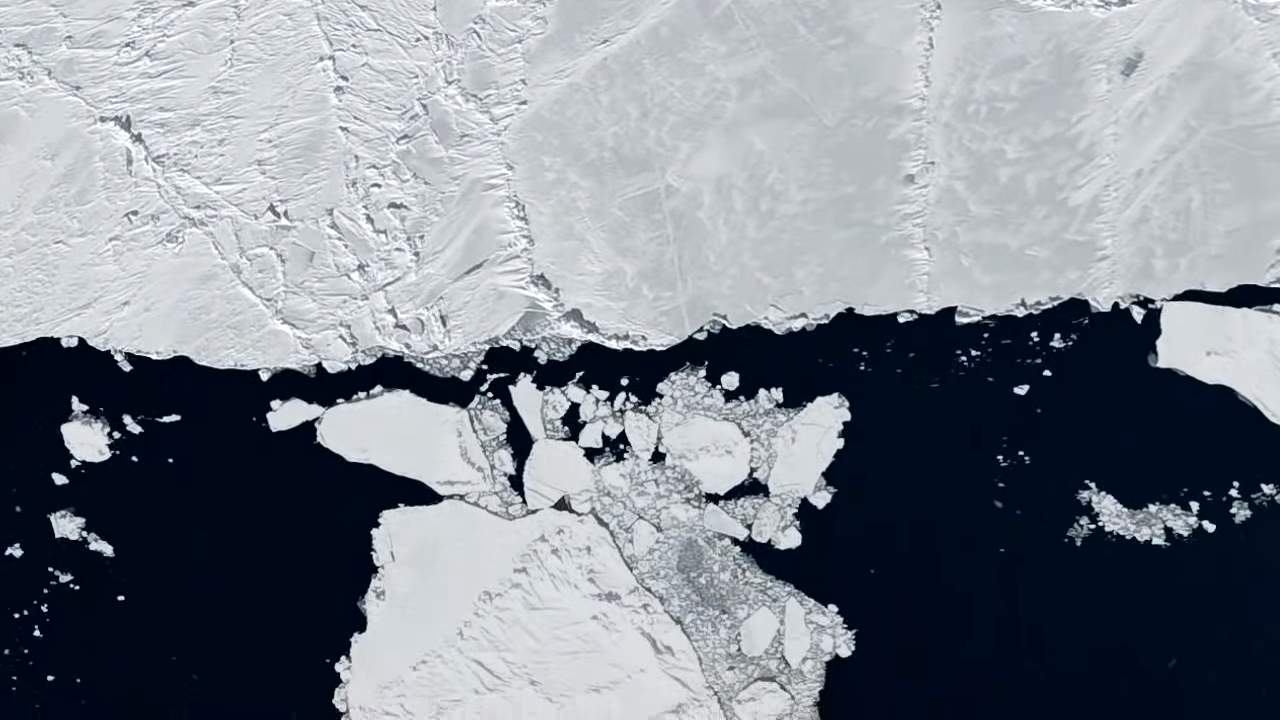 Representational image. Image: NOAA[/caption]Nor may the systems we ourselves have designed be any less fragile in this respect. Indeed, many of our institutions have shown themselves to be almost entirely unconcerned with human well-being; so long as they can serve the interests of short-term profit maximisation, voter turnout and other, ultimately useless, goals.Yet, it might not be all bad news for humanity. Some theorists suggest that the catastrophic effects of a mass extinction tend to sweep away the highly adapted specialists of the era and allow more flexible generalists to survive and eventually flourish into new forms. So perhaps we can take comfort from the fact that humans have shown themselves to be the ultimate generalists, adapting to survive, though not always thrive, in every habitat on Earth, and even in outer space.But we should also reflect on the fact that most of this flexibility flows not from our biology but from the technologies we have created. Not only are these the very technologies that are leading us to push global systems as far as we have, but they are rapidly passing out of the realms of human comprehension in their complexity and sophistication. Indeed, it now requires immense individual knowledge to use and maintain them, making each of us, individually, just the sort of adapted specialists most vulnerable in a mass extinction event – something that may not be quite such good news after all.
 Simon Beard, Senior Research Associate, Centre for the Study of Existential Risk, University of Cambridge; Lauren Holt, Research Associate, Centre for the Study of Existential Risk, University of Cambridge, and Paul Upchurch, Professor of Palaeobiology, UCLThis article is republished from The Conversation under a Creative Commons license. Read the original article.
Careless Whispers: Scientists discover that plants can 'talk' to each other using smells
Life on Mars? European Space Agency’s Orbiter discovers ice water deposits at equator
Microsoft briefly overtakes Apple as the most valuable company, Apple back on top again
Even NASA is facing a tough time, starts layoffs following major budget cuts
ISRO, NASA's NISAR satellite to get ready by Jan-end, will monitor Earth's snow-covered regions