


Coronavirus is sparing children and largely affecting the ill and aged — infection experts explain why
Experts have theorised that younger people are being infected, too, but developing a relatively milder infection.

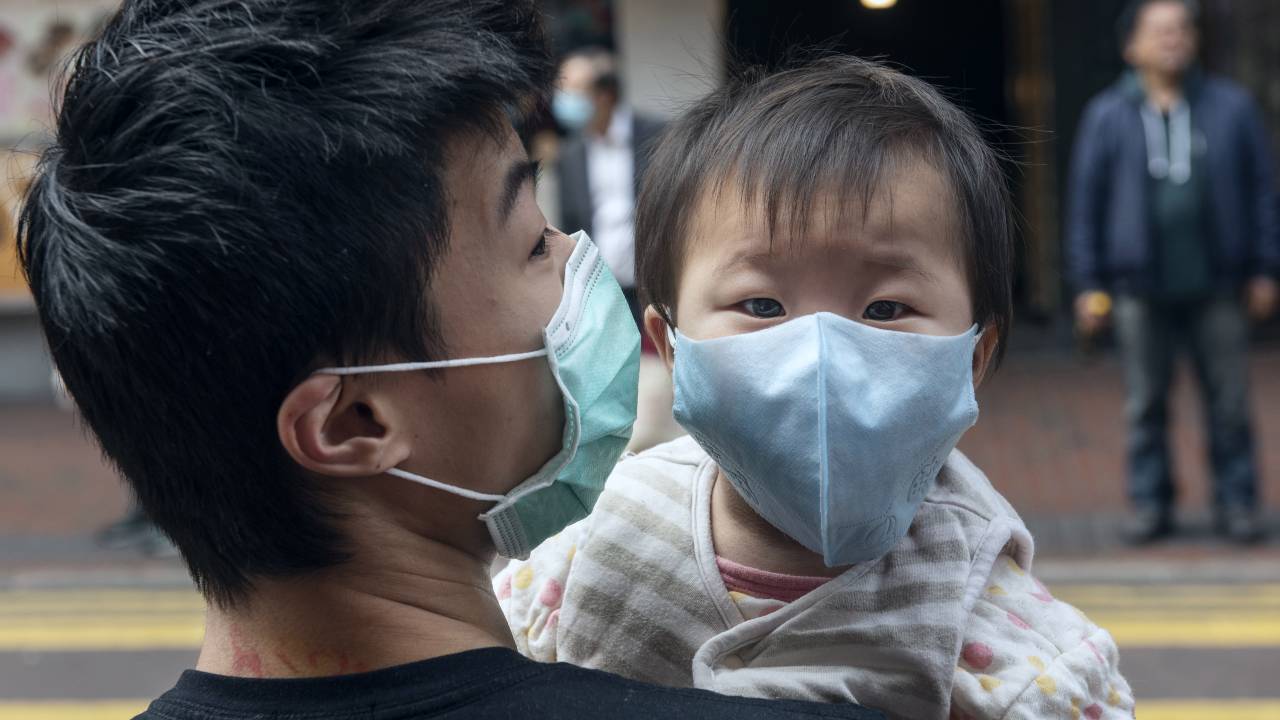
Father and his son wear face mask to prevent a coronavirus infection in Hong Kong, 3 Feb 2020. image: Miguel Candela Poblacion/Getty[/caption]In one published case, a 10-year-old traveled to Wuhan, China, the epicenter of the outbreak, with his family. Upon returning to Shenzhen, China, the other infected family members, ranging in age from 36 to 66, developed fever, sore throat, diarrhea and pneumonia.The child, too, had signs of viral pneumonia in the lungs, doctors found — but no outward symptoms. Some scientists suspect that this is typical of coronavirus infection in children.“It’s certainly true that children can be either asymptomatically infected or have a very mild infection,” said Dr Raina MacIntyre, an epidemiologist at the University of New South Wales in Sydney who has been studying the spread of the new coronavirus.In many ways, this pattern parallels that seen during outbreaks of SARS and MERS, also coronaviruses. The MERS epidemics in Saudi Arabia in 2012 and in South Korea in 2015 together claimed more than 800 lives. Most children who were infected never developed symptoms.No children died during the SARS epidemic in 2003, and the majority of the 800 deaths in the outbreak were in people over age 45, with men more at risk.Among the more than 8,000 cases of SARS, researchers at the Centers for Disease Control and Prevention were able to identify 135 infected children in published reports.Children under age 12 were much less likely to be admitted to a hospital or to need oxygen or other treatment, researchers found. Children over age 12 had symptoms much like those of adults.“We don’t fully understand the reason for this age-related increase of severity,” Peiris said. “But we see that now — and with SARS, you could see that much more clearly.”It’s not unusual for viruses to trigger only mild infections in children and much more severe illnesses in adults. Chickenpox, for example, can be largely inconsequential in children yet catastrophic in adults.Influenza is unusual in that it has evolved with humans over thousands of years and infects millions worldwide each year. Still, even though thousands of young children end up in the hospital each year with influenza, just a small percentage of them die, Peiris noted.Adults may be more susceptible because they are more likely to have other diseases, such as diabetes, high blood pressure or heart disease, that weaken their ability to stave off infections.The body’s innate immunity, which is critical for fighting viruses, also deteriorates with age, and particularly after middle age.“Something happens at age 50,” MacIntyre said. “It declines, and it declines exponentially, which is why for most infections we see the highest incidence in the elderly.”A key question about the new coronavirus is whether children who are infected and asymptomatic are able to pass the virus to others.“We know that young people in general — not just kids, but young adults and teenagers — have the most intense contact in society,” MacIntyre said. Young people who don’t realize they are sick may contribute to the epidemic’s momentum, she said.To understand the epidemic fully, she and other scientists said they need detailed data: when people were first exposed to the virus, when they first began to show symptoms, and how many and which people have mild symptoms versus more severe disease.With detailed data, some observations, such as the higher risk in men, may change. Still, Dr. Mark Denison, a pediatric infectious diseases specialist at Vanderbilt University in Nashville, Tennessee, said he does not expect to see a sudden uptick in infected children.“It’s hard for me to imagine that there’s such a degree of underreporting of clinical illness in children that we’re only hearing about two or three cases,” he said.“I think it means that there are many, many less children” who are infected in China, he said, “and that they’re not as much at risk.”Apoorva Mandavilli. c.2020 The New York Times Company

Careless Whispers: Scientists discover that plants can 'talk' to each other using smells
Life on Mars? European Space Agency’s Orbiter discovers ice water deposits at equator
Microsoft briefly overtakes Apple as the most valuable company, Apple back on top again
Even NASA is facing a tough time, starts layoffs following major budget cuts
ISRO, NASA's NISAR satellite to get ready by Jan-end, will monitor Earth's snow-covered regions