
Advertisement


Sections
China launches first Tianwen-1 orbiter-lander-rover mission to Mars today; CNSA yet to confirm success
The launch is an open secret, with CNSA not particularly hiding the relevant information but not being very forthcoming with it either.

China's first interplanetary Mars mission, Tianwen-1, has launched today, 23 July 202o at 10.12 am IST.China's largest carrier rocket, the Long March 5, lifted off with the Tianwen-1 spacecraft from the Wenchang Satellite Launch Center on Hainan Island in southern China.While the launch has been confirmed by local news media, a final word of confirmation on the mission's successful launch is still awaited from the Chinese National Space Agency (CNSA).The mission compromises of a Mars orbiter, rover, and lander, weighing a total of (including fuel) about 5 tonnes. The spacecraft is expected to reach Mars around February 2021, after which the scientific observation phase will begin in April 2021. The lander and rover will perform a soft landing on Utopia Planitia, around two to three months after it arrives at Mars. Utopia Planitia a large plain in the largest crater - Utopia - on Mars.The China National Space Administration (CNSA) has named the mission 'Tianwen-1' after a poem by a popular ancient poet in Chinese history, Qu Yuan.In the poem, Yuan raises questions about stars and other celestial bodies. The Tianwen-1 mission's name is inspired by references made to 'Heavenly Questions' or 'Questions to Heaven' asked in Yuan's poem.[caption id="attachment_8630491" align="alignnone" width="1280"]![Artist’s impression of the Tianwen-1 mission that is a combination of orbiter, lander and rover. Image credit: Nature]() Artist’s impression of the Tianwen-1 mission that is a combination of orbiter, lander and rover. Image credit: Nature[/caption]The launch of the Tianwen-1 is an open secret, with CNSA not particularly hiding the relevant information but not being very forthcoming with it either.This will be the second interplanetary mission to launch this year, after the United Arab Emirates successfully launched their Hope Probe on 20 July. All space agencies are taking advantage of a window of time between 14 July and 12 August 2020, where Mars and Earth are in close proximity. This gives the agencies a relatively long launch window in case of any last-minute technical emergencies or issues.[caption id="attachment_7834951" align="alignnone" width="1280"]
Artist’s impression of the Tianwen-1 mission that is a combination of orbiter, lander and rover. Image credit: Nature[/caption]The launch of the Tianwen-1 is an open secret, with CNSA not particularly hiding the relevant information but not being very forthcoming with it either.This will be the second interplanetary mission to launch this year, after the United Arab Emirates successfully launched their Hope Probe on 20 July. All space agencies are taking advantage of a window of time between 14 July and 12 August 2020, where Mars and Earth are in close proximity. This gives the agencies a relatively long launch window in case of any last-minute technical emergencies or issues.[caption id="attachment_7834951" align="alignnone" width="1280"]![China launches third Long March-5 rocket in Hainan province on Friday evening, 27 December 2019. Image: ANI]() China launches third Long March-5 rocket in Hainan province on Friday evening, 27 December 2019. Image: ANI[/caption]One Martian year is equal to almost two years on Earth i.e. Mars takes two Earth years to complete one orbit around the sun. It is only once every two years that the two planets come into perfect alignment with each other around the Sun. This alignment is the ideal time for an Earth-Mars journey since it saves on time, money and fuel.
China launches third Long March-5 rocket in Hainan province on Friday evening, 27 December 2019. Image: ANI[/caption]One Martian year is equal to almost two years on Earth i.e. Mars takes two Earth years to complete one orbit around the sun. It is only once every two years that the two planets come into perfect alignment with each other around the Sun. This alignment is the ideal time for an Earth-Mars journey since it saves on time, money and fuel.
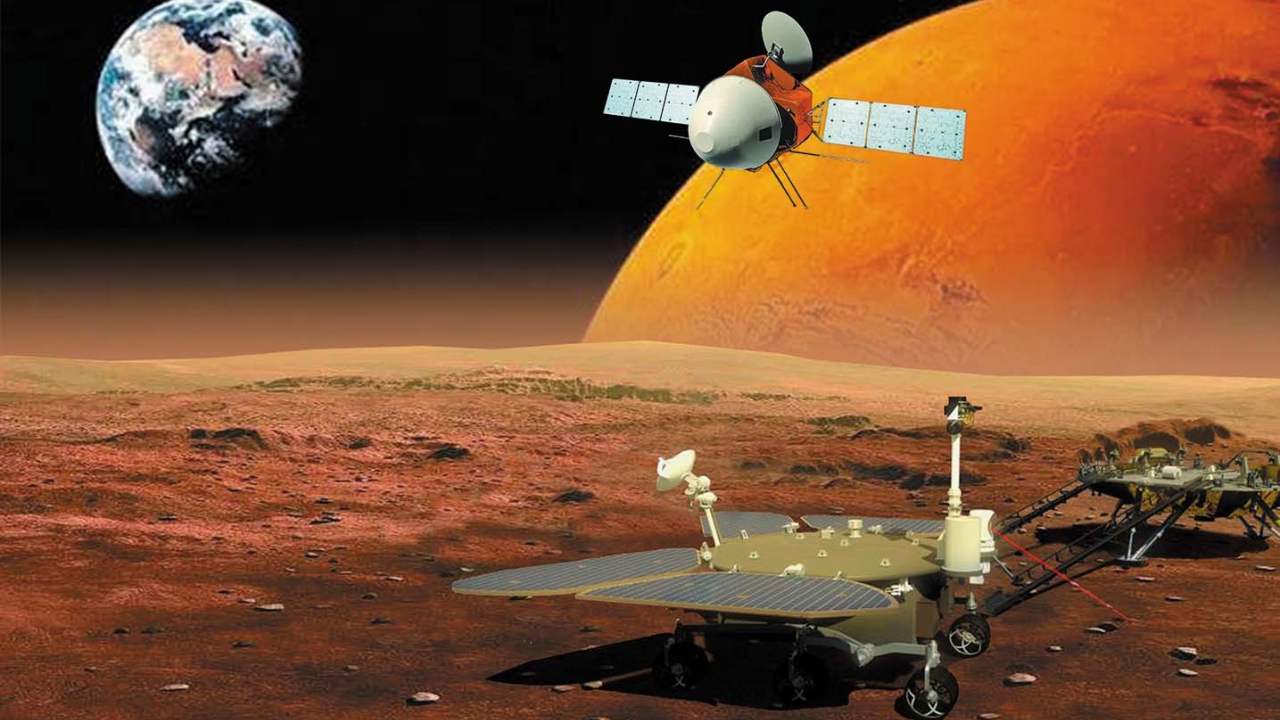 Artist’s impression of the Tianwen-1 mission that is a combination of orbiter, lander and rover. Image credit: Nature[/caption]The launch of the Tianwen-1 is an open secret, with CNSA not particularly hiding the relevant information but not being very forthcoming with it either.This will be the second interplanetary mission to launch this year, after the United Arab Emirates successfully launched their Hope Probe on 20 July. All space agencies are taking advantage of a window of time between 14 July and 12 August 2020, where Mars and Earth are in close proximity. This gives the agencies a relatively long launch window in case of any last-minute technical emergencies or issues.[caption id="attachment_7834951" align="alignnone" width="1280"]
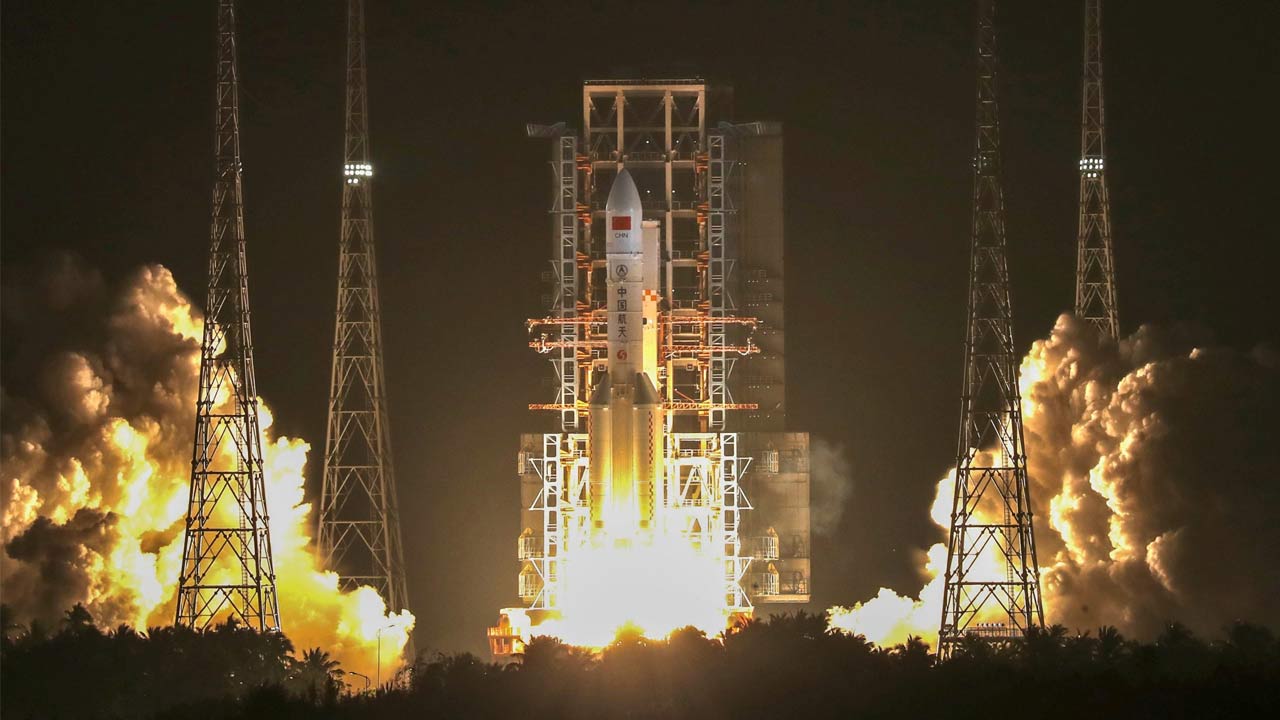 China launches third Long March-5 rocket in Hainan province on Friday evening, 27 December 2019. Image: ANI[/caption]One Martian year is equal to almost two years on Earth i.e. Mars takes two Earth years to complete one orbit around the sun. It is only once every two years that the two planets come into perfect alignment with each other around the Sun. This alignment is the ideal time for an Earth-Mars journey since it saves on time, money and fuel.
China's unsuccessful past attempts to reach Mars
According to The New York Times, in 2011, China tried to reach Mars but failed. The Chinese space agency had paired its orbiter Yinghuo-1 along with Russias mission to study Phobos, one of the two tiny Martian moons.The Russian rocket carrying both the spacecraft malfunctioned a little after launch, and it couldn’t escape the Earth's gravity. Both spacecraft eventually burned up in the atmosphere.First Published:Jul 23, 2020, 08:00:13 IST
Advertisement
Advertisement

Careless Whispers: Scientists discover that plants can 'talk' to each other using smells
Japanese scientists have recorded a video that shows plants, in certain conditions, communicate with each other using mists that carry smells. The discovery, reveals that plants release a fine mist of airborne compounds, to warn nearby plants of potential dangers
Life on Mars? European Space Agency’s Orbiter discovers ice water deposits at equator
European Space Agency's Mars Express Orbiter has identified massive ice and ice water deposits beneath the surface of Mars. The Mars Express orbiter was also the first to confirmed the presence of ice on Mars in 2004
Microsoft briefly overtakes Apple as the most valuable company, Apple back on top again
At its peak during the session, Microsoft's value reached $2.903 trillion, with a 2% surge. As of writing this article, Apple closed at $2.89 trillion, whereas Microsoft closed at $2.86 trillion
Even NASA is facing a tough time, starts layoffs following major budget cuts
NASA is facing some massive budget cuts, because of which, it has been forced to postpone some upcoming missions. NASA's Jet Propulsion Laboratory has been hit hard by recent federal budget cuts, resulting in the layoff of 100 contractors last week
ISRO, NASA's NISAR satellite to get ready by Jan-end, will monitor Earth's snow-covered regions
The NISAR satellite which has been developed jointly ISRO and NASA, should be ready for launch by the end of January 2024. The collaboration between NASA and ISRO on NISAR is the first time the two agencies have cooperated on hardware development for an Earth-observing mission
Advertisement
Advertisement