
Advertisement


Sections
Chandrayaan 2: Failure is part of the 'big game', shouldn't discourage the science community, says NASA-JPL CTO
The NASA JPL Chief emphasised a familiar statistic quotes at the time of Vikram's planned landing — 40% of moons missions in last 60 years have failed.

It's only been weeks since the American space agency NASA shared the first visuals of the debris field of the Vikram lander — part of India's first attempt to land on the moon with the Chandrayaan 2 mission. The Chief Technical Officer of NASA's Jet Propulsion Laboratory has shared what his biggest takeaway from the Chandrayaan 2 mission is: space probes are bound to fail, and no one knows failure [and learning from it] than NASA."Space missions are expected to fail...[but this] must not deter the scientific community in India that [witnessed] the Vikram lander not making it to the lunar surface from attempting [it] again", Tomas Soderstrom, Chief Innovation and Technology Officer at NASA JPL, told Indo-Asian News Service in an interview."That's the business because it's a difficult business...it's amazing that it ever works. We get super nervous every single time...we never know if [our plans will] work there — one little thing goes wrong and the whole thing [can] fail," Soderstrom added.[caption id="attachment_7758931" align="alignnone" width="1280"]![The moon lander Vikram (in the foreground) and orbiter (in the back ground), part of the Chandrayaan 2 mission, in a clean room at ISRO, Bengaluru. Image: Getty]() The moon lander Vikram (in the foreground) and orbiter (in the back ground), part of the Chandrayaan 2 mission, in a clean room at ISRO, Bengaluru. Image: Getty[/caption]In his statement, the NASA JPL Chief put emphasis on a statistic that made the rounds in the days leading up to the expected landing date of Chandrayaan 2 on 7 September: 40 percent of lunar missions in last 60 years have failed.Losing a rover or two in the larger scheme of things isn't worth losing heart over, Soderstrom told IANS. "When we went to the Moon, it failed time and time again, but eventually it worked. You learn."After NASA released images of the crashed Vikram lander on 2 December, the ISRO Chairman Dr K Sivan was quick to reiterate that ISRO's own orbiter (which is also part of the partially successful Chandrayaan 2 mission) located the crashed Vikram lander on the lunar surface. However, he added that "ISRO will not refute the claims made by NASA."[caption id="attachment_7668411" align="alignnone" width="1280"]
The moon lander Vikram (in the foreground) and orbiter (in the back ground), part of the Chandrayaan 2 mission, in a clean room at ISRO, Bengaluru. Image: Getty[/caption]In his statement, the NASA JPL Chief put emphasis on a statistic that made the rounds in the days leading up to the expected landing date of Chandrayaan 2 on 7 September: 40 percent of lunar missions in last 60 years have failed.Losing a rover or two in the larger scheme of things isn't worth losing heart over, Soderstrom told IANS. "When we went to the Moon, it failed time and time again, but eventually it worked. You learn."After NASA released images of the crashed Vikram lander on 2 December, the ISRO Chairman Dr K Sivan was quick to reiterate that ISRO's own orbiter (which is also part of the partially successful Chandrayaan 2 mission) located the crashed Vikram lander on the lunar surface. However, he added that "ISRO will not refute the claims made by NASA."[caption id="attachment_7668411" align="alignnone" width="1280"]![ISRO Chairman Dr K Sivan (L) and Minister of State in the Department of Atomic Energy and Minister of State in the Department of Space Dr Jitendra Singh brief media on Chandrayaan 2 on 13 June 2019 in New Delhi. Image: Getty]() ISRO Chairman Dr K Sivan (L) and Minister of State in the Department of Atomic Energy and Minister of State in the Department of Space Dr Jitendra Singh brief media on Chandrayaan 2 on 13 June 2019 in New Delhi. Image: Getty[/caption]The key takeaway from the mission, in Soderstrom's words, is to "share all that learning so that more people can participate in the endeavour to reach the next frontier in space." For the timebeing, the technological frontier is the moon, with Mars being a close second. But in a few years, that moving goal post is likely a lot further away from the Earth than the moon or Mars."In the end, the Earth is ours, and if we [one day] need to find a new Earth, it's going to be the whole Earth that has to pull it together because it's a big job," he emphasised.[caption id="attachment_5346611" align="alignnone" width="1280"]
ISRO Chairman Dr K Sivan (L) and Minister of State in the Department of Atomic Energy and Minister of State in the Department of Space Dr Jitendra Singh brief media on Chandrayaan 2 on 13 June 2019 in New Delhi. Image: Getty[/caption]The key takeaway from the mission, in Soderstrom's words, is to "share all that learning so that more people can participate in the endeavour to reach the next frontier in space." For the timebeing, the technological frontier is the moon, with Mars being a close second. But in a few years, that moving goal post is likely a lot further away from the Earth than the moon or Mars."In the end, the Earth is ours, and if we [one day] need to find a new Earth, it's going to be the whole Earth that has to pull it together because it's a big job," he emphasised.[caption id="attachment_5346611" align="alignnone" width="1280"]![In this image captured during the Galileo mission in the 1990s, Europa's icy surface and the long fissures cutting through them are evident. Image courtesy: NASA]() This image captured by the Galileo mission in the 1990s shows Jupiter's moon Europa's icy surface, and the long fissures cutting through them. Apart from its frigid temperatures, there's a lot about Europa — flowing liquid water, most of all — that make it a promising potential planet for humans to inhabit in the future. Image courtesy: NASA[/caption]As for NASA's most likely guess at a potential second Earth, it isn't the moon, but Jupiter's moon Europa that they're eyeing. Liquid water erupts in huge geysers from under the moon's thin, icy surface from time to time, and scientists expect to find some microbial life there. An international research effort led by NASA's Goddard Space Flight Center confirmed that water vapour was present above Europa's surface, in a study published in November 2019."We're going to go to Europa," Soderstrom said. "We're [also] going to Mars because we don't know yet if life was there. If we can find that the planet was [once] brimming with life, that'll be very interesting."
This image captured by the Galileo mission in the 1990s shows Jupiter's moon Europa's icy surface, and the long fissures cutting through them. Apart from its frigid temperatures, there's a lot about Europa — flowing liquid water, most of all — that make it a promising potential planet for humans to inhabit in the future. Image courtesy: NASA[/caption]As for NASA's most likely guess at a potential second Earth, it isn't the moon, but Jupiter's moon Europa that they're eyeing. Liquid water erupts in huge geysers from under the moon's thin, icy surface from time to time, and scientists expect to find some microbial life there. An international research effort led by NASA's Goddard Space Flight Center confirmed that water vapour was present above Europa's surface, in a study published in November 2019."We're going to go to Europa," Soderstrom said. "We're [also] going to Mars because we don't know yet if life was there. If we can find that the planet was [once] brimming with life, that'll be very interesting."
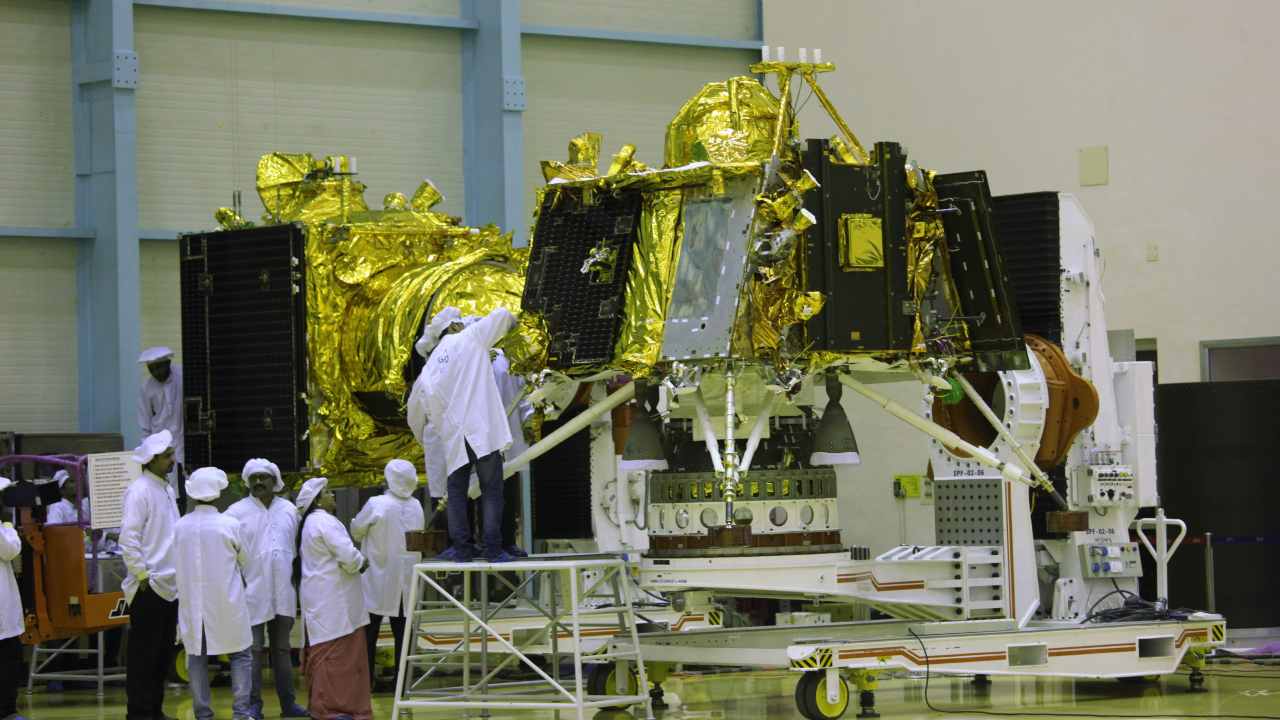 The moon lander Vikram (in the foreground) and orbiter (in the back ground), part of the Chandrayaan 2 mission, in a clean room at ISRO, Bengaluru. Image: Getty[/caption]In his statement, the NASA JPL Chief put emphasis on a statistic that made the rounds in the days leading up to the expected landing date of Chandrayaan 2 on 7 September: 40 percent of lunar missions in last 60 years have failed.Losing a rover or two in the larger scheme of things isn't worth losing heart over, Soderstrom told IANS. "When we went to the Moon, it failed time and time again, but eventually it worked. You learn."After NASA released images of the crashed Vikram lander on 2 December, the ISRO Chairman Dr K Sivan was quick to reiterate that ISRO's own orbiter (which is also part of the partially successful Chandrayaan 2 mission) located the crashed Vikram lander on the lunar surface. However, he added that "ISRO will not refute the claims made by NASA."[caption id="attachment_7668411" align="alignnone" width="1280"]
 ISRO Chairman Dr K Sivan (L) and Minister of State in the Department of Atomic Energy and Minister of State in the Department of Space Dr Jitendra Singh brief media on Chandrayaan 2 on 13 June 2019 in New Delhi. Image: Getty[/caption]The key takeaway from the mission, in Soderstrom's words, is to "share all that learning so that more people can participate in the endeavour to reach the next frontier in space." For the timebeing, the technological frontier is the moon, with Mars being a close second. But in a few years, that moving goal post is likely a lot further away from the Earth than the moon or Mars."In the end, the Earth is ours, and if we [one day] need to find a new Earth, it's going to be the whole Earth that has to pull it together because it's a big job," he emphasised.[caption id="attachment_5346611" align="alignnone" width="1280"]
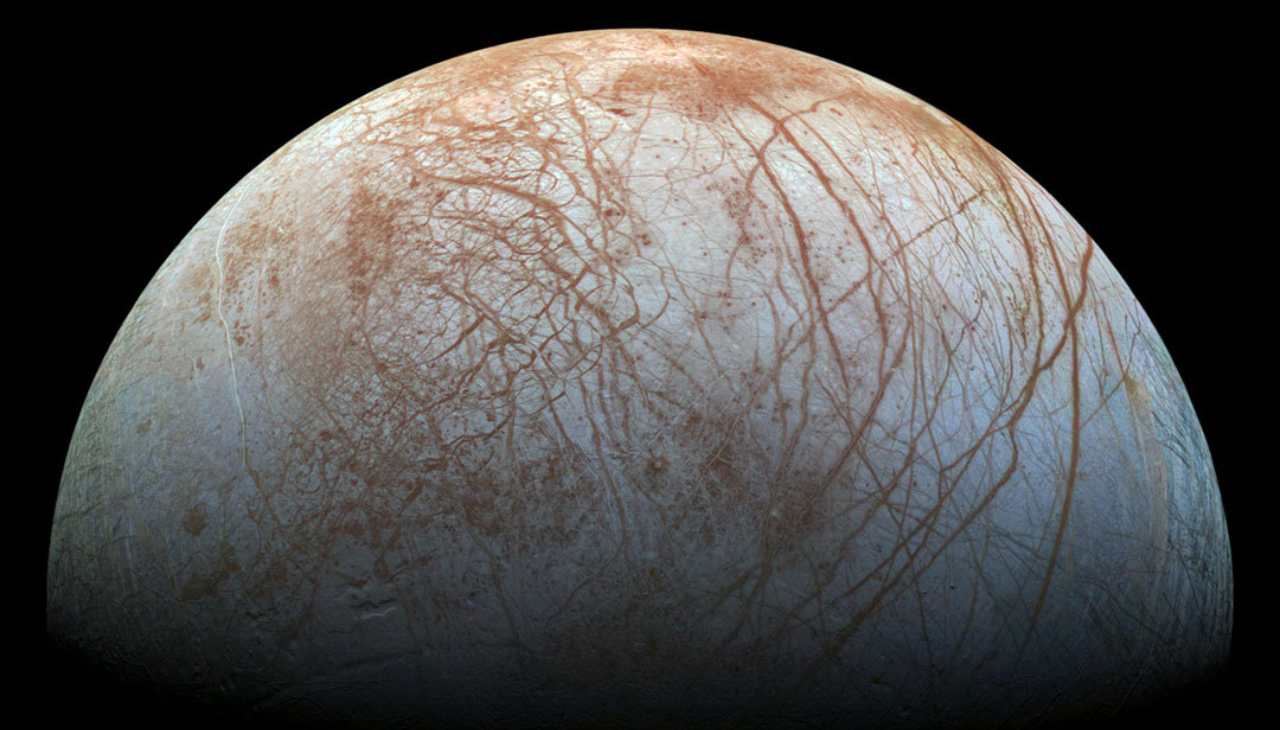 This image captured by the Galileo mission in the 1990s shows Jupiter's moon Europa's icy surface, and the long fissures cutting through them. Apart from its frigid temperatures, there's a lot about Europa — flowing liquid water, most of all — that make it a promising potential planet for humans to inhabit in the future. Image courtesy: NASA[/caption]As for NASA's most likely guess at a potential second Earth, it isn't the moon, but Jupiter's moon Europa that they're eyeing. Liquid water erupts in huge geysers from under the moon's thin, icy surface from time to time, and scientists expect to find some microbial life there. An international research effort led by NASA's Goddard Space Flight Center confirmed that water vapour was present above Europa's surface, in a study published in November 2019."We're going to go to Europa," Soderstrom said. "We're [also] going to Mars because we don't know yet if life was there. If we can find that the planet was [once] brimming with life, that'll be very interesting."
First Published:Dec 16, 2019, 14:23:44 IST
Advertisement
Advertisement

Careless Whispers: Scientists discover that plants can 'talk' to each other using smells
Japanese scientists have recorded a video that shows plants, in certain conditions, communicate with each other using mists that carry smells. The discovery, reveals that plants release a fine mist of airborne compounds, to warn nearby plants of potential dangers
Life on Mars? European Space Agency’s Orbiter discovers ice water deposits at equator
European Space Agency's Mars Express Orbiter has identified massive ice and ice water deposits beneath the surface of Mars. The Mars Express orbiter was also the first to confirmed the presence of ice on Mars in 2004
Microsoft briefly overtakes Apple as the most valuable company, Apple back on top again
At its peak during the session, Microsoft's value reached $2.903 trillion, with a 2% surge. As of writing this article, Apple closed at $2.89 trillion, whereas Microsoft closed at $2.86 trillion
Even NASA is facing a tough time, starts layoffs following major budget cuts
NASA is facing some massive budget cuts, because of which, it has been forced to postpone some upcoming missions. NASA's Jet Propulsion Laboratory has been hit hard by recent federal budget cuts, resulting in the layoff of 100 contractors last week
ISRO, NASA's NISAR satellite to get ready by Jan-end, will monitor Earth's snow-covered regions
The NISAR satellite which has been developed jointly ISRO and NASA, should be ready for launch by the end of January 2024. The collaboration between NASA and ISRO on NISAR is the first time the two agencies have cooperated on hardware development for an Earth-observing mission
Advertisement
Advertisement