
Advertisement


Sections
BioMethics: understanding bioethics issues and its aspects in biomedical engineering
Incorporate insights on bioethical principles into clinical research is the need of the hour.

The bioengineering world, as well as the biomedical sciences, are evolving very rapidly on new frontiers such as artificial intelligence, machine learning, deep learning and 3D printing beyond the established frontiers related to genetic engineering and genomics. Now techniques are being refined and advanced systems are being built to assist doctors in making accurate diagnosis and, in the instance of genetic engineering, the development of genomic editing techniques.The genomic approach has seen some success in the field of oncology by modifying the protocols of effective immunotherapies. Compared to previous cytotoxic chemotherapies, effective immunotherapies have showed significant and promising results in patients. This revolution is creating a veritable tsunami of computer data on patients, their illnesses, the diagnostic tests carried out and genetic data.In light of the growing research on predictive medicine, hyper-personalised medical services and medical devices which can better support the diagnosis and therapy through machine learning — it’s necessary to incorporate insights on bioethical principles into medical design and clinical research. Furthermore, the tsunami that we all know as Big Data requires great reflection on the techniques used to analyse data, to manage it, to govern it and to interpret it in the most correct way.[caption id="attachment_6778521" align="alignnone" width="1280"]![Representative Image]() Representative Image[/caption]Each great technological evolution should be accompanied by ethical reasoning that focuses, primarily, on the patient's welfare. Health policies should follow not just on a national level but also on a European level in the interests of balanced and democratic medicine. The role of bioengineers has become necessary in order to coordinate and centralise procedures in a clinical investigation and adopt new technologies. Due to the complexity of problems linked to the evolution of medicine as well as the pressing challenges of an ageing population, a multidimensional approach is needed which includes clinical engineering and humane bioethical elements.Actors and the controlled mapping of processes become crucial to ensure that the essential principles of bioethics namely — respect for autonomy, non-maleficence, social benefit and justice — are respected not only for the doctor and patient — but also for all relevant stakeholders and professionals, who have access to, and who are involved in managing the sensitive medical data.These principles must be viewed and oriented toward two complementary directions. The first direction involves health professionals — those who are responsible for patient care as well as technical operators who are responsible for the choice of biomedical equipment, governance, and data security. The second direction concerns respect for the patient in their decision-making autonomy (i.e. patient-centricity) and defining clinical actions in favour of the patient minimising harm to them and acting in the good conscience.Today, the areas of Information and Communication Technology and Clinical Engineering are getting closer and closer — often intersecting. Biomedical equipment is also for instance used within a general information security system. This equipment falls under the rules of the new EU GDPR in particular in two articles which are Article 35 (evaluation of the impact on data protection) and Article 5 (Principles relating to processing of personal data).[caption id="attachment_6778511" align="alignnone" width="1280"]
Representative Image[/caption]Each great technological evolution should be accompanied by ethical reasoning that focuses, primarily, on the patient's welfare. Health policies should follow not just on a national level but also on a European level in the interests of balanced and democratic medicine. The role of bioengineers has become necessary in order to coordinate and centralise procedures in a clinical investigation and adopt new technologies. Due to the complexity of problems linked to the evolution of medicine as well as the pressing challenges of an ageing population, a multidimensional approach is needed which includes clinical engineering and humane bioethical elements.Actors and the controlled mapping of processes become crucial to ensure that the essential principles of bioethics namely — respect for autonomy, non-maleficence, social benefit and justice — are respected not only for the doctor and patient — but also for all relevant stakeholders and professionals, who have access to, and who are involved in managing the sensitive medical data.These principles must be viewed and oriented toward two complementary directions. The first direction involves health professionals — those who are responsible for patient care as well as technical operators who are responsible for the choice of biomedical equipment, governance, and data security. The second direction concerns respect for the patient in their decision-making autonomy (i.e. patient-centricity) and defining clinical actions in favour of the patient minimising harm to them and acting in the good conscience.Today, the areas of Information and Communication Technology and Clinical Engineering are getting closer and closer — often intersecting. Biomedical equipment is also for instance used within a general information security system. This equipment falls under the rules of the new EU GDPR in particular in two articles which are Article 35 (evaluation of the impact on data protection) and Article 5 (Principles relating to processing of personal data).[caption id="attachment_6778511" align="alignnone" width="1280"]![An employee works with stem cells at a laboratory in Munich, Germany. Reuters]() An employee works with stem cells at a laboratory in Munich, Germany. Reuters[/caption]The new EU-GDPR does not provide specific requirements for hospital security; however it requires strategic re-organisation of monitoring to maintain the efficiency of the information systems. The GDPR also requires having clear internal information assets to manage the platforms of clinical investigations and medical devices. We then need to contemplate the following questions:
An employee works with stem cells at a laboratory in Munich, Germany. Reuters[/caption]The new EU-GDPR does not provide specific requirements for hospital security; however it requires strategic re-organisation of monitoring to maintain the efficiency of the information systems. The GDPR also requires having clear internal information assets to manage the platforms of clinical investigations and medical devices. We then need to contemplate the following questions:
 Representative Image[/caption]Each great technological evolution should be accompanied by ethical reasoning that focuses, primarily, on the patient's welfare. Health policies should follow not just on a national level but also on a European level in the interests of balanced and democratic medicine. The role of bioengineers has become necessary in order to coordinate and centralise procedures in a clinical investigation and adopt new technologies. Due to the complexity of problems linked to the evolution of medicine as well as the pressing challenges of an ageing population, a multidimensional approach is needed which includes clinical engineering and humane bioethical elements.Actors and the controlled mapping of processes become crucial to ensure that the essential principles of bioethics namely — respect for autonomy, non-maleficence, social benefit and justice — are respected not only for the doctor and patient — but also for all relevant stakeholders and professionals, who have access to, and who are involved in managing the sensitive medical data.These principles must be viewed and oriented toward two complementary directions. The first direction involves health professionals — those who are responsible for patient care as well as technical operators who are responsible for the choice of biomedical equipment, governance, and data security. The second direction concerns respect for the patient in their decision-making autonomy (i.e. patient-centricity) and defining clinical actions in favour of the patient minimising harm to them and acting in the good conscience.Today, the areas of Information and Communication Technology and Clinical Engineering are getting closer and closer — often intersecting. Biomedical equipment is also for instance used within a general information security system. This equipment falls under the rules of the new EU GDPR in particular in two articles which are Article 35 (evaluation of the impact on data protection) and Article 5 (Principles relating to processing of personal data).[caption id="attachment_6778511" align="alignnone" width="1280"]
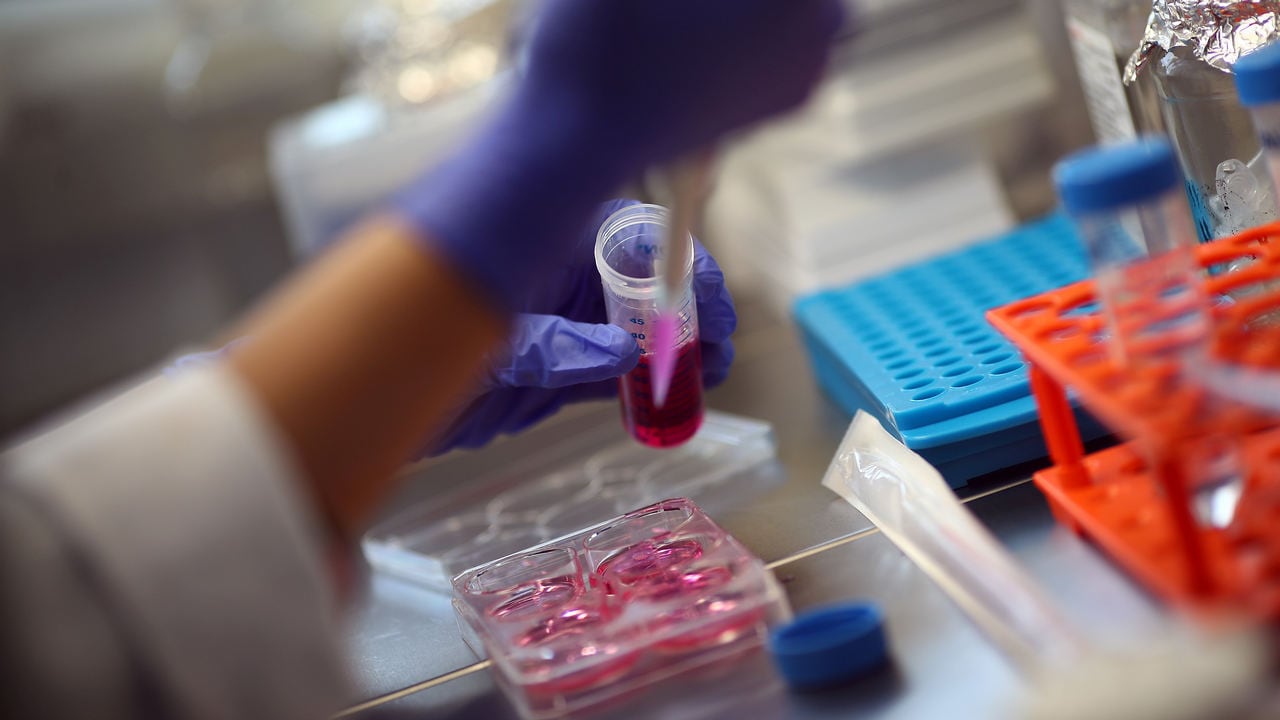 An employee works with stem cells at a laboratory in Munich, Germany. Reuters[/caption]The new EU-GDPR does not provide specific requirements for hospital security; however it requires strategic re-organisation of monitoring to maintain the efficiency of the information systems. The GDPR also requires having clear internal information assets to manage the platforms of clinical investigations and medical devices. We then need to contemplate the following questions:
- Concerning everything that we have just mentioned can we address the complexity of these problems with a Business Process Reengineering in Healthcare?
- Is it correct to use multidimensional models to address problems with cyber security and bioethical choices?
- Whom
- How
- Where
- When
First Published:Jun 08, 2019, 18:16:45 IST
Advertisement
Advertisement

Careless Whispers: Scientists discover that plants can 'talk' to each other using smells
Japanese scientists have recorded a video that shows plants, in certain conditions, communicate with each other using mists that carry smells. The discovery, reveals that plants release a fine mist of airborne compounds, to warn nearby plants of potential dangers
Life on Mars? European Space Agency’s Orbiter discovers ice water deposits at equator
European Space Agency's Mars Express Orbiter has identified massive ice and ice water deposits beneath the surface of Mars. The Mars Express orbiter was also the first to confirmed the presence of ice on Mars in 2004
Microsoft briefly overtakes Apple as the most valuable company, Apple back on top again
At its peak during the session, Microsoft's value reached $2.903 trillion, with a 2% surge. As of writing this article, Apple closed at $2.89 trillion, whereas Microsoft closed at $2.86 trillion
Even NASA is facing a tough time, starts layoffs following major budget cuts
NASA is facing some massive budget cuts, because of which, it has been forced to postpone some upcoming missions. NASA's Jet Propulsion Laboratory has been hit hard by recent federal budget cuts, resulting in the layoff of 100 contractors last week
ISRO, NASA's NISAR satellite to get ready by Jan-end, will monitor Earth's snow-covered regions
The NISAR satellite which has been developed jointly ISRO and NASA, should be ready for launch by the end of January 2024. The collaboration between NASA and ISRO on NISAR is the first time the two agencies have cooperated on hardware development for an Earth-observing mission
Advertisement
Advertisement