


Baked-in global warming already in the air will make it difficult to stick to climate change goals
Researchers have calculated committed warming to take into account that the world has warmed at different rates in different places.

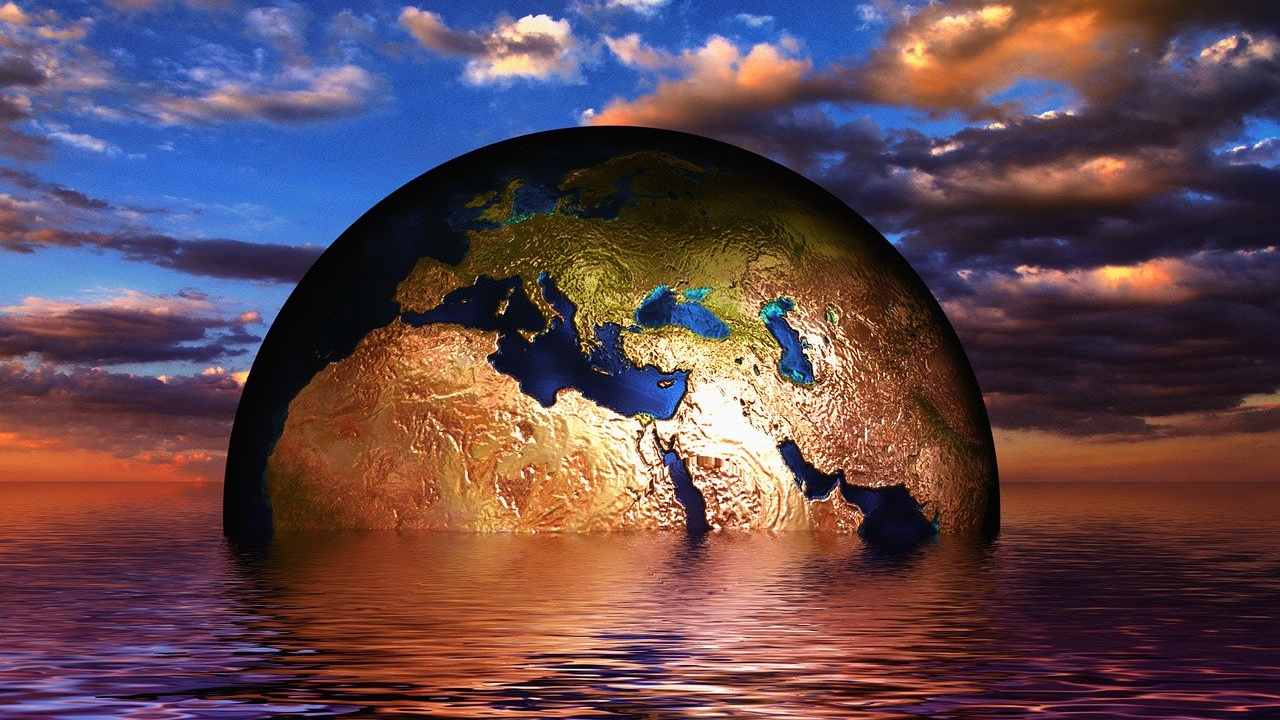
Earth's surface has already warmed 1.1 C on average, making extreme weather more deadly, and new research shows that a return to 2019 levels of carbon pollution would likely push the world past the 1.5C milestone around 2030. Image credit: Pixabay[/caption]But Monday’s study in the journal Nature Climate Change calculates that a bit differently and now figures the carbon pollution already put in the air will push global temperatures to about 2.3 degrees Celsius of warming since pre-industrial times.Previous estimates, including those accepted by international science panels, were about a degree Celsius less than that amount of committed warming.International climate agreements set goals of limiting warming to two degrees Celsius since pre-industrial times, with the more ambitious goal of limiting it to 1.5 degrees Celsius added in Paris in 2015. The world has already warmed about 1.1 degrees Celsius.“You’ve got some ... global warming inertia that’s going to cause the climate system to keep warming, and that’s essentially what we’re calculating,” said study co-author Andrew Dessler, a climate scientist at Texas A&M University. “Think about the climate system like the Titanic. It’s hard to turn the ship when you see the icebergs.”Dessler and colleagues at the Lawrence Livermore National Lab and Nanjing University in China calculated committed warming to take into account that the world has warmed at different rates in different places and that places that haven’t warmed as fast are destined to catch up.Places such as the Southern Ocean, surrounding Antarctica are a bit cooler, and that difference creates low-lying clouds that reflect more sun away from earth, keeping these places cooler. But this situation can’t keep going indefinitely because physics dictates that cooler locations will warm up more and when they do, the clouds will dwindle and more heating will occur, Dessler said.Previous studies were based on the cooler spots staying that way, but Dessler and colleagues say that’s not likely.Outside experts said the work is based on compelling reasoning, but want more research to show that it’s true. Breakthrough Institute climate scientist Zeke Hausfather said the new work fits better with climate models than observational data.Just because the world is bound to get more warming than international goals, that doesn’t mean all is lost in the fight against global warming, said Dessler, who cautioned against what he called “climate doomers.”If the world gets to net zero carbon emissions soon, 2 degrees of global warming could be delayed enough so that it won’t happen for centuries, giving society time to adapt or even come up with technological fixes, he said.“If we don’t, we’re going to blow through (climate goals) in a few decades,” Dessler said. “It’s really the rate of warming that makes climate change so terrible. If we got a few degrees over 100,000 years, that would not be that big a deal. We can deal with that. But a few degrees over 100 years is really bad.”

Careless Whispers: Scientists discover that plants can 'talk' to each other using smells
Life on Mars? European Space Agency’s Orbiter discovers ice water deposits at equator
Microsoft briefly overtakes Apple as the most valuable company, Apple back on top again
Even NASA is facing a tough time, starts layoffs following major budget cuts
ISRO, NASA's NISAR satellite to get ready by Jan-end, will monitor Earth's snow-covered regions