
Advertisement


Sections
Asteroid over 22 meters wide to make a pass by Earth closer than the Moon, NASA says
The 'potentially hazardous asteroid' called '2011 ES4' will be at a distance of 1.2 lakh kms from Earth at its closest.

On 1 September, an asteroid between 22-50 metres wide is expected to make a pass of Earth at a closer distance than the Moon, on September 1, according to the National Aeronautics and Space Administration (NASA).The 'potentially hazardous asteroid' called '2011 ES4' will be at a distance of 1.2 lakh kms from Earth at its closest. This will be the closest approach of a (large) asteroid like it in the ten years to come, NASA said.The agency tweeted confirming that the asteroid will not be harmful to Earth."Will asteroid 2011 ES4 hit Earth? No! 2011 ES4's close approach is 'close' on an astronomical scale but poses no danger of actually hitting Earth. Planetary defence experts expect it to safely pass by at least 45,000 miles away on Tuesday, September 1," NASA said on Twitter.[caption id="attachment_8096941" align="alignnone" width="1280"]![A asteroid has got caught in the Earth's orbit making it a natural satellite of our planet, similar to our moon.]()
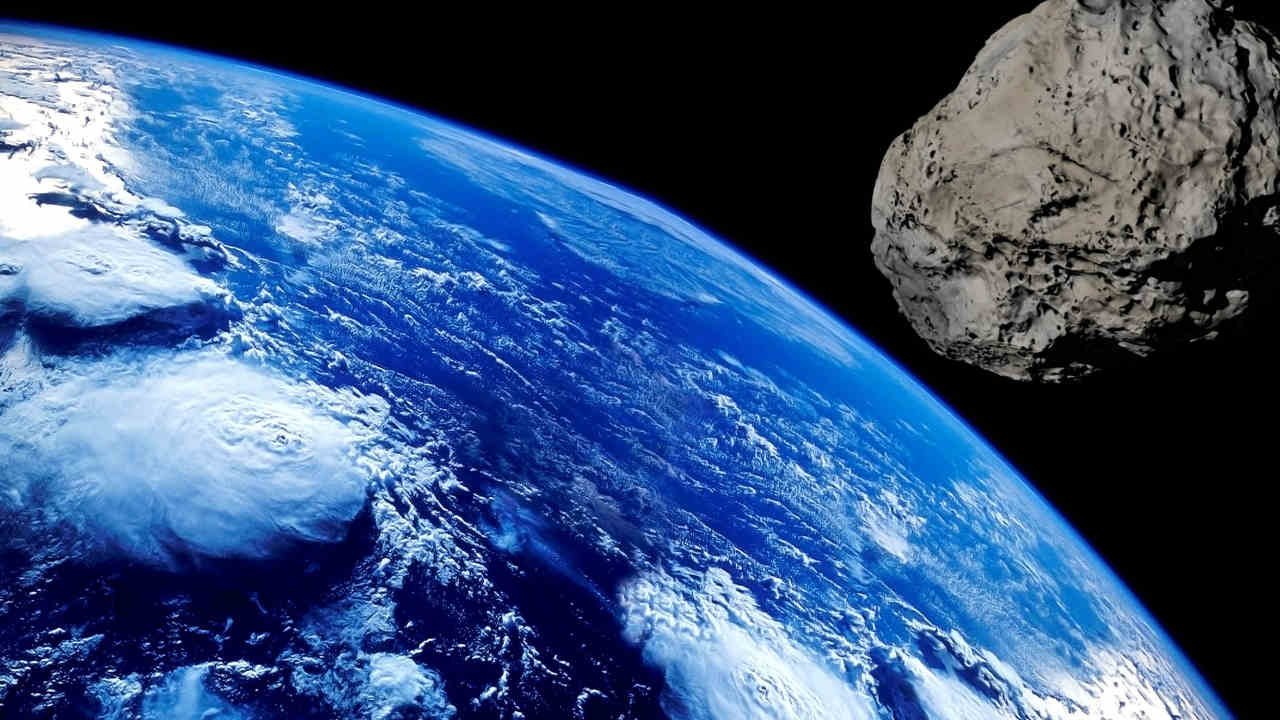
A asteroid has got caught in the Earth's orbit making it a natural satellite of our planet, similar to our moon.[/caption]
The asteroid will be zipping by us at an incredible speed of over 8 kilometres per second during its flyby. The last time the asteroid, called '2011 ES4', made a fly by the Earth, it was visible from the ground for four days,This time, it will be closer to our planet than before with an estimated distance of 1.2 lakh kilometres, closer than that of the Moon, which is 3.84 lakh kilometres away from the Earth. The asteroid was first discovered in the spring of 2011, reportedly makes a pass of Earth every nine years.The last time asteroid 2011 ES4 flew by Earth, it was visible from ground for four days, according to the Weather Channel. This time, it will be closer to our planet than before, and the chances of spotting it, especially with a telescope will be high.First Published:Aug 31, 2020, 16:04:32 IST
Advertisement
Advertisement

Careless Whispers: Scientists discover that plants can 'talk' to each other using smells
Japanese scientists have recorded a video that shows plants, in certain conditions, communicate with each other using mists that carry smells. The discovery, reveals that plants release a fine mist of airborne compounds, to warn nearby plants of potential dangers
Life on Mars? European Space Agency’s Orbiter discovers ice water deposits at equator
European Space Agency's Mars Express Orbiter has identified massive ice and ice water deposits beneath the surface of Mars. The Mars Express orbiter was also the first to confirmed the presence of ice on Mars in 2004
Microsoft briefly overtakes Apple as the most valuable company, Apple back on top again
At its peak during the session, Microsoft's value reached $2.903 trillion, with a 2% surge. As of writing this article, Apple closed at $2.89 trillion, whereas Microsoft closed at $2.86 trillion
Even NASA is facing a tough time, starts layoffs following major budget cuts
NASA is facing some massive budget cuts, because of which, it has been forced to postpone some upcoming missions. NASA's Jet Propulsion Laboratory has been hit hard by recent federal budget cuts, resulting in the layoff of 100 contractors last week
ISRO, NASA's NISAR satellite to get ready by Jan-end, will monitor Earth's snow-covered regions
The NISAR satellite which has been developed jointly ISRO and NASA, should be ready for launch by the end of January 2024. The collaboration between NASA and ISRO on NISAR is the first time the two agencies have cooperated on hardware development for an Earth-observing mission
Advertisement
Advertisement